A roller cover has more than one useful specification, and nap is only one of them. You will make a better match when you consider the wall's texture, the coating directions, the cover material, and the frame together instead of choosing the thickest cover on the shelf.
Start with the surface you actually have and the finish you want. A roller cannot flatten an unfinished repair, correct an unstable coating, or make an incompatible paint suitable for a wall.
Separate nap from width
Nap describes the thickness of the roller cover's fibers, while width describes the length of the working cylinder. A wider cover is not necessarily a higher-nap cover, and changing one dimension does not automatically solve a problem associated with the other.
Read both specifications on the package before buying. A nine-inch frame needs a compatible cover format, and a small roller for a narrow space may use a different core or attachment arrangement.
Keep any frame and end-cap requirements in the comparison. You want a complete working combination rather than a cover that has the desired nap but does not fit the equipment you brought home.
If you are replacing a familiar cover, record its full specification instead of remembering only the brand. A product family may contain several widths and naps that look similar in a small online photograph.
Look at the wall before the package
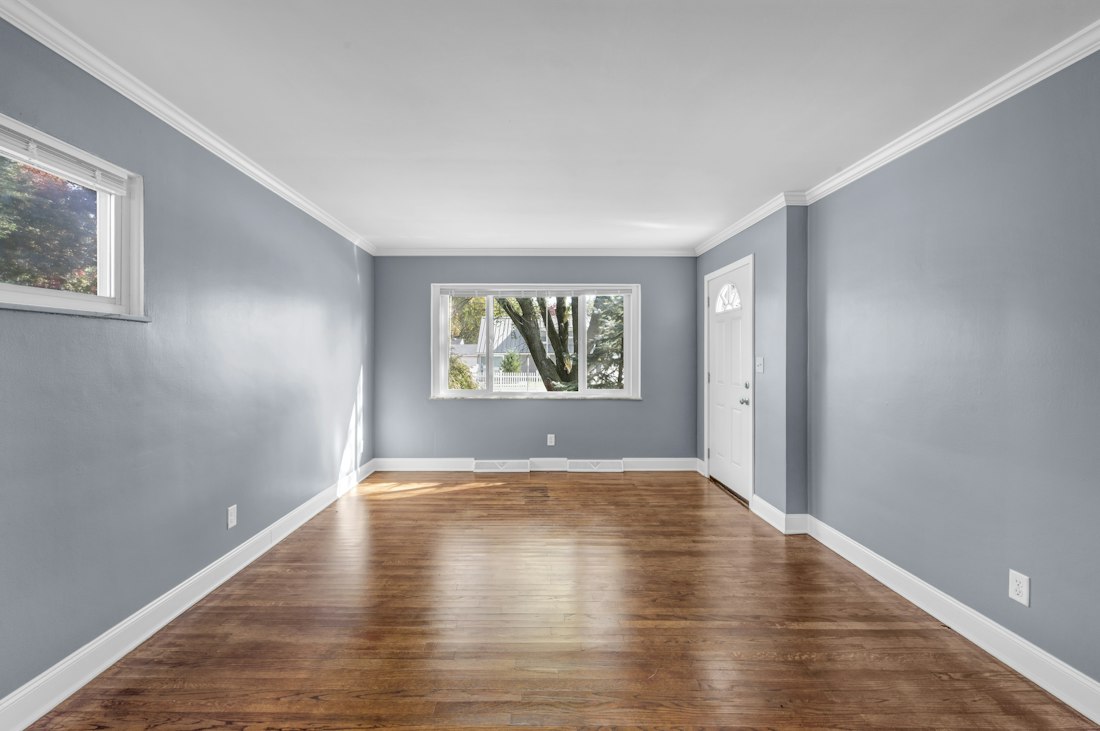
Observe whether the surface is comparatively smooth, lightly textured, or deeply uneven. Use those words to describe the existing finish without assuming that an online example exactly matches your wall.
Check whether a repaired area differs from the surrounding texture. A smooth patch in a previously rolled wall presents a finishing question that cannot be answered solely by choosing a longer fiber for the whole project.
Look at the wall from the room's ordinary viewing positions and lighting. You are deciding what the application needs to accomplish on that surface, not trying to reproduce an attractive close-up from another house.
If the texture is unusual or you are unsure what coating is already present, seek product-specific advice before proceeding. The right applicator choice depends on information that the nap number alone cannot supply.

Use manufacturer guidance as a starting map
Purdy's roller-selection guide relates lower naps to smoother surfaces and higher naps to rougher surfaces, while also considering desired appearance and coating type. Its examples are a manufacturer selection framework, not a promise that one nap fits every wall sold under the same description.
For example, Purdy lists a three-eighths-inch nap for walls and ceilings, a half-inch nap for lightly textured walls, and a three-quarter-inch nap for textured ceilings, stucco, and masonry. Read those as its starting examples, then check the actual coating and surface instead of treating the numbers as universal requirements.
Compare that guidance with the application directions for the paint you selected. If the coating specifies an applicator type or range, include that requirement rather than replacing it with a general shopping chart.
When you ask for help, describe both the surface and the coating. A question about an actual textured wall and a named finish will produce a more useful recommendation than asking for the best roller without context.
Avoid transferring an exterior masonry recommendation to a smooth interior wall simply because both jobs use a roller. Different surfaces and coating systems deserve their own selection decision.
Keep fabric in the comparison
Purdy also distinguishes woven and knit cover fabrics and their intended application characteristics. That distinction means two covers with the same nap dimension can still belong to different material choices.
Do not turn a broad fabric category into a guarantee of zero lint or a perfect finish. Evaluate the exact product information and follow any preparation directions supplied for the cover.
If a review compares covers, check whether the comparison keeps the width, nap, material, and package consistent. A different size or construction may explain a practical difference that the brand name alone leaves unclear.
Keep the cover clean and appropriate for the coating stage. A previously used cover with uncertain residue is a different starting point from a properly prepared compatible cover, even if its printed specifications match.

Plan how you will reach narrow areas
A small roller can be useful where a full-size cover does not fit, but it introduces another matching question. Consider the smaller cover's fabric and nap alongside the larger one rather than assuming any miniature roller will leave the same appearance.
Check access before opening paint. A radiator, a deep reveal, or a fixed cabinet can change which surfaces are reachable and how the work needs to be organized.
Use suitable access equipment and tool instructions for the space. Reaching farther with an unsuitable setup is not an applicator-selection solution, and an extension pole does not remove every access limitation.
If a narrow section cannot be finished consistently with the planned system, resolve that method first. You can then choose the tools for the actual sequence rather than discovering the mismatch while the surrounding paint is changing.
Make a supported trial meaningful
If the product directions or supplier recommend a trial, keep it representative of the intended job. Use the chosen coating, prepared surface, and applicator rather than comparing several variables at once and guessing which one caused the result.
Observe the finish only at the readiness point specified for evaluation. A wet patch can look different as it dries, so an immediate impression is not the same as the final appearance.
Record the cover specification and method used in the trial. If the result is useful, you will be able to repeat the relevant choices instead of trying to identify a damp anonymous roller later.
If the finish is unsatisfactory, ask what the observation suggests before changing nap automatically. Surface preparation, coating application, and room conditions remain possible parts of the conversation.
Do not use pressure to compensate for the wrong match
Follow the coating and tool directions for loading and application. A cover that seems unable to reach the intended surface or release paint appropriately needs investigation rather than progressively harder pressure as an improvised fix.
Keep the equipment condition in view as well. A damaged frame, a slipping cover, or a poorly fitting extension connection is a handling problem that a different nap will not necessarily address.
Pause when the tool behaves unpredictably. You will learn more by checking the combination than by finishing a whole wall with a setup you already suspect is unsuitable.
The selection decision should make the application manageable and repeatable. It should not depend on a special trick that you cannot explain or reproduce for the next section.
Write a useful shopping specification
Your final note should identify the cover family, fabric, width, nap, compatible frame, and package quantity. Include the coating and surface description so the specification stays attached to its purpose.
Check all of those details again when buying online. A listing photograph may show several options, while the selected variation or package title describes only one of them.
You do not need the largest collection of roller covers to paint one room well. You need a documented combination that fits the surface, the coating, the access, and the appearance you have chosen for that project.
Compare two wall sections before generalizing
Imagine that most of a room has a consistent rolled texture, but a narrow repaired strip beside the door is much smoother. Describe that difference before changing the roller specification for the entire room, because the localized surface transition may need a preparation decision of its own.
Now imagine a different room where the whole wall has a deliberate deep relief. The question concerns reaching and coating that actual geometry with a suitable system, rather than matching one smoother patch to its surroundings; those two projects should not share a recommendation just because both are called interior walls.
Keep the observation attached to the surface. A useful photograph shows both the representative area and its position in the room, while your written note identifies whether the texture is consistent or changes across repairs.
When you record the result, describe the surface as well as the applicator. That keeps a successful choice from becoming an unexplained universal rule when your next room has a different coating or texture.
Published technical information supports the specific material statements. Room examples and illustrations are original; they are not product tests or a diagnosis of your wall.