You need the area of the surfaces you are painting, not the floor area of the room, to build a useful paint estimate. Once you keep those two measurements separate, the calculation becomes a worksheet you can check instead of a guess based on the room's name.
The examples below use invented room dimensions and an explicitly hypothetical coverage figure. Replace both with your actual measurements and the current directions for the exact coating you intend to use.
Make a separate row for each coating
Start by listing what receives the same product, color, and sheen. Walls might form one group, while a ceiling, closet, and trim belong on separate rows if their coatings differ.
Do not add unlike coatings together just because they all come in gallon containers. A primer quantity and a finish-paint quantity describe different stages with potentially different coverage requirements.
If two rooms use the same coating, you can total their measured areas after keeping the individual room calculations. That gives you a useful way to check the total and identify which room changes if the scope grows.
Write the unit beside every measurement. Feet and inches are easy to mix when you are taking notes quickly, and a unit error can matter more than a small rounding choice at the end.
Measure wall area rather than floor area
For a rectangular wall, multiply its width by its height. For a room with equal wall heights, you can also multiply the total wall length around the room by that height.
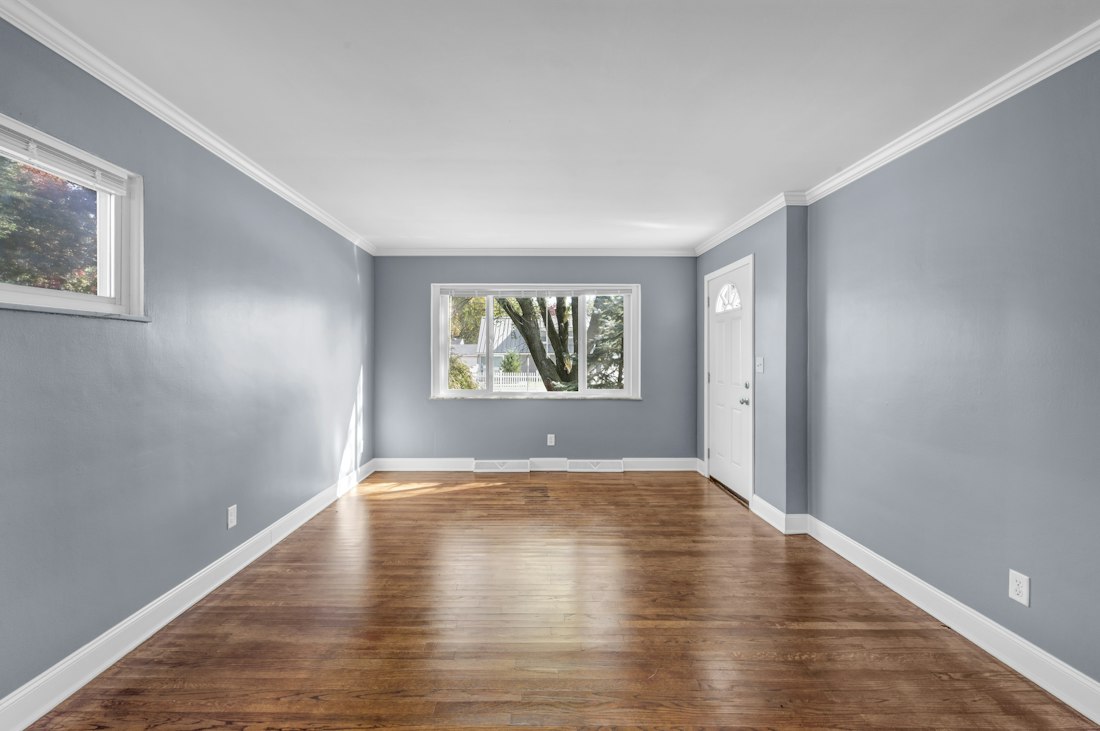
Imagine a room that measures twelve feet by ten feet with eight-foot walls. The perimeter is forty-four feet, so its gross wall area is three hundred fifty-two square feet before any opening deductions.
The floor area in that example is only one hundred twenty square feet. Using that number for the walls would leave out much of the surface you actually intend to paint.
For a sloped ceiling, alcove, or irregular wall, divide the surface into shapes you can measure or obtain suitable help with the estimate. Do not pretend that a simple rectangular-room formula describes every part of a complicated space.
State how you treat doors and windows
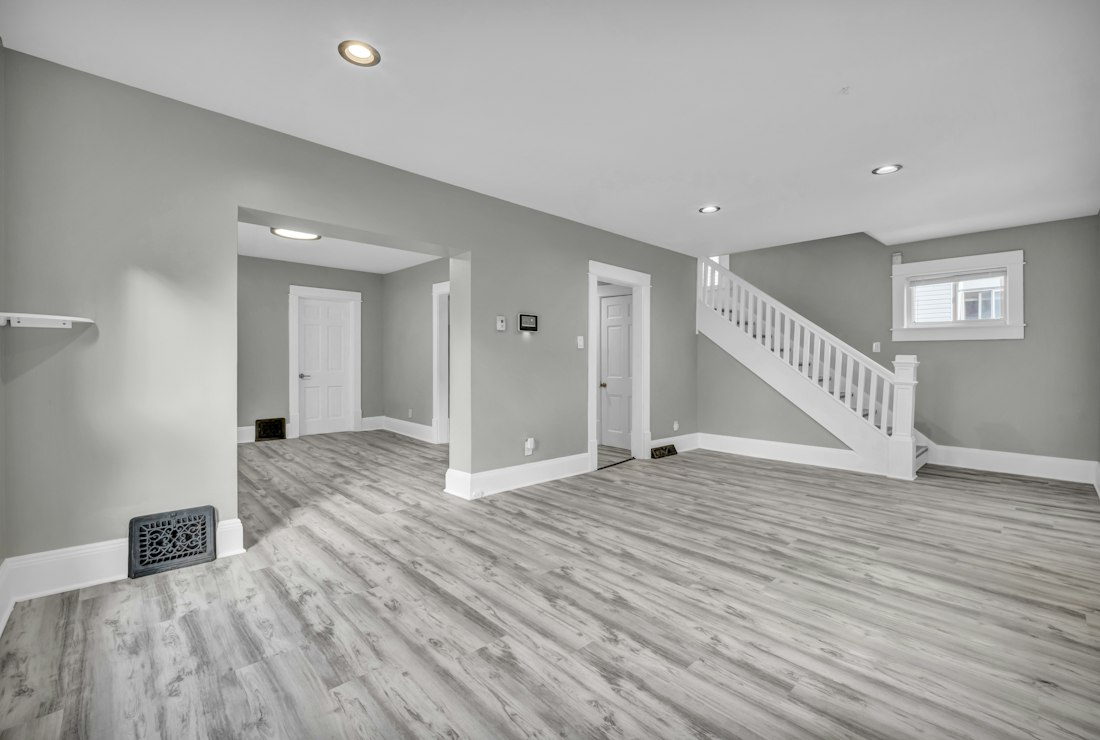
You may deduct measured openings when building a net wall-area estimate. Keep those deductions visible rather than silently subtracting a standard amount for every opening regardless of its actual size.
In the example room, imagine a door opening of twenty-one square feet and a window opening of fifteen square feet. Subtracting both from the gross wall area leaves three hundred sixteen square feet of wall surface.
That is an arithmetic example, not a claim about the dimensions of your openings. Measure yours and decide whether the estimate's practical allowance already accounts for small features before making repeated deductions.
Do not subtract a door from the walls and then forget that you also intend to paint the door itself. Put the door on the appropriate separate coating row, including the surfaces actually in scope.
Multiply by the planned coats
A coverage number usually needs a clearly stated coat basis. If your directions describe coverage for one coat, an area receiving two coats represents twice that amount of coating work in the calculation.
For the example's three hundred sixteen square feet, two planned coats produce six hundred thirty-two square feet of coat-area. Writing that intermediate result helps you see where the second coat entered the estimate.
Do not double an online calculator's answer without checking its assumptions. Benjamin Moore's calculator, for example, states that its rough estimate already assumes two coats and excludes the ceiling.
A planned coat count should also come from the actual project and product directions. A mathematical estimate does not establish that one coat will provide the required appearance or that another coat is the answer to an unresolved preparation problem.

Divide by the exact coverage information
Now find the relevant coverage guidance for the selected product and surface. Keep its units, coat basis, and any stated range or limitations beside the calculation.
If a hypothetical coating covered three hundred fifty square feet per gallon per coat, the example's six hundred thirty-two square feet of coat-area would require about one point eight one gallons by arithmetic. This number illustrates division; it is not a coverage promise for a real paint.
If the manufacturer gives a range, calculate the implication rather than choosing the most optimistic endpoint automatically. Ask the supplier how the actual surface and application method should affect your purchase estimate.
Do not thin a coating or spread it farther simply to make the purchased quantity match your worksheet. Application and thinning limits remain product instructions, not adjustable variables for rescuing a shopping calculation.
Turn the estimate into a purchase discussion
Paint is sold in available container sizes, so a mathematical quantity is not the final shopping list. Discuss the estimate, product sizes, and a reasonable project allowance with the supplier before ordering.
Keep that allowance visible as a separate decision. You can then explain why you bought more than the exact division result without presenting the arithmetic as a guarantee of consumption.
If color consistency across a large area matters, ask the supplier about purchasing and handling the material for that job. Follow the coating's directions rather than inventing a universal mixing method that might not suit the product.
Record any unopened-container return policy before purchase if it affects your plan. Do not assume that tinted paint can be returned or that every retailer treats partial project leftovers the same way.
Add the ceiling without hiding it in the wall total
For a simple flat rectangular ceiling, the length-times-width area can form its own row. The example's twelve-by-ten room would have a one-hundred-twenty-square-foot ceiling before accounting for any relevant features.
Apply the ceiling coating's own planned coat count and coverage information to that row. Do not reuse the wall-paint rate merely because both products are intended for the same room.
Keep trim, doors, or other detailed surfaces separate when their estimating method differs. A single combined number may look convenient while concealing which product quantity it actually represents.
If an item is outside your current scope, mark it excluded. This makes the worksheet useful when someone else asks whether the estimate includes the closet or the back of the door.
Check the worksheet before buying
Read the calculation from the surface list through the final containers. Confirm that each row uses the right dimensions, opening treatment, coat count, coverage basis, and exact product.
Then compare the result with the room itself. A forgotten alcove or second wall color is easier to spot when you walk through the space with the worksheet than when you review one final gallon figure in isolation.
Keep the completed sheet with the paint information after the project. It is a practical record of your assumptions and actual scope, and you can revise those assumptions if a later room has a different surface or finish system.
Use leftovers as feedback, not a new rule
After the job, note what remained and whether the original scope changed. That information can improve your next estimate without turning one room's consumption into a promise for every future wall.
A larger leftover amount might reflect opening deductions, application differences, container rounding, or an unfinished coat. Record what you actually know rather than declaring that the label rate was wrong simply because your final container was not empty.
Keep an accent wall on its own line
Suppose one wall in the example room will receive a second color. Remove its measured area from the first color's row and give it a separate row with its own coat count and product information, rather than buying a small can based only on the phrase accent wall.
The same approach works when a closet remains unchanged or only three walls are being repainted. Your estimate should describe the work you intend to do now, and the written exclusions prevent an apparently tidy room total from quietly including surfaces that will never receive that coating.
Published technical information supports the specific material statements. Room examples and illustrations are original; they are not product tests or a diagnosis of your wall.