A paint color can look quiet on one wall and surprisingly shiny on another. Sheen is one reason, and you will make a better choice when you consider the room's light, the surface condition, and the cleaning you expect rather than choosing a familiar word on the can.
This guide is a decision framework for an ordinary interior painting project. The exact coating's technical information still governs its suitable surfaces, performance, application, and care.
Start with what sheen describes
Benjamin Moore describes sheen as the amount of light reflected by a painted surface. Its finish range includes names such as flat, matte, eggshell, satin, semi-gloss, and high gloss, but those names belong in the context of the particular product line.
Within Benjamin Moore's illustrated range, flat and matte sit toward the quieter, lower-reflection end, followed by eggshell and satin, with semi-gloss and high gloss toward the shinier end. That ordering helps you read its finish choices, while names and formulations across brands are not completely equivalent.
Keep color and sheen together when you evaluate a finish. A color chip may help you narrow the hue, but it does not show every aspect of a painted wall in your room.
If an exact appearance matters, ask how to evaluate the specific color and finish before committing to the full project. Keep the sample method tied to the product rather than assuming any small pot represents every finish sold under that color name.
Describe the room before picking a finish
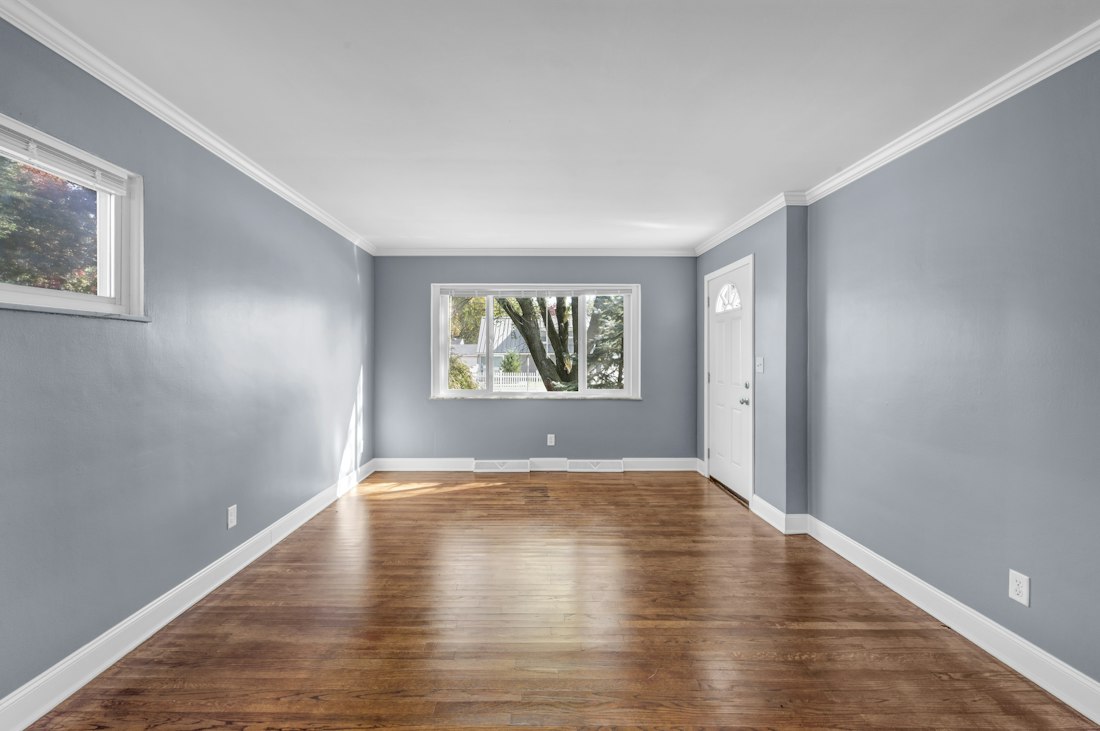
Think about where you normally see the wall and which lights are on at those times. A side-lit hallway, a softly lit bedroom, and a wall facing a large window create different viewing situations.
Then describe how the space is used. You may want to wipe marks near a dining chair, leave a decorative bedroom wall largely untouched, or deal with a narrow passage where bags frequently brush the surface.
Those observations make a useful request at a paint counter. You can ask about an appropriate product for the room and care pattern instead of asking which sheen is always best.
Include any known surface concerns in that conversation. Sheen selection is part of the finish plan, but it cannot repair loose coatings, damaged board, moisture, or a raised patch edge.

Compare reflection in the light you use
Look at a proposed finish from more than one position. A surface seen straight on may look different when you view it along the wall toward a window or lamp.
Return at another ordinary time of day if that room changes strongly with daylight. You are choosing a finish for the room's real use rather than trying to find one flattering moment when everything looks the same.
Keep your comparison consistent by viewing the samples in similar positions. Moving one sample into a shadow and another beside a bright window can make the lighting difference look like a product difference.
Photographs can help you remember the comparison, but they are not a reliable measurement of gloss. A phone may change exposure or processing, so keep your direct observation and written notes alongside the images.
Keep wall condition in the decision
A different sheen may change how a surface variation appears, but it does not remove the variation. Inspect profile and texture before you decide that a less reflective finish will solve the whole problem.
For example, a repaired area may be smoother than the surrounding rolled surface. Choosing a finish without addressing the intended preparation can leave you disappointed even when the color is correct.
Ask what preparation is appropriate for the wall and desired result. If you are hiring the work, discuss that expectation while the scope can still include finishing changes rather than after the coating is on.
Avoid the phrase hides everything when describing a low-sheen choice. It creates a promise that no paint label can reasonably make about every damaged or uneven wall.

Ask about cleaning by exact product
Benjamin Moore's guide gives different room uses for its sheen options and identifies particular matte products with washing or bathroom applications. That is a useful reminder that performance depends on the formulation as well as the sheen name.
Instead of assuming that every shiny coating is the right answer for frequent cleaning, ask what the exact product permits. Check its intended use, cure requirements, and care instructions before deciding that it fits your room.
Describe the cleaning problem honestly. Occasional fingerprints, repeated chair contact, cooking residue, and persistent dampness are different conditions, even when you casually call them a busy room.
A washable coating is not permission to ignore the cause of repeated moisture or damage. Resolve the building or use problem separately from the decorative finish choice.
Consider trim as a separate surface
You do not have to give the trim the same finish as the walls merely because they share a color. Doors, baseboards, and casings have their own substrates, preparation needs, and practical use.
Look at how those surfaces meet before deciding on a contrast. A glossy trim line beside a quiet wall may be part of the appearance you want, while another room may suit a less pronounced difference.
If the old trim coating is unknown, identify the preparation and compatible system before buying the new finish. Sheen names do not answer adhesion questions about an existing painted surface.
Include the ceiling in your surface list when it is part of the project. Its ordinary lighting and visibility differ from the walls, so there is no reason to make its choice by accident while you are ordering the wall paint.
Write a finish schedule you can understand
Make a short record for each surface: exact product, color, sheen, and intended room location. Include primer or special preparation where the chosen system requires it.
Use full product names rather than a note that says satin white. A later touch-up needs more information, and a different can with similar words may not reproduce the appearance.
If several people are purchasing or applying the materials, share the same schedule. This prevents one person from selecting an assumed equivalent when the specified finish is unavailable.
When a substitution is necessary, compare it deliberately with the supplier or manufacturer. Do not discover a product change only after two adjacent walls have different finishes.
Test the decision against an everyday scene
Imagine the room at the time you use it most, with furniture in place and the normal lamps on. Ask whether the appearance you saw in the sample still fits that setting and whether the care instructions fit your household.
If the choice remains uncertain, narrow the uncertainty before buying the full quantity. You may need a more representative sample, clearer product advice, or a better understanding of the wall condition rather than another round of color names.
The goal is a finish you chose for a reason you can explain. You will know how reflection, preparation, and expected care influenced the choice, without pretending that a single sheen is the universal answer for every room.
Keep the first cleaning decision on the calendar
Before you put the room back into normal service, keep the product's care and curing instructions visible. A finish selected for its eventual cleaning performance still needs the specified conditions and time before you judge that performance.
Tell anyone helping with the room which surfaces need gentler treatment or delayed cleaning. That small handoff connects the purchase decision to everyday use and avoids treating a newly painted wall like a fully established finish simply because it looks dry.
Keep adjoining rooms in view
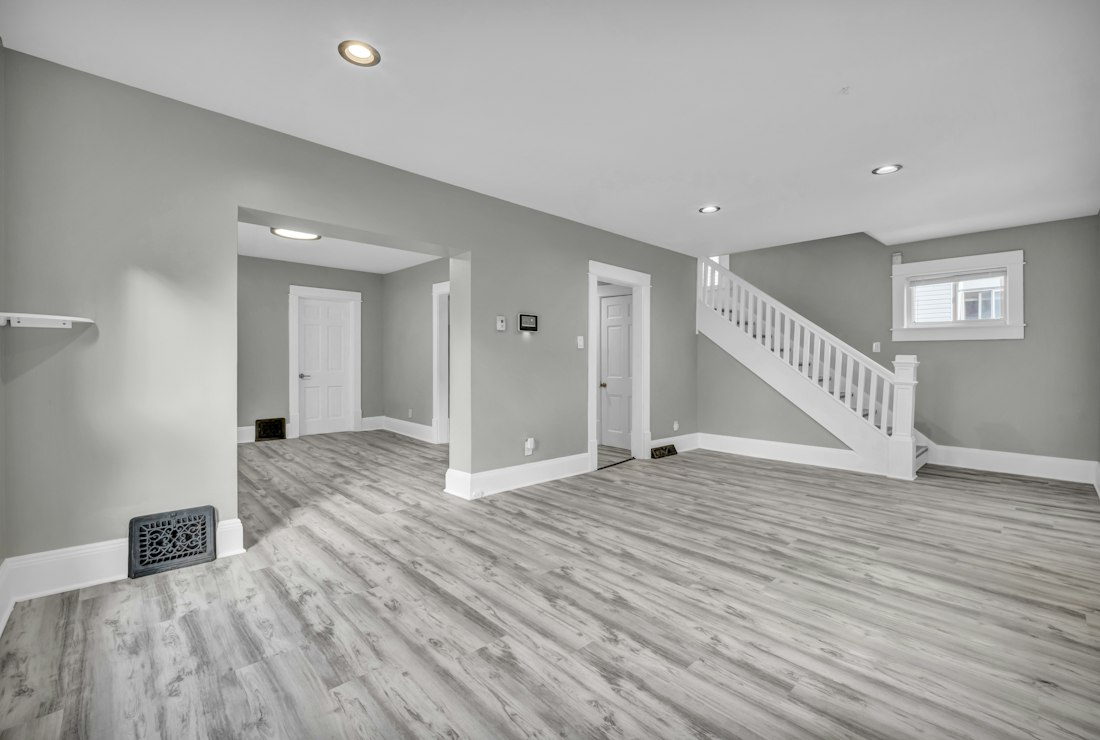
If an open doorway lets you see two rooms together, include that view in your comparison. You may like a change in finish, but it should be a deliberate part of the plan rather than something you notice only when the materials are already applied.
You can still choose different products for different needs. Record where the transition occurs and why, then confirm that the visible relationship suits you under ordinary lighting instead of trying to force every surface in the house into one assumed universal category.
Published technical information supports the specific material statements. Room examples and illustrations are original; they are not product tests or a diagnosis of your wall.