Looking for premixed plaster for walls that saves time and reduces mess? This guide highlights five top options, focusing on ease of use, quick drying, and strong adhesion. Ideal buyers include DIY homeowners, weekend renovators, and pros repairing interior walls or masonry. The table below compares key points to help you decide quickly.
| Product | Best For | Drying/Set Time | |
|---|---|---|---|
| DAP Patching Plaster, White, 1 Gal | Wall patching and quick fixes | 1–5 hours depending on temp/humidity | Ready-to-use latex-based, minimal shrinkage |
| DAP Plaster of Paris (Dry Mix), 4 Lb | Holes in plaster walls and craft projects | 20–30 minutes hardening | Professional interior repairs and modeling use |
| DAP DryDex Dry Time Indicator Spackling, 32 Oz | Interior/exterior repairs with color check | 1–5 hours to dry | Color indicator confirms dryness |
| Dap 10504 All-Purpose Ready-to-Use Stucco Patch | Stucco wall repairs | Standard set typical for stucco patches | Ready-to-use, United States manufactured |
| Sika Sikacryl Gray Ready-Mix Concrete Patch | Concrete and masonry repair | Fast setting with minimal shrinkage | Textured finish blends with surface |
DAP Patching Plaster, White, 1 Gal

Best for: Immediate wall patching tasks where a latex-based finish is desired. Suitable for homeowners and DIYers repairing holes or cracks in plaster and drywall before painting.
Why chosen: It is a ready-to-use patching compound with quick drying and minimal shrinkage, allowing repairs to blend with surrounding walls after 1–5 hours depending on conditions. The formula accepts paint after curing, simplifying the workflow for quick renovations.
How to use: Apply to the hole or crack, smooth the surface, and allow to dry before sanding and painting as needed. It dries faster in warm, dry conditions and with shallower fills.
Caution: Avoid applying thick layers in one go; deeper fills may require multiple applications to reduce cracking.
DAP Plaster of Paris (Dry Mix), White, 4 Lb Tub
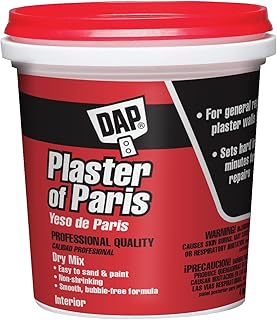
Best for: Interior plaster repairs where a professional-grade finish is needed, or small crafts and model work requiring a hard-setting plaster.
Why chosen: Plaster of Paris is ideal for filling holes in interior plaster ceilings and walls with a durable repair. It sets hard in about 20–30 minutes, making rapid progress possible on small patches or detailed craft projects.
How to use: Mix as directed, apply to the hole or crack, shape, and allow to harden. Clean tools immediately after use to prevent setting on equipment.
Caution: It can be brittle if overworked or applied too thickly in one pass; consider multiple thin coats for large patches.
DAP DryDex Dry Time Indicator Spackling, Pink/White, 32 Oz

Best for: Repairs across drywall, plaster, wood, brick, and stone surfaces where a color cue helps confirm dryness.
Why chosen: DryDex uses a pink-to-white color indicator to show when it is dry within 1–5 hours, aiding accuracy in layered repairs. It also dries within 1 hour for shallow patches of 1/8″ depth.
How to use: Smooth over the repair area, apply in layers if needed, and wait for color to change to white before sanding and painting.
Caution: For deeper fills beyond 1/8″, apply multiple layers and allow drying between applications to avoid cracking or insufficient cure.
DAP 10504 All-Purpose Ready-to-Use Stucco Patch

Best for: Exterior or interior stucco repairs requiring a ready-to-use patching compound with painting compatibility.
Why chosen: Labeled as all-purpose and ready-to-use, this patch addresses wall-surface repairs with stucco textures, suitable for painting after application. It is manufactured in the United States, which can matter for sourcing and consistency concerns.
How to use: Apply the patch into the prepared area, press to fit, and smooth before it cures. Sand lightly after drying if needed before painting.
Caution: Not ideal for very large structural gaps; for large patches, consult a professional or use a product designed for extensive stucco repairs.
Sika Sikacryl Gray Ready-Mix Concrete Patch

Best for: Concrete and masonry repairs where texture matching and high strength are desired.
Why chosen: This acrylic-based concrete patch is designed to resist shrinking and cracking, providing good adhesion for slabs, walls, and walkways. The product is textured to blend with surrounding masonry, improving cosmetic results on repairs.
How to use: Clean the area, apply the patch, and shape to match the surface texture. It cleans up with water after application.
Caution: Suitable for concrete and masonry repairs; test color and texture on a hidden area if exact matching is critical.
Buying Guide
What type of premixed plaster should I choose?
- For quick wall patches in interior drywall, choose latex-based patching plaster with fast setup and paint-ready finish.
- For plaster or masonry surfaces, plaster of Paris or concrete patches provide stronger, durable repairs with varying cure times.
Is color and finish important?
- Look for products with color indicators or textures that match the surface for easier blending and fewer coats.
- Textured patches help blends on concrete and stucco surfaces where a seamless look is desired.
What about application depth?
- Shallow repairs can often be treated with a single layer, while deeper holes may need multiple thin coats to prevent cracking.
- Read product instructions to determine recommended fill depth per layer and curing time.
What are the cleanup considerations?
- Most premixed plasters are water-cleanup when they are still wet; set times determine how long you should wait before washing tools.
- Acrylic-based patches typically rinse clean with water after use.
FAQs
- What is premixed plaster best for home walls? – It is best for quick repairs on drywall, plaster, and small masonry patches, offering ready-to-use convenience with varying cure times.
- Can I paint plaster patches right away? – Many patches become paint-ready after drying; check product guidelines for exact timing.
- Do these patches require sealing or priming? – Some patches may need primer or sealant when applying over very porous surfaces; follow product directions.
- Are there products suitable for exterior use? – Yes, some stucco and concrete patches are designed for exterior masonry repairs as well as interior work.
- Which patch is best for textures? – Textured patches, like Sika Sikacryl or textured concrete patches, blend with masonry and concrete surfaces.
- What supplies should I have on hand? – A putty knife, sanding block, painter’s tape, and a damp sponge help complete repairs cleanly.