If you’re refreshing indoor brick surfaces, these interior-friendly paints are designed to cover brick, fireplaces, and masonry with minimal odor and easy cleanup. This guide highlights five top picks, explains who each product is best for, and calls out practical pros and limitations. Ideal buyers include DIY homeowners updating a fireplace, renters seeking temporary brick refreshes, and projects that demand low-VOC formulas for enclosed spaces.
Quick comparison table of selected products:
| Product | Best For | Key Benefit | Typical Coverage |
|---|---|---|---|
| Giani Brick Transformations Whitewash Paint (16 oz) | Small brick areas and fireplaces | Water-based, low odor; easy blending | About 100 sq ft |
| GLAINTE Brick Transformation Paint | Direct-application on multiple surfaces | Low odor, versatile indoors/outdoors | Adjustable with 1:1 or 1:2 mix |
| KILZ Self-Priming Masonry Paint (White) | Large brick or masonry projects | Self-priming, strong adhesion | Typically 250+ sq ft per gallon |
| Giani Brick Transformations Whitewash Paint (Walls/Fireplaces) | Brick walls and larger fireplaces | 200 sq ft coverage; low odor | 200 sq ft |
| KILZ Basement And Masonry Waterproofing Paint | Moisture-prone basements or damp spaces | Water barrier and alkali resistance | 1 gallon coverage varies by surface |
Giani Brick Transformations Whitewash Paint for Brick and Fireplaces- 16 oz Pint

Best for small fireplace facades or accent bricks in living spaces. This water-based acrylic offers low odor and minimal VOCs, with coverage of about 100 sq ft per gallon when diluted as directed. It must be diluted at least 1:2 with water to reach full coverage. Choose this for quick, even whitened brick with a traditional, matte finish. Caution: diluted ratio is essential for even results; over-thinning may reduce coverage.
GLAINTE Brick Transformation Paint
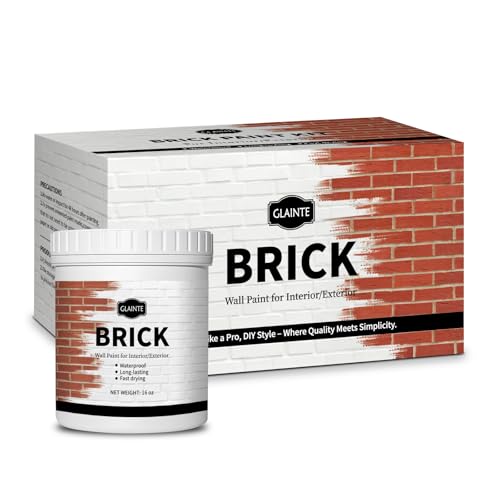
Best for versatile indoor/outdoor projects on brick, concrete, and more. No primer needed for many surfaces; the kit supports direct application with control over opacity. It’s a low-odor, water-based formula with improved sun and water resistance. Apply with a 1:1 ratio for a light veiling or 1:2 for bold, textured finishes. Best for homeowners who want to tailor brick texture or create ombré effects. Limitation: outdoor use requires careful timing in sunny conditions; un-dried paint can dissolve with water exposure.
KILZ Self-Priming Masonry, Stucco and Brick Paint (White, 1 Gallon)

Best for larger brick or masonry upgrades where priming is preferred to speed up coverage. This acrylic latex water-based paint provides excellent hiding, adhesion, and water repellency on textured surfaces, and is alkali-resistant up to pH 12.0. It accepts rolling, brushing, or spraying. Consider this option for comprehensive wall-to-wall brick transformations. Limitation: not a dedicated primer; always ensure surface is properly prepared for optimal results.
KILZ Self-Priming Masonry, Stucco and Brick Paint (White, 1 Gallon)

Best for smooth, textured, and rough masonry surfaces in interiors or exteriors. Similar to the white option above, this paint offers strong hiding, good adhesion, and alkali resistance with easy soap-and-water cleanup. Choose this if you want a bright, clean finish on brick or drywall transitions. Caution: ensure adequate ventilation during application to minimize odor in enclosed spaces.
Giani Brick Transformations Whitewash Paint for Brick Walls and Fireplaces

Best for brick walls and larger fireplace surfaces needing a uniform whitewash appearance. This product provides up to 200 sq ft coverage when followed with the kit’s instructions. It’s low in odor and VOCs, offering a straightforward application for bright, contemporary brick styling. Limitation: ensure proper dilution and follow setup steps to achieve consistent coverage across broad areas.
KILZ Basement and Masonry Waterproofing Paint (White)

Best for moisture-prone areas such as basements or damp masonry walls. This product uses nanotechnology to form a water barrier and resists alkali buildup, helping protect brick, concrete, and masonry from water infiltration. It’s suitable for below-grade or exterior-facing surfaces where waterproofing is a priority. Limitation: not intended for floors or areas with active active water leaks; prepare walls by filling cracks first.
Buying Guide
- Surface compatibility: Check whether the brick is new, aged, or sealed, and choose a product that matches indoor use, weather exposure, and the level of adhesion you need.
- Finish preferences: Matte, satin, or gloss options affect the final look; consider light reflectivity in living spaces or entertainment areas.
- Ambient conditions: Enclosed spaces benefit from low-VOC formulas with minimal odor; plan application when rooms can be ventilated.
- Coverage and dilution: Some products require dilution to achieve full coverage; measure brick area to estimate the number of cans or kits.
- Primer vs. self-priming: Self-priming options simplify workflows on rough or new masonry, while others may require a dedicated primer for best results.
- Water resistance: For basements or damp walls, prioritize waterproofing or alkali-resistant finishes to extend brick life.
FAQ
- Q: Do brick paints require priming? A: Some products are self-priming while others may require a separate primer for best adhesion on certain surfaces.
- Q: Can I use these paints on outdoor brick as well? A: Several options are suitable for both indoor and outdoor use, but follow product instructions for outdoor conditions and weather.
- Q: How should I prepare brick surfaces before painting? A: Clean off dust and efflorescence, repair cracks, and ensure the surface is dry and stable before applying paint.
- Q: What about odor and ventilation? A: Look for low-VOC, water-based formulas, especially for enclosed spaces or rooms with limited ventilation.
- Q: How many coats are typically needed? A: Many brick paints are designed for one-coat operation when properly applied, but surface texture and color goals may require more passes.
- Q: Will these paints hide old brick patterns? A: Some products are designed to cover or soften brick textures; if preserving texture matters, select a lighter veil or translucent whitewash.