Yes, a low-pressure sprayer can efficiently apply concrete sealers when chosen for chemical resistance, pump durability, and ease of use. This guide highlights five proven models ideal for DIY projects and professional work. Each option is evaluated for best use cases, such as handling solvent-based sealers, waxes, or water-based coatings, and for maneuverability on job sites. Read on to choose the sprayer that best fits your sealer type, workspace, and fatigue tolerance.
| Product | Brand | Best For |
|---|---|---|
| CHAPIN 19494 3.5-Gallon Industrial Concrete Sprayer | CHAPIN Store | Heavy-duty concrete work, large jobs |
| VEVOR Industrial Concrete Sprayer with Cart | VEVOR Store | Mobility and long spraying sessions |
| Concrete Sprayer 2 Gallon Chemical Resistant | Sprayers Plus Store | Chemical variety, smaller jobs |
| Armor 2-Gallon Stainless Steel Pump Sprayer | Foundation Armor Store | Water-based and specialty sealers |
| CHAPIN 1244 2-Gallon Steel Pump Sprayer | CHAPIN Store | Pro-level lawn, garden, and concrete prep |
CHAPIN 19494 3.5-Gallon Industrial Concrete Sprayer

This 3.5-gallon Tri-Poxy sprayer is built for demanding concrete work. It features a Tri-Poxy steel tank for rust and dent resistance and a secure Tri-Lock pump handle to prevent leaks during use and transport. The wide 4-inch mouth opening makes filling and cleaning quick, reducing downtime on the job. Best for: professional contractors or serious DIYers tackling large concrete sealing projects where durability is critical. Limitation: heavier and bulkier than smaller models, which may impact portability on tight sites.
VEVOR Industrial Concrete Sprayer with Cart

This 3.5-gallon sprayer sits on a wheeled cart, enabling easy mobility across large jobs. Its tri-poxy stainless steel tank, two brass nozzles, and fluorine rubber seals provide strong rust and corrosion resistance for industrial use. Best for: projects requiring extended spraying sessions with less fatigue and frequent moves, such as large outdoor sealant applications. Caution: immediate cleaning after use is recommended to maintain performance.
Concrete Sprayer 2 Gallon Chemical Resistant
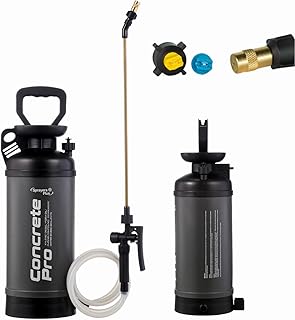
This 2-gallon model emphasizes exceptional durability with Viton seals and a 5.24-inch wide opening to reduce spills. Its tank is thicker than many competitors, offering better resistance to chemicals and drops. Best for: professionals handling varied chemical sealers and daily use in construction environments. Limitation: smaller capacity means more frequent refills on larger projects.
Armor 2-Gallon Stainless Steel Pump Sprayer

Designed for water-based and solvent-based sealers, this 2-gallon sprayer includes a .5 adjustable cone tip and a 1 GPM fan tip, plus a pressure gauge for precise spraying. Best for: users needing adjustable spray patterns and clear visual pressure feedback. Caution: ensure compatible sealants with metal components to avoid buildup or tip clogging.
CHAPIN 1244 2-Gallon Steel Pump Sprayer

Built for professionals and serious homeowners, this 2-gallon Tri-Poxy tank sprayer supports lawn, garden, and concrete prep tasks. Its funnel-top opening reduces splashing and simplifies cleaning, and chemical-resistant seals suit common concrete care chemicals. Best for: DIY projects and small contractor tasks needing reliable performance. Limitation: lower capacity may require more frequent refills for large jobs.
Buying Guide: Low-Pressure Sprayers For Concrete Sealer
What type of sealer will you apply?
Water-based sealers are gentler on sprayers, while solvent-based or oil-based sealers demand chemical-resistant seals and metal components. Assess nozzle options and sealing materials before choosing a model.
Tank material and durability
Tanks range from steel with Tri-Poxy coatings to stainless steel. Tri-Poxy coatings guard against rust and denting in harsh environments, while stainless steel resists corrosion from chemicals. For heavy-duty use, prioritize metal tanks with robust seals and leakproof pumps.
Mobility and handling on site
Wheeled carts reduce fatigue for long sessions. If you work in tight spaces, a lighter 2-gallon model might be easier to maneuver. Consider weight distribution, handle design, and whether the sprayer is easy to fill and clean.
Spray accuracy and control
Look for adjustable spray tips, pressure gauges, and durable nozzles. A pistol grip or ergonomic handle minimizes fatigue. A wide mouth opening simplifies refilling and cleaning to reduce downtime.
Maintenance and compatibility
Choose models with readily available replacement seals, gaskets, and tips. Ensure your chosen sprayer works with the sealer types you use most often, and follow immediate cleaning after use to maintain performance.
Best-for scenarios
- Large projects: CHAPIN 19494 for durability and capacity.
- Mobility-focused jobs: VEVOR with cart for easy transport across sites.
- Smaller, versatile jobs: Concrete Sprayer 2 Gallon for multi-chemical use.
- Precision work: Armor 2-Gallon for adjustable tips and pressure readouts.
- Pro-grade lawn and concrete prep: CHAPIN 1244 for professional applications.
Frequently Asked Questions
- What is the main advantage of a Tri-Poxy tank? It offers superior resistance to rust, corrosion, and denting, extending the sprayer’s life on chemical-heavy jobs.
- Should I choose a wheeled sprayer or a handheld model? Choose wheeled sprayers for long or wide-area tasks to reduce fatigue; handheld units are better for small, precise applications.
- What capacity is best for concrete sealing projects? For larger projects, 3.5 gallons or more reduces refills; for smaller tasks, 2 gallons may be sufficient.
- Are adjustable tips important for seals? Yes, adjustable tips and a pressure gauge improve control and reduce overspray on delicate surfaces.
- Can these sprayers handle solvent-based sealers? Some models are designed for solvent-based substances; always verify compatibility with the sealer you plan to use.
- What maintenance is recommended after spraying? Rinse the tank, hoses, and nozzles with an appropriate base cleaner and let the sprayer dry before storage.