Answering the need for durable, epoxy-based priming on fiberglass, these selections focus on barrier coats and high-build primers that seal, protect, and ready surfaces for topcoats. Best for boat hulls, gelcoat repairs, and above- or below-waterline work, these products prioritize adhesion, corrosion resistance, and finish quality. Ideal buyers include boaters doing hull refinishing, hobbyists restoring fiberglass surfaces, and professionals applying epoxy-based primers to prevent gelcoat blisters or enhance topcoat adhesion. The table below highlights five strong options and how they can fit different fiberglass projects.
Product Snapshot
- TotalBoat TotalProtect Epoxy Barrier Coat System (White, Quart) — High-build epoxy barrier coat for above and below waterline use.
- TotalBoat TotalProtect Epoxy Barrier Coat System (White, Gallon) — Same system in a larger size for bigger projects.
- Rust-Oleum 396969 Marine Coatings Wood and Fiberglass Primer — Base coat for better topcoat adhesion on fiberglass and wood above waterline.
- SprayMax 2K Epoxy Primer Gray — Automotive-grade 2K epoxy primer for metal and select other substrates requiring strong adhesion.
- SprayMax 2K Epoxy Primer Black — Similar 2K epoxy primer option in black for uniform base coats and quick color matching.
TotalBoat TotalProtect Epoxy Barrier Coat System (White, Gallon)

This two-part epoxy primer and barrier coat is designed for both above and below the waterline. It excels at gelcoat blister prevention and repair work on fiberglass boats, providing robust protection against underlying corrosion on underwater metals. Best for large hull projects and areas requiring a durable barrier coat before final coatings.
Best for: professional refinishers and serious DIYers tackling hulls or repair zones that demand a strong seal and barrier coat. Why selected: this system builds a high-strength epoxy layer that resists water intrusion and blistering, reducing maintenance over time.
Caution: proper mixing with catalyst is essential; follow the product’s instructions for ratios and pot life to avoid improper curing.
TotalBoat TotalProtect Epoxy Barrier Coat System (Gray, Gallon)

This gray version provides the same high-build benefits as white, with emphasis on epoxy barrier properties for fiberglass surfaces. Use above or below the waterline where gelcoat blister prevention and protection of underwater metals are priorities. Best for large projects that require the same epoxy protection in a different color option to match or contrast with the topcoat.
Best for: projects needing a high-build epoxy barrier without changing chemistry; this is a direct color option when you want a neutral gray undercoat. Why selected: it offers consistent performance with the white variant, enabling color-matched topcoats and reliable adhesion.
Caution: ensure proper ventilation and personal protection during mixing and application, as with all two-part epoxies.
Rust-Oleum Marine Coatings Wood and Fiberglass Primer (Quart, White)

This primer is ideal for fiberglass and wood surfaces above the waterline, serving as a solid base coat to improve adhesion of subsequent topcoats. It dries to the touch quickly and covers up to 100 sq ft per quart, making it a practical choice for smaller boats or detailed fiberglass components. Best for: quick-turnaround projects where a reliable base coat is needed before topcoating fiberglass surfaces. Why selected: it’s specifically marketed for fiberglass and wood above water, making it a straightforward option for common boats and trailers.
Caution: check compatibility with your planned topcoat; some topcoats may require specific primers for optimal bonding depending on resin and finish.
SprayMax 2K Epoxy Primer Gray

This 2K epoxy primer provides professional-grade bonding strength with long pot life and a smooth surface seal, ideal for metal, aluminum, and galvanized substrates. It serves as a strong foundation for topcoats and paint finishes. Best for: projects requiring a high-adhesion primer in a spray format for rapid application. Why selected: its 2K formulation offers durable, moisture-resistant adhesion that can be advantageous for fiberglass surfaces when used with compatible topcoats and proper surface prep.
Caution: designed for metal substrates; confirm compatibility with fiberglass when applying in a mixed-material project and follow safety instructions for aerosol coatings.
SprayMax 2K Epoxy Primer Black
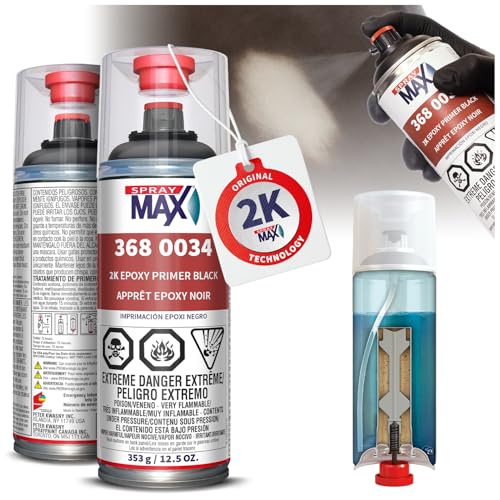
Similar to the gray version, the black option offers a 2K epoxy primer with strong adhesion and corrosion resistance. It provides a uniform base for topcoats and is suited for projects where a darker underbase is advantageous for color matching or finish aesthetics. Best for: coordinated color schemes and professional refinishing projects requiring robust corrosion resistance. Why selected: the black variant gives an alternative undercoat to accommodate different topcoat colors while retaining the same 2K epoxy benefits.
Caution: ensure proper ventilation and use appropriate spray equipment or technique to achieve even coverage on fiberglass surfaces.
Buying Guide: Key Considerations For Epoxy Primers On Fiberglass
- Surface preparation: Clean, dry, and free of wax or contaminants. Light scuffing with 320- to 400-grit sandpaper improves adhesion.
- Epoxy type: Two-part epoxy systems offer superior barrier properties and durability but require accurate mixing and longer setup times. One-part primers are easier to apply but may offer less build and blister resistance.
- Waterline vs. above waterline use: Some primers are formulated for above-waterline use, others for below-waterline, or both. Choose accordingly to your project location on the hull or surface.
- Topcoat compatibility: Verify compatibility with your intended topcoat (polyurethane, enamel, gelcoat repair products) to ensure optimal adhesion and curing.
- Color options: White and gray are common undercoats; darker primers can aid color matching or conceal imperfections in some topcoats.
- Safety and ventilation: Work in a well-ventilated area, wear PPE, and follow all label guidance for mixing ratios, pot life, and cure times.
- Curing time and conditions: Temperature and humidity affect cure rates. Plan work around recommended conditions to avoid pinholes or solvent entrapment.
Frequently Asked Questions
- What is epoxy barrier coat used for on fiberglass?
It creates a durable, moisture-resistant layer that protects against gelcoat blistering and provides a solid base for topcoats.
- Can I use automotive epoxy primers on boats?
Yes, some automotive 2K epoxy primers are suitable for marine use if they’re compatible with fiberglass and topcoats, but verify with product guidelines.
- Do I need a clear coat over epoxy primer?
Most marine primers are designed to be topcoated directly; a separate clear coat is not typically required unless specified by the topcoat manufacturer.
- Is it better to choose white or gray epoxy primer for fiberglass?
White is common and provides brightness for inspection; gray can be used to better see surface imperfections and is compatible with many topcoats.
- How long does epoxy primer take to cure on fiberglass?
Cure times vary by product and conditions; follow the product label for dry-to-touch and recoat windows. Temperature and humidity influence cure rate.
- Can I apply epoxy primer directly over old, weathered gelcoat?
Typically, old gelcoat should be inspected, repaired if needed, and abraded to promote adhesion; avoid applying over severely deteriorated surfaces without proper preparation.