Short answer: for clear, fire-resistant protection on porous materials like wood and fabric, choose products designed to form a transparent, protective barrier that meets Class A standards. This guide highlights five accessible options ideal for homes, cabins, workshops, and small businesses. Each product is described with its best-use scenarios, limitations, and who should consider it.
| Product | Best For | Notes |
|---|---|---|
| Master FX Master Flame Class A (Gallon) | Unfinished wood and absorbent fabrics | Clear, dry barrier; Class A; suitable for porous surfaces |
| Master FX Master Flame Class A (Quart) | Smaller projects or touch-ups | Similar to gallon, great for limited areas |
| Flamecheck M-111PA Fire Retardant Paint Additive (8 oz) | Latex paints and primers | Non-toxic; zero smoke and flame spread on non-flammable substrates |
| DRI-ONE Flame Retardant (5 Gallon) | Heavy-duty or large-volume projects | Clear, ready-to-use; no mixing; broad surface compatibility |
| INSL-X FR110099-01 INS-LX Fire Retardant Paint | Interior paints with low VOC | Slows fire spread and smoke; low odor |
Master FX Master Flame Class A Fire Retardant for Wood & Fabric – Gallon

This clear, dry fire-retardant spray forms a protective barrier on absorbent materials. It earned a Class I/A rating in SGS ASTM E84 testing, indicating strong performance against flame spread and smoke development on treated wood. Best for unfinished wood, paper, cotton, and porous fabrics. Not recommended for painted, sealed, or non-absorbent materials.
Who it’s best for: homeowners and small contractors working with untreated wood, fabric seating, or upholstery where visible finish is desired after treatment. Choose this if you need a ready-to-spray solution with a proven Class A result on porous substrates.
Limitation: not suitable for non-porous or sealed materials, which should be treated with alternative methods or coatings.
Master FX Master Flame Class A Fire Retardant for Wood & Fabric – Quart

This quart-size version mirrors the gallon’s fire-retardant capabilities, providing a clear barrier for smaller jobs on wood and fabric. It carries the same Class A performance and suitability for porous materials, with the advantage of easier handling for limited projects.
Who it’s best for: DIYers or professionals tackling smaller areas or restoration projects where a clear finish is required after treatment. Better for precise coverage on limited surfaces.
Limitation: volume may be insufficient for larger rooms or extensive wood-and-fabric installations.
Flamecheck M-111PA Fire Retardant Paint Additive (8 oz)
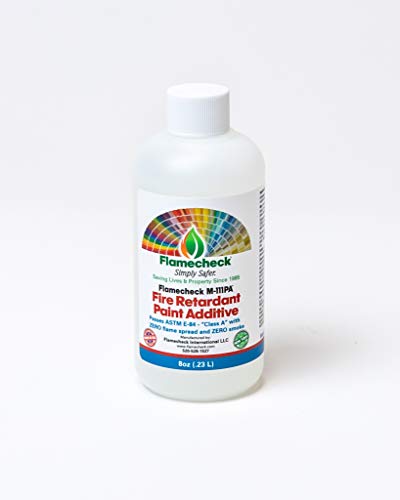
Flamecheck M-111PA is a non-toxic additive designed to be mixed into interior or exterior latex paints. It achieves fire-protective performance by enhancing the coating’s characteristics, and the product is tested with ASTM E-84 for reduced smoke and flame spread on compatible substrates. It’s ideal for DIY projects where you want to upgrade ordinary paint into a fire-resistant layer.
Who it’s best for: homeowners or small shops that prefer applying fire resistance through existing paint systems. Choose this for large wall surfaces using standard latex paints.
Limitation: requires proper mixing and compatibility checks with existing paints; not a standalone coating on its own.
DRI-ONE Fire Retardant (5 Gallon) – Liquid Spray

DRI-ONE Fire Retardant is presented as an established, government-recognized option with a long-standing reputation. The formula bonds with materials, dries clear, and is ready for paint or stain post-application. It emphasizes environmental safety from hazardous chemicals and is widely used in varied settings, including homes and commercial properties.
Who it’s best for: larger projects or facilities needing bulk quantities and a straightforward application process. This option suits projects where post-treatment finishing is planned.
Caution: ensure compatibility with target substrates and follow safety guidelines for broad-area use, as large volumes require careful handling and ventilation.
INSL-X FR110099-01 INS-LX Fire Retardant Paint

INS-LX FR110099-01 provides a high-performance, low-VOC fire retardant coating that slows both fire spread and smoke development. This product is designed for interior use and complements low-emission environments where air quality is a priority. It helps maintain visibility of surfaces while providing protection.
Who it’s best for: spaces requiring a low-VOC solution with fire-safety improvements on interior walls and surfaces. Opt for this when indoor air quality matters alongside fire protection.
Limitation: primarily intended for interior use; verify substrate compatibility and drying times for the project’s workflow.
Flamecheck M-111PA Fire Retardant Paint Additive (40 oz)

This larger 40-ounce bottle extends the same concept as the 8-ounce option, turning ordinary latex paints or primers into fire-resistant coatings. It’s designed for interior and exterior applications, enabling broader coverage per project. The mixing ratio remains straightforward: add 8 ounces per gallon for optimal performance.
Who it’s best for: households or contractors tackling more extensive painting projects who want predictable fire protection without changing the paint system’s base properties.
Limitation: ensure the substrate is compatible with the additive and that the final coating meets local fire-code requirements for the specific use area.
Buying Guide: Key Considerations for Clear Fire Retardants
- Material compatibility: porous vs. non-porous substrates determine which product to select. Clear fire retardants work best on unfinished wood, fabric, and absorbent surfaces.
- Fire-rating and standards: look for products with recognized ratings such as Class A and certifications like NFPA 701 or ASTM E84 for reliable performance data.
- Finish and aesthetics: some products stay clear and dry, while others may leave a noticeable film. For visible surfaces, prioritize clear, non-yellowing formulas.
- Application method: sprays, paints, and additives require different application tools. Consider project size and whether post-treatment coatings are planned.
- Ventilation and safety: follow label directions for ventilation, PPE, and cleanup since fire retardants can involve solvents or particulates.
- Durability and reapplication: some coatings plan for reapplication or re-treatment after cleaning or maintenance. Check recommended intervals.
- Environmental impact: prefer low-VOC formulas when indoor air quality is a concern. Verify certifications and safety data sheets (SDS).
FAQs
- What is a Class A fire retardant, and where should I use it? A Class A retardant reduces flame spread and smoke development on porous surfaces like wood and textiles, suitable for indoor and some outdoor areas depending on product.
- Can I apply fire retardant over painted wood? Some products are designed for unfinished or absorbent surfaces; avoid applying to sealed or non-porous finishes unless specified by the manufacturer.
- Are fire retardant additives the same as paints? Additives are mixed into existing paints to enhance fire resistance, while paints or sprays provide a standalone fire-resistant coating.
- Do fire retardants affect paint color or finish? Clear retardants aim to maintain the original appearance, but always test a small area to confirm appearance and adhesion.
- Is professional installation required for fire retardants? For large or high-risk areas, consult local codes and consider professional application to ensure proper coverage and compliance.
- Are these products safe for homes with kids and pets? Many options claim non-toxic formulations, but always follow label instructions, ventilation, and safety guidelines during and after application.