Looking to brighten brick without covering its texture? Whitewash paint for brick offers a light, airy look that preserves the masonry’s character. This guide highlights five strong options and explains who each is best for, plus practical buying considerations. Whether you’re updating a fireplace, a brick accent wall, or exterior brick, these picks balance coverage, odor, and ease of use. The featured choices cover DIY kits, traditional paint, and low-odor formulas to fit different projects and spaces.
Summary table of selected products
| Product | Brand | Best For | Notes |
|---|---|---|---|
| Brick Transformations Whitewash Paint (16 oz) | Giani | Small brick surfaces and fireplaces | Requires 1:2 water dilution for full coverage |
| Brick Transformations Whitewash Paint (200 sq ft) | Giani | Medium brick areas, walls, fireplaces | Follow dilution for large coverage |
| Brick Transformations Whitewashed Kit | Giani | Complete starter kits | All-in-one with tools and ratios |
| Rust-Oleum Whitewash Masonry Paint (Quart) | Rust-Oleum | Porous brick, stone, stucco | Self-priming, adjustable with dilution |
| BEHR Whitewash Oak Flat Masonry Paint | BEHR | Interior/exterior masonry with wood-like finish | Affordable option with practical tools |
Giani Brick Transformations Whitewash Paint for Brick and Fireplaces- 16 oz Pint

Best for small brick accents and fireplaces. This water-based acrylic paint is designed to be diluted at least 1:2 with water to achieve full coverage, reducing saturation while preserving texture. It is described as safe with low odor and low VOCs, making it suitable for indoor spaces with restricted ventilation. Coverage is around 100 sq. ft. per pint when properly diluted, making it ideal for targeted projects. Choose this if you want a straightforward, approachable whitewash with minimal prep.
Who it’s best for: DIYers tackling a single fireplace or a compact brick feature who want an easy, low-odor product with a clear dilution routine.
Limitations to consider: Requires precise water dilution to reach full coverage; miscalculations can affect film thickness and color evenness. Follow the included guidance for ratios and mixing to avoid inconsistent results.
Giani Brick Transformations Whitewash Paint for Brick Walls and Fireplaces

Best for medium-sized brick walls or interior fireplaces where a pale, even finish is desired. The product notes emphasize dilution with water to reach up to 200 sq. ft. of coverage, aligning with larger project needs than the pint option. This option provides a practical path for homeowners who want a uniform whitewashed look across a broader area while preserving brick texture. Its low-odor formula supports indoor use with minimal disruption.
Who it’s best for: Homeowners expanding a whitewashed look from a fireplace to a surrounding brick wall, seeking predictable coverage per kit guidelines.
Limitations to consider: Dilution instructions must be followed to achieve full stated coverage; ignoring the guidance may reduce coverage and color consistency across large surfaces.
Giani Brick Transformations Kit- Whitewashed
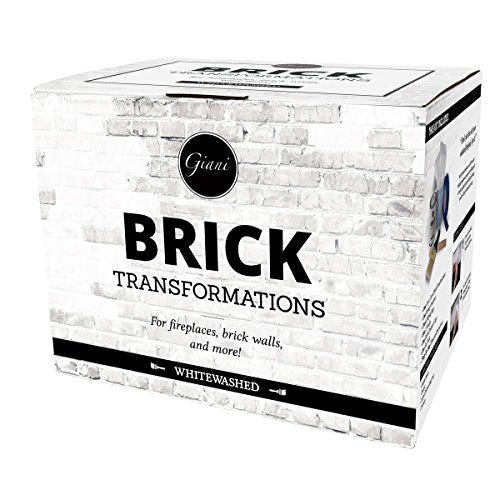
Best for complete starter projects and homeowners who want a turnkey approach. The Whitewashed Kit includes tools, mixing guidance, and everything needed to tackle a range of brick colors. It’s designed to simplify the process by providing pre-established paint-to-water ratios, reducing guesswork. This kit is suitable for fireplaces, brick walls, and interior accents where a cohesive, modern whitened appearance is desired.
Who it’s best for: First-time whitewashing projects where having all required tools in one package helps ensure consistent results.
Limitations to consider: The kit’s success depends on following the provided ratios; variance in brick porosity or color may affect final tone and coverage. Expect some practice on a test area before full application.
Rust-Oleum Whitewash Interior and Exterior Masonry Paint
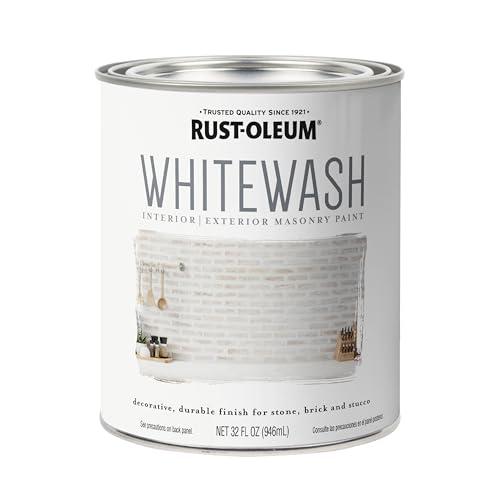
Best for porous surfaces where you want to brighten brick, stone, stucco, and wood while preserving texture. This Rust-Oleum formula is self-priming and self-sealing, offering a convenient, all-in-one solution. The product is described as customizable in coverage through water dilution, making it versatile for different project scales. It’s ideal for spaces where a durable, washable finish is preferred and where odor control is a consideration.
Who it’s best for: Project planners seeking a single-step finish that combines primer and sealer with flexible coverage options.
Limitations to consider: As with any whitewash, achieving ultra-light or uniform color may require careful testing on a hidden area, especially on highly textured brick.
Rust-Oleum Whitewash Interior and Exterior Masonry Paint (4 Pack)

Best for larger projects or multi-room applications where multiple cans are beneficial for consistency. This Quart, four-pack option mirrors the single-quart product’s self-priming, self-sealing properties while offering more coverage per project. Use when planning an interior and exterior whitewashed brick look across larger areas like a family room or a brick exterior feature. Dilution remains a key control for achievable coverage and tone.
BEHR Whitewash Oak Flat Masonry Paint

Best for an affordable option that provides a wood-inspired whitewash effect suitable for interior or exterior masonry. BEHR’s product line emphasizes practical tools and a straightforward finish, making it accessible for DIYers seeking a simple, durable whitewashed look. It supports a balanced approach to brick and other masonry surfaces and is well-suited for progressive projects where budget matters.
Buying Guide: Key Considerations For Whitewash On Brick
- Coverage versus color: Decide whether you want a light, natural texture or a more opaque whitewash. Dilution levels directly affect coverage and tone.
- Surface type: Porous brick, brick with stone, or fireplace brick may require different dilution and application methods. Always test on a small area first.
- Indoor versus outdoor use: Low-odor formulas are preferable indoors, while UV resistance matters for exterior brick.
- Tools and prep: Kits that include brushes, rollers, and mixing guidance simplify the process. Prep usually involves cleaning the surface and filling cracks.
- Durability and maintenance: Some products are designed to be permeant with masonry materials; others sit on the surface. Choose based on whether you want a permeating or a surface finish.
- Safety and ventilation: Wear appropriate PPE when applying coatings, even if formulations claim low VOCs. Work in a well-ventilated area.
Frequently Asked Questions
- What is whitewash paint for brick? – It is a diluted paint or coating designed to lighten brick while preserving its texture and character.
- Do I need a primer for brick whitewashing? – Some products are self-priming; others may benefit from a primer on very porous surfaces.
- How many coats are typically required? – Often 1–2 coats, but this depends on dilution and desired visibility of brick texture.
- Can whitewash be removed? – Light scrubbing with mild cleaners can remove some whitewash, but heavy alkali content may require more effort.
- Is whitewashing durable? – Durability varies by product; some are designed to penetrate slightly or bond with masonry, others form a finish layer that may wear over time.
- Is it better to buy a kit or individual products? – Kits simplify application with pre-mixed ratios and included tools, making them useful for beginners.