Answers for home buyers seeking clean, durable white bedroom paint. This guide highlights five top options that balance coverage, odor, drying time, and finish. Best for renters or frequent movers: easy-to-clean, quick-dry options. Best for allergy-aware spaces: low-odor formulas. Best for long-lasting walls: premium primers and one-coat finishes. Use the quick-reference table to compare core details at a glance.
| Product | Brand | Finish | Best For |
|---|---|---|---|
| Zinsser PERMA-WHITE | Zinsser | Eggshell | Moisture-prone rooms, mold resistance |
| Rust-Oleum Painter’s Touch | Rust-Oleum | Semi-Gloss | General spaces, easy-to-clean |
| DWIL White Wall Paint | DWIL | White (interior) | Low-odor, quick-dry interior walls |
| Rust-Oleum Latex Flat | Rust-Oleum | Flat | Hiding imperfections, wall touch-ups |
| PRESTIGE Interior/Primer In One | PRESTIGE | Flat/Satin (varies by product) | Premium finish, one-coat versatility |
Zinsser PERMA-WHITE Mold & Mildew Proof Interior Paint

Product features indicate a self-priming formula that requires no sanding and a mold & mildew-proof paint film, guaranteed for five years. This makes it a strong candidate for bedrooms with higher humidity or basement-adjacent rooms. Best for buyers seeking a low-effort, durable finish that resists dirt on the film coating. Caution: the product is an eggshell finish, which shows more texture than satin in brighter rooms.
Rust-Oleum Painter’s Touch Ultra Cover

This semi-gloss white paint is versatile for walls, trim, and furniture. It’s water-based, low odor, and designed to resist chips while providing long-lasting protection. It covers up to 120 square feet and dries to the touch quickly, making it suitable for faster bedroom refreshes. Best for: areas needing easier cleanup and a slightly reflective surface for brighter spaces. Limitation: semi-gloss shows more sheen and may highlight wall imperfections more than flat finishes.
White Paint for Wall 32 Oz (DWIL)
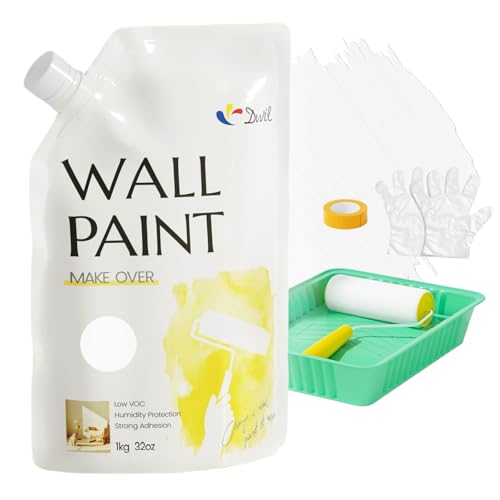
DWIL’s interior white wall paint claims excellent adhesion with no primer required, plus low odor and fast drying (24-hour surface dry, seven-day cure). It’s well-suited for renters or households wanting minimal prep and quick freshening. Best for: bedrooms needing a clean, durable surface with easy cleanup. Caution: long-term durability depends on room use and maintenance; recoats may be needed sooner in high-traffic areas.
Rust-Oleum Painter’s Touch Latex Flat White
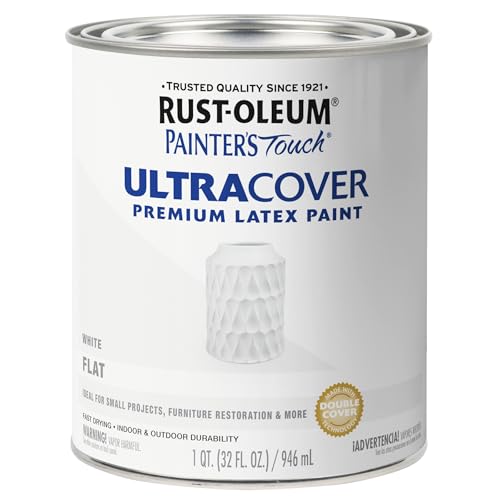
This flat white latex option covers up to 120 square feet and offers low-odor, water-based performance with good hiding power. Best for: achieving a smooth, non-reflective wall surface that hides minor wall flaws. Better for: bedrooms where a muted, matte appearance is preferred. Caution: flat finishes can show marks more readily and may require more frequent touch-ups in high-traffic areas.
PRESTIGE Paints Interior Paint And Primer In One
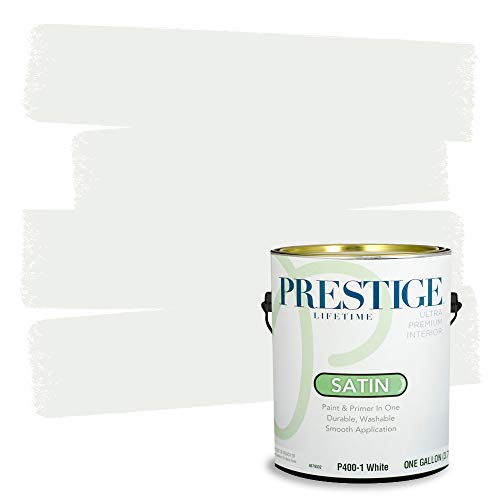
PRESTIGE offers an ultra-premium interior paint and primer in one, labeled as suitable for living rooms, bedrooms, and hallways with smooth application. Best for: buyers seeking a premium finish with simplified workflow. Limitation: higher price tier than standard paints and the exact finish may vary by bundle (satin vs flat). This product is chosen for its one-coat potential and refined appearance.
PRESTIGE Paints Interior/Primer In One, Flat White
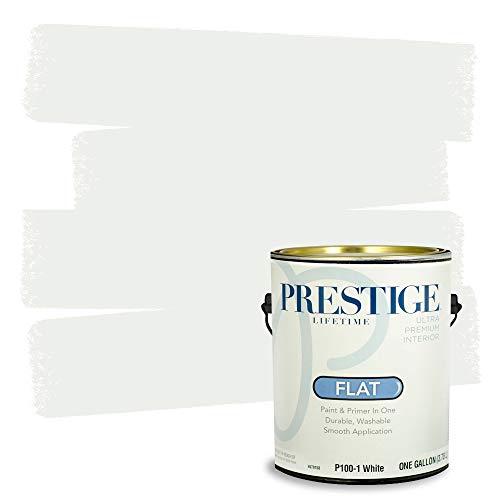
This variant combines interior paint with primer in one, advertised for bedrooms and other common living spaces with smooth application. Best for: buyers who want a simplified, durable finish with consistent coverage. Caution: flat finish may require more frequent touch-ups in bright rooms or spaces with direct sunlight, as it shows surface imperfections more readily.
Buying Guide: Key Purchase Considerations
Which finish should I choose for a bedroom? For a calm, reflective-prone space, consider a satin or eggshell finish, which balances light diffusion and ease of cleaning. Flat finishes hide wall flaws but show more marks; semigloss or satin finishes are easier to wipe down in light-colored bedrooms with kids or pets. If humidity is an issue, seek mold- and mildew-resistant formulas.
Do I need primer? Some products are self-priming, but for new walls or stain-prone surfaces, applying a primer improves adhesion and coverage. One-coat options can save time, but always verify whether the surface requires a second coat for even color and durability.
What about odor and drying time? Low-odor, low-VOC formulas are preferable for bedrooms to minimize disruption during painting. Quick-dry options help when you want to minimize furniture disruption, but ensure sufficient cure time before reoccupying the room.
How large is the space? Calculate wall area (length × height × number of walls) to estimate gallons needed. Most quart cans cover about 100–120 square feet per coat; larger rooms may need multiple quarts or gallons depending on number of coats and color differences.
What about cleanup and durability? Water-based acrylic and latex paints clean up with water and soap, offering durable finishes with minimal odor. For high-traffic rooms or children’s spaces, prioritize scrubbable finishes and durable formulas that resist chips and scuffs over time.
Frequently Asked Questions
- What finish is best for a bedroom? A satin or eggshell finish offers a balanced look with wipeable surfaces, suitable for bedrooms that require easy cleaning without a strong sheen.
- Is a primer necessary for white walls? Not always. Some products are self-priming, but priming can improve coverage and adhesion on problematic surfaces or fresh drywall.
- How long does it take to cure fully? Many interior paints dry to the touch within 30 minutes to a few hours, with full cure often taking several days to a week depending on humidity and temperature.
- Are low-odor paints safer for bedrooms? Yes, low-VOC formulas reduce odors during application and are generally better for indoor air quality.
- Can I use exterior paint inside? No; exterior paints are not designed for indoor environments and may be overly strong or emit strong odors and toxicity indoors.
- How many coats are typically required? Most interior walls require two coats for even color and durability, especially when repainting from a dark or contrasting shade.