If you’re choosing white paint for basement walls, the core goal is a durable, mold- and moisture-resistant finish that brightens a often-damp space. The best picks combine waterproofing or mold resistance with good coverage and easy cleanup. This guide highlights five top products suited for basements, explains who they’re best for, and why each is worth considering. Ideal buyers include DIY homeowners updating a concrete or masonry basement, landlords seeking low-maintenance walls, and those who want fast-drying coatings with minimal prep.
Summary table of recommended products
| Product | Best For | Key Benefit |
|---|---|---|
| Zinsser PERMA-WHITE Mold & Mildew-Proof Interior Paint | Mold-prone basements | Mold and mildew-proof film with self-priming formula |
| KILZ Basement and Masonry Waterproofing Paint | Very damp areas | Waterproofing protection with nanotechnology |
| INSL-X WaterBlock Acrylic Masonry Paint | Sealing concrete walls | Water-based, high alkali resistance |
| KILZ Self-Priming Masonry, Stucco and Brick Paint | All masonry surfaces | Self-priming with excellent adhesion |
| Zinsser White WaterTite-LX Mold & Mildew-Proof | Dry, bright interiors | Strong water resistance with a smooth finish |
Zinsser PERMA-WHITE Mold & Mildew-Proof Interior Paint

Zinsser PERMA-WHITE is a self-priming interior paint designed to resist mold and mildew. The formula forms a protective film that guards against moisture-related staining, with a durable, washable eggshell finish. This option is best for basements where you want fewer prep steps and a lighter, cleanable surface. It is suitable for concrete or masonry walls that are not actively leaking, and it helps reduce recurring mold concerns on treated walls.
Who it’s best for: Homeowners seeking a low-effort, mildew-resistant white finish for damp basement walls. Why selected: The self-priming feature reduces steps and accelerates project timelines, while the mold- and mildew-proof film provides ongoing protection for humid environments.
Caution: This product is designed for interior use; if your basement experiences active water intrusion, pairing with a dedicated waterproofing system is advised.
KILZ Basement and Masonry Waterproofing Paint

This coating uses advanced nanotechnology to create a strong water barrier, blocking up to 12 PSI of water pressure. It’s designed for both interior and exterior masonry, making it highly versatile for basement walls, concrete, brick, or cinder blocks. It’s not recommended for floors or walls with active leaks. The product is alkali resistant and durable, helping walls hold up in high-moisture basements.
Who it’s best for: Builders or DIYers facing persistent moisture who want a robust waterproofing finish. Why selected: The nanotechnology-driven barrier helps prevent water infiltration, offering a longer-lasting defense in damp basements.
Caution: For below-grade applications, preparatory steps like filling holes with hydraulic cement are advised, and do not use on areas with ongoing leaks without additional waterproofing measures.
INSL-X WaterBlock Acrylic Masonry Paint
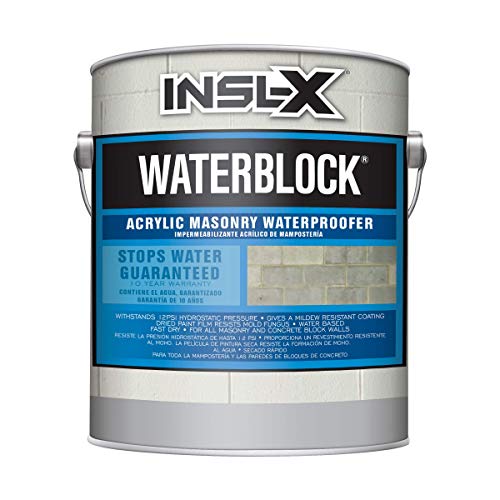
INSL-X WaterBlock is a water-based coating designed for interior and exterior masonry walls. It seals vertical surfaces such as basement walls, foundations, and retaining walls. The paint dries quickly and provides high alkali resistance up to pH 13, making it suitable for masonry with high alkalinity. This is a good option when you need a breathable, water-sealing finish that’s easy to apply and clean up.
Who it’s best for: Homeowners wanting a fast-drying, high-alkali-resistant paint for basement walls. Why selected: It combines sealing properties with strong alkali resistance, helping walls resist moisture-driven deterioration.
Caution: As with most water-based masonry paints, ensure proper surface preparation and sealing of obvious leaks before application for best results.
KILZ Self-Priming Masonry, Stucco and Brick Paint

This acrylic latex water-based paint is designed for interior and exterior masonry and provides excellent hiding, adhesion, and water repellency on textured surfaces. It’s alkali-resistant up to pH 12 and can be rolled, brushed, or sprayed. It’s ideal for basements where you want reliable coverage on concrete or hard-to-paint masonry walls with minimal priming required.
Who it’s best for: Those who want a single-coat look on various masonry textures without heavy prep. Why selected: Self-priming capability simplifies the process and reduces labor while delivering solid coverage in basement environments.
Caution: It’s best applied on properly prepared, clean surfaces; heavily peeling or salt-affected walls may need additional prep or a dedicated primer.
Rust-Oleum Advanced Dry Door & Trim Paint

Rust-Oleum Advanced Dry is a water-based formula designed for doors, trim, and similar surfaces. It dries quickly and emits less odor, with good fade resistance. While not a dedicated basement wall paint, it can be used for finishing trim or accents in a basement with white, bright finishes. Use this for contrast or targeted touch-ups on doors and trim in damp basements.
Who it’s best for: Homeowners finishing trim or doors in a basement to achieve a clean, bright look. Why selected: Fast drying and low odor make it a convenient companion to wall coatings in tight basement projects.
Caution: Not intended as the primary wall coating for damp masonry; pair with a wall-specific paint for full wall coverage.
Buying Guide: White Basement Wall Paint Considerations
- Moisture management: For actively damp basements, consider waterproofing paints (KILZ Basement, INSL-X WaterBlock) in addition to mold- and mildew-resistant finishes (Zinsser PERMA-WHITE, WaterTite-LX) to reduce ongoing moisture risk.
- Wall surface type: Concrete, masonry, stucco, and brick each respond differently. Self-priming options simplify prep but verify compatibility with your surface texture and porosity.
- Finish and maintenance: Eggshell or satin finishes are common in basements for washability. Matte or flat finishes tend to hide surface imperfections but may be harder to clean.
- Alkali resistance: Basements often have high alkalinity; choose paints with alkali resistance (pH up to 12–13) to prevent blushing or staining.
- Application and cure time: Fast-drying formulas allow quicker projects. For large walls, choose a paint with good coverage and a reasonable recoat window to keep work efficient.
- Longevity vs. prep: If walls show cracks or leaks, address underlying moisture issues first. Waterproofing paints work best when used alongside proper structural and drainage improvements.
- Environmental and odor considerations: Water-based formulas generally emit less odor and are easier to clean up, which can be beneficial for basements used as living space.
Frequently Asked Questions
What is the best white paint for a damp basement?
Look for a white paint with mold- and mildew-proof properties or a dedicated waterproofing paint such as Zinsser PERMA-WHITE or KILZ Basement and Masonry Waterproofing Paint.
Should I primer my basement walls before painting?
Many basement paints are self-priming, but heavily damaged, stained, or very porous surfaces may benefit from a primer to improve adhesion and coverage.
Is it okay to paint directly over concrete?
Yes, provided the concrete is clean, dry, and free of active moisture leaks. For damp walls, consider a water-blocking or waterproofing paint for better long-term results.
How long does basement paint typically take to dry?
Most water-based paints dry to the touch within 30 minutes to a few hours, depending on humidity and temperature. Full cure takes longer and may require 24 hours or more.
Can I use exterior paint on basement walls?
Exterior-grade paints can be used on interior basement walls in some cases, but they may be overly robust or have odor not suited for living spaces. Prefer interior masonry paints designed for damp basements.
What if my basement has active water leaks?
Active leaks require moisture management first. Use a waterproofing system or repair leaks before applying wall coatings designed for damp environments.