The best wet and dry sanding paper depends on the grit range and sheet format your project needs. BAISDY is best for fine-to-ultrafine finishing, Atosun offers the broadest listed grit range, Shineboc is a compact option for common sanding stages, BMOTL suits coarse-to-medium material removal, and Pihemum covers a wide range from shaping to polishing.
| Product | Best For | Grit Range | Sheets |
|---|---|---|---|
| BAISDY Wet Dry Sandpaper | Fine finishing and polishing | 400–3000 | 45 |
| Atosun Premium Wet Dry Sandpaper | Broad grit selection | 120–5000 | 45 |
| Shineboc Sandpaper Assortment | Basic coarse-to-fine projects | 120–2000 | 21 |
| BMOTL Wet Dry Sandpaper Sheets | Material removal and surface prep | 80–400 | 12 |
| Pihemum Wet Dry Sandpaper | Shaping through finish polishing | 80–5000 | 45 |
BAISDY Fine-Grit Wet Dry Sandpaper
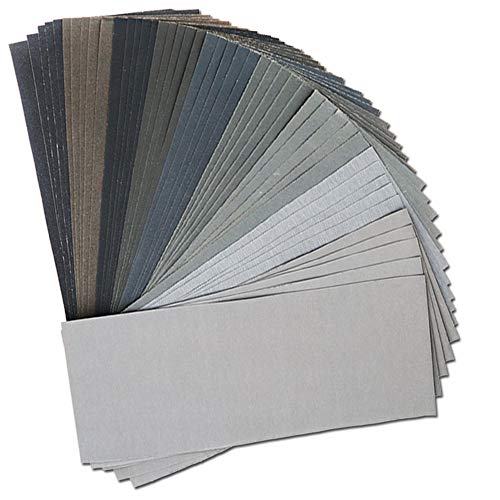
BAISDY is best for buyers who need a substantial selection of fine and superfine grits for polishing, finishing, and detail sanding. The 45-sheet assortment includes five sheets each of 400, 600, 800, 1000, 1200, 1500, 2000, 2500, and 3000 grit. Its listed uses include automotive work, metal polishing, clay sanding, woodworking, and furniture finishing.
Each silicon carbide sheet measures 9 by 3.6 inches and can be cut or folded to fit a work area or crevice. The progression from 400 through 3000 makes this set especially suitable when a project requires several finer sanding steps.
- Best for: Fine finishing and polishing across several materials.
- Why it stands out: Five sheets are included for each of nine grits.
- Limitation: The assortment starts at 400 grit, so it is not the best choice for coarse stock removal or stripping.
Atosun Broad-Range Wet Dry Sandpaper

Atosun is best for buyers who want one sheet assortment spanning rougher sanding and very fine polishing. It includes 45 sheets across 15 grits: 120, 150, 180, 240, 320, 400, 600, 800, 1000, 1200, 1500, 2000, 2500, 3000, and 5000. There are three sheets per grit.
The sheets are made from waterproof silicon carbide and are described as electro-coated. The manufacturer lists the paper for both wet and dry use, as well as wood furniture finishing, metal sanding, and automotive polishing. Its 9-by-3.6-inch sheet size is useful for hand sanding and can be trimmed for smaller work areas.
- Best for: DIYers who need a wide grit progression in one pack.
- Why it stands out: The selection runs from 120 to 5000 grit and includes wet-or-dry use.
- Limitation: Three sheets per grit may be less convenient when one grit is used much more heavily than others.
Shineboc Seven-Grit Sandpaper Assortment

Shineboc is best for projects that need a smaller, straightforward selection rather than a very large grit range. The 21-sheet pack contains three sheets each of 120, 220, 400, 600, 800, 1000, and 2000 grit. The 9-by-3.6-inch sheets are made with silicon carbide and are listed for both wet and dry sanding.
The grit choices cover rougher sanding through fine finishing, with larger jumps between some stages than assortments containing more grit options. The product description says wet sanding can help reduce scratches and dust, while dry sanding supports faster material removal and convenience.
- Best for: General-purpose projects using a limited set of common grits.
- Why it stands out: It offers seven stages in a manageable 21-sheet pack.
- Limitation: It does not include grits below 120 or above 2000, so it is less suited to very coarse removal or ultra-fine polishing.
BMOTL Coarse-To-Medium Sandpaper Sheets

BMOTL is best for buyers focused on material removal, leveling, and intermediate surface preparation. This 12-sheet assortment includes two sheets each of 80, 120, 180, 220, 320, and 400 grit. The silicon carbide sheets measure 9 by 11 inches and can be cut into quarter, third, or half sheets to fit a sanding block or tool.
The listed applications include woodworking, metalworking, crafts, removing coatings, and preparing surfaces for priming or final finishing. The product description says dry use supports faster cutting, while wet use helps prevent grit from clogging and cools the work surface.
- Best for: Stripping, leveling, and preparing wood or metal before finer sanding.
- Why it stands out: The large sheets can be cut to suit different hand-sanding setups.
- Limitation: The assortment stops at 400 grit, so a separate finer paper may be needed for polishing or a smooth final finish.
Pihemum 80-To-5000 Grit Sandpaper

Pihemum is best for buyers who want a wide range covering coarse shaping through fine polishing. The pack contains 45 sheets across 15 grit values: 80, 120, 180, 240, 320, 400, 600, 800, 1000, 1200, 1500, 2000, 2500, 3000, and 5000. The listing specifies three sheets per grit.
Its silicon carbide abrasive is described as electro-coated, waterproof, and tear-resistant. The sheets are intended for wet or dry sanding. According to the product details, wet sanding can reduce dust and scratches, while dry sanding is intended for faster material removal.
- Best for: Buyers who want both coarse and very fine grits in one assortment.
- Why it stands out: Its 80-to-5000 range covers many stages without limiting the set to finishing or rough sanding.
- Limitation: Three sheets per grit may not be enough for a project that consumes one particular grit quickly.
Buying Guide: How to Choose Wet and Dry Sanding Paper
What grit range does your project need?
Grit number indicates how coarse or fine the abrasive is. Lower numbers generally cut more aggressively, while higher numbers are used for finer smoothing and polishing. A project that starts with rough material removal may need lower grits, followed by progressively finer paper. A polishing task may begin at a higher grit if the surface is already smooth.
Choose an assortment based on the work you actually plan to do. BMOTL focuses on 80–400 grit for removal and preparation. BAISDY starts at 400 and is aimed more at fine finishing. Atosun and Pihemum span both ends of the range, while Shineboc covers a shorter progression.
Should you choose wet sanding or dry sanding?
Wet sanding uses water during sanding. The product descriptions for these papers associate wet use with reduced dust, fewer scratches, cooling, or less clogging, depending on the product. Follow the project’s material and finishing requirements before adding water, since not every surface or coating should be sanded wet.
Dry sanding is typically selected when convenience or faster material removal is important. It can create more airborne dust than wet sanding. Use suitable dust control and protective equipment for the material being worked, and keep the work area clean.
How many sheets and grits are useful?
A pack with many grit levels can reduce the need to buy separate assortments, but it may provide only a few sheets of each grit. Atosun and Pihemum each list three sheets per grit across 15 grits. BAISDY provides five sheets per grit across nine grits. Shineboc offers three sheets each of seven grits, while BMOTL includes two sheets each of six grits.
Consider whether you need range or quantity at specific stages. A broad range is useful when a job moves from rough sanding to polishing. More sheets in a narrower range can make sense when repeated work uses the same few grit levels.
Does sheet size matter?
Smaller sheets, such as the 9-by-3.6-inch formats listed for BAISDY, Atosun, and Shineboc, are convenient for hand work and can be cut or folded for smaller areas. BMOTL’s 9-by-11-inch sheets offer more material to cut into different sizes. Check the dimensions and intended tool setup before choosing; the supplied product information does not state that every sheet fits every sanding tool.
Which abrasive material should you look for?
All five selected assortments are described as silicon carbide paper. For these listings, check whether the sheets are identified as waterproof and whether wet and dry use is specified. Construction details can help compare products, but the listed features do not establish that a sheet is suitable for every material, coating, or machine.
How should you move between grits?
Use a progression that removes the marks left by the previous sanding stage before moving to a finer grit. Skipping too many stages can leave deeper scratches visible beneath a smoother finish. Clear away sanding residue and inspect the surface between grits. The appropriate progression depends on the starting condition, material, and desired finish.
Frequently Asked Questions
What is wet and dry sandpaper used for?
Wet and dry sandpaper is designed for sanding with water or for dry sanding, when the product listing specifies both uses. These assortments list applications including wood finishing, metal sanding, automotive polishing, crafts, and surface preparation. Choose a grit and method appropriate for the workpiece.
Is higher-grit sandpaper finer?
Yes. In general, a higher grit number indicates a finer abrasive. Lower grits remove material more aggressively, while high grits are used for smoothing and polishing.
Which assortment is best for coarse sanding?
BMOTL is the most focused option among these picks for coarse-to-medium work because it includes 80, 120, and 180 grit, along with grits through 400. Pihemum also starts at 80 grit but includes finer options up to 5000.
Which set has the highest listed grit?
Atosun and Pihemum both list 5000 grit. BAISDY reaches 3000, Shineboc reaches 2000, and BMOTL reaches 400.
Can wet and dry sandpaper be cut to size?
Some sheets can be cut to fit a work area or hand-sanding setup. BAISDY says its sheets can be cut or folded, and BMOTL states that its larger sheets can be cut into quarter, third, or half sheets. Check the product dimensions before planning a particular tool arrangement.
How do I avoid visible scratches after sanding?
Use an appropriate grit progression, remove residue between stages, and inspect the surface before moving to finer paper. If scratches remain, return to a grit that can remove them and continue with smaller steps. Wet sanding may help reduce scratches according to the product descriptions, but the right method depends on the material and finish.


