Answering the common question “which waterproof sealant is best for plywood?” this guide highlights five reliable options that work well on exterior and interior plywood surfaces. Each product is suited to different needs, from quick-dry basics to UV-stable marine applications. This overview targets DIYers, homeowners with exterior decks, and gardeners using plywood in raised beds or outdoor projects. Use the quick comparison table below to narrow your choices before diving into detailed product notes.
| Product | Best For | Key Benefit |
|---|---|---|
| Thompson’s WaterSeal Clear Wood Sealer | General outdoor plywood and surfaces | Dries clear; helps prevent water damage |
| SEAL-ONCE Marine Penetrating Wood Sealer | Outdoor decks, docks, and marine environments | UV-stable, water-repellent protection |
| TUFINEIN Waterproof Sealant 70oz | Indoor/outdoor roofs, walls, and gardens | Clear, water-based, multi-surface |
| OLYMPIC WaterGuard Exterior Sealer | New or weathered wood | Ready-to-use spray for fast coverage |
| Gorilla 100% Silicone Caulk | Caulking gaps and seams | 100% silicone for durable moisture barrier |
Thompson’s WaterSeal Clear Wood Sealer
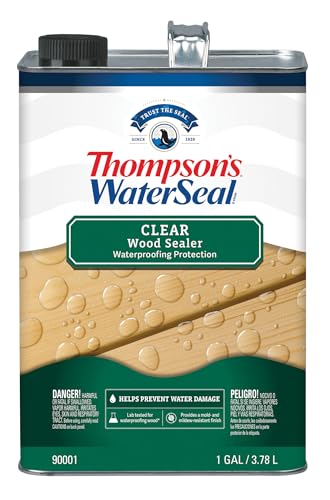
Features: Helps Prevent Water Damage, Helps Maintain Natural Color-Dries Clear, Use as a wood sealer, brick sealer, or for concrete waterproofing.
Best for: DIYers protecting newly installed or weathered plywood used in exterior projects like sheds, fences, or paneling. The clear finish preserves the wood’s natural color while adding a water barrier. Choose this if you want a straightforward, all-purpose sealant with clear drying.
Limitation: This product is a general-purpose sealer and may not offer the same UV or saltwater resistance as marine-grade formulas for coastal environments. Consider a marine or UV-stable option for long-term outdoor exposure near saltwater.
SEAL-ONCE Marine Penetrating Wood Sealer

Features: MARINE SEALANT with UV-stable coating, protection against elements and water damage. Safe for outdoor decks, thermally modified wood, and boat docks. Water-based, ultra-low VOC with color maintenance in mind. Not intended for hardwoods like ipe or teak.
Best for: Exterior plywood used on docks, seawalls, or decks near water where constant moisture is a concern. It’s a strong pick for projects near saltwater or frequent rain, while keeping color retention. Avoid if working with certain dense hardwoods.
Limitation: Not suitable for all hardwood species; verify wood type before application to ensure compatibility and finish.
Waterproof Sealant 70oz Clear, TUFINEIN

Features: Waterproof Glue Clear Material—water-based coating; semi-transparent before use and transparent after curing. Suitable for wood, indoor/outdoor concrete, brick, metal, and ceramics. Forms a dense waterproof coating and resists temperature changes.
Best for: Projects requiring a durable, invisible seal on plywood in gardens, roofs, or walls. Good for mixed-material sites where a clear, flexible barrier is desired. Better for larger, multi-surface applications than single wood touch-ups.
Limitation: As a multi-surface sealant, performance can vary by substrate. For high-traffic exterior wood decks, a dedicated wood sealer with UV protection might be preferred.
OLYMPIC WaterGuard Exterior Sealer

Features: Ready to use clear sealant and waterproofer, ideal for new or weathered wood. Durable, waterproofing protection for exterior wood surfaces.
Best for: Quick, spray-on protection for exterior plywood on fencing, sheds, or small outdoor structures. Choose this for fast coverage on large flat surfaces. Limitation: Spray applications may require masking and correct technique to avoid runs on vertical surfaces.
Gorilla 100% Silicone Caulk

Features: Waterproof sealant using 100% silicone; cures to seal out air, water, and moisture. Indoor/outdoor use with quick exposure to water after curing.
Best for: Sealing gaps and joints in plywood installations or panel edges where a flexible, long-lasting moisture barrier is needed. Choose this if you need a durable caulk for seams rather than a broad surface coat. Limitation: Silicone caulks can be more challenging to apply neatly in tight joints and may require tool smoothing.
Buying Guide: Key Considerations For Plywood Sealants
- Purpose and environment: Outdoor plywood benefits from UV stability and water resistance; indoor plywood may need low odor and low VOC, with sufficient expansion and contraction tolerance.
- Wood type and surface: Consider whether your plywood is new, weathered, or used in high-moisture areas (basements, docks) to pick the right formula (clear sealer, penetrating sealer, or caulk).
- Film vs. penetrating sealers: Film-forming sealers create a surface barrier; penetrating sealers soak into fibers for long-term protection without changing texture or color.
- VOC and safety: For indoor projects or edible-garden applications, prioritize low-VOC or FDA-compliant, plant-based options when possible.
- Finish and color: If you prefer a clear finish that preserves wood color, choose a clear sealer. For color enhancement, select a product that adds or maintains tint while sealing.
- Application method: Sprays offer quick coverage; brushes provide control for joints; dips and penetration methods suit complex shapes or multiple boards.
- Cure time and recoat window: Check curing times and whether a second coat is recommended for full protection or UV resilience.
Frequently Asked Questions
- Can I use any wood sealer on plywood? Most sealers work on plywood, but for outdoor plywood near water, marine-grade or UV-stable options are better.
- Is a silicone caulk good for plywood seams? Yes, silicone caulk is durable for joints and gaps, but it should be used where flexibility and moisture sealing are needed, not as a full wood surface coating.
- Do I need a sealant for interior plywood? If the plywood is in a dry indoor area, a clear sealant can protect against minor humidity and spills; assess if a primer is needed first.
- How soon can I expose sealed plywood to moisture? Cure times depend on the product; follow manufacturer guidance for safe moisture exposure after application.
- Are low-VOC options as effective as traditional sealants? Yes, many low-VOC sealants provide comparable water resistance and durability when used as directed.
- Can I seal plywood with multiple products? In some cases, layering products (e.g., a penetrating sealer followed by a surface sealer) can improve protection, but always test compatibility first.