Looking for a reliable waterproof coating to protect basement walls from moisture and leaks? This guide highlights five top options, explaining who each is best for and why. Ideal buyers include DIY homeowners tackling basement leaks, property managers sealing foundations, and builders needing flexible, durable membranes. Below is a quick summary of the chosen products.
| Product | Best For | Key Benefit |
|---|---|---|
| Waterproof Sealant 70oz Clear — TUFINEIN | Indoor/outdoor applications | Water-based, transparent membrane |
| Ames Block & Wall Liquid Rubber | Basements & foundations | Heavy-duty, white finish, multipurpose |
| Liquid Rubber Basement & Foundation Sealant | Active leaks | 90%+ elongation, flexible |
| Transparent Waterproof Coating — TUFINEIN 35oz | Thin gaps & cracks | Clear, self-leveling |
| Rubber Liquid Waterproof Sealant — Tufinein 53oz | General waterproofing | Fast-drying, flexible |
Waterproof Sealant 70oz Clear By Tufinein

Product overview: This water-based coating forms a dense, transparent waterproof membrane after curing. It is suitable for walls, roofs, basements, and other indoor/outdoor areas. It adheres to wood, concrete, brick, metal, and ceramics, providing an insulating seal against air and moisture. Best for DIY projects and light commercial sealing where a clear finish is preferred.
Who it’s best for: Homeowners sealing small-to-medium basement sections, sheds, or terraces where a visible yet clear seal is desired. It’s also suitable for indoor walls where aesthetics matter. Caution: may require reapplication if subjected to heavy traffic or dynamic structural movement.
Why selected: It offers a clear, water-based solution with a durable membrane and broad substrate compatibility, making it suitable for mixed indoor/outdoor basement areas.
Ames Block & Wall Liquid Rubber
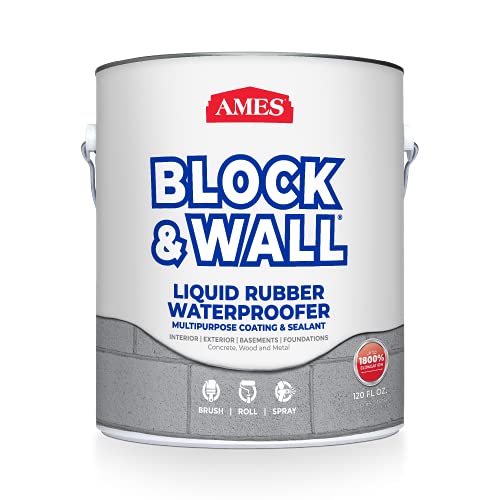
Product overview: This white, multi-purpose coating is designed for concrete sealing and basement foundation protection. It provides a durable barrier that helps prevent moisture intrusion. It’s often used where a white finish is acceptable or preferred for subsequent coatings or paint.
Who it’s best for: Builders and property managers seeking a robust baseline sealant for basements and foundations, especially where a white appearance is acceptable. Caution: listed as a general coating; verify compatibility with any existing coatings or primers before application.
Why selected: It brings a professional-grade option widely used for foundation sealing with straightforward application and foundational performance for basement waterproofing.
Liquid Rubber Basement & Foundation Sealant

Product overview: A flexible liquid rubber coating that creates a permanent waterproof membrane for basements, foundations, and related areas. It accommodates self-leveling concrete applications and adheres well to multiple substrates, offering high elongation to absorb movement and temperature changes.
Who it’s best for: Homeowners addressing active leaks or planning a complete basement waterproofing membrane with ongoing flexibility. Caution: not ideal for high-traffic walking surfaces due to possible surface tackiness when cured.
Why selected: It provides an all-weather, flexible solution that can bridge gaps and cracks while remaining adaptable to temperature shifts, making it a strong baseline option for foundation protection.
Transparent Waterproof Coating — TUFINEIN 35oz

Product overview: A clear, water-based sealant that cures into a transparent membrane, providing long-lasting resistance to air, water, and moisture. It self-levels to fill small gaps and cracks while preserving surface aesthetics, suitable for outdoor and indoor use.
Who it’s best for: DIY enthusiasts and professionals needing a barely-there finish with strong leak protection on walls, roofs, and garden structures. Caution: check for surface texture compatibility before large-scale use.
Why selected: Its combination of invisibility, film formation, and crack-filling capability makes it attractive for projects where appearance matters alongside performance.
Transparent Waterproof Sealant — LISRUX 141 Oz

Product overview: An invisible, water-based sealant that leaves no surface texture change. It forms a resilient barrier with good adhesion, resisting deformation and maintaining a smooth finish over time. It is designed to fill gaps up to 2mm with self-leveling properties.
Who it’s best for: Those who want a clear sealant with strong adhesion and low-surface impact for kitchens, bathrooms, roofs, or basements. Caution: ensure substrate compatibility for larger gaps or wider cracks beyond 2mm.
Why selected: It emphasizes long-lasting protection with a focus on surface aesthetics, making it suitable for visible interior spaces where a transparent coat is preferred.
Xmntdo Invisible Waterproof Agent

Product overview: This transparent repair coating offers strong adhesion to cracks, seams, and leaks, delivering lasting water-repellent protection. It is designed for uncoated or unpainted surfaces and provides a clear finish that won’t alter appearance.
Who it’s best for: Home users repairing small leaks in walls, roofs, or window sills where an invisible sealant is desired. Caution: best for cracks up to a few millimeters; larger structural faults require additional assessment.
Why selected: Its emphasis on strong adhesion and easy application makes it a practical option for quick basement patchwork and leak prevention without changing surface texture.
Buying Guide: Key Considerations for Basement Wall Waterproofing
What substrate will you seal? Concrete, brick, wood, and metal each have different adhesion needs. Verify compatibility with existing coatings or primers before application.
Is a clear or opaque finish preferred? Clear coatings preserve surface aesthetics, especially in living spaces, while white or tinted finishes can reflect lighting and offer different appearances.
What level of flexibility is required? Basements experience movement and temperature changes. Choose products with high elongation and crack-bridging capabilities to minimize future leaks.
Do you need interior or exterior performance? Some coatings perform best indoors, while others excel outdoors or in damp basements. Consider exposure to moisture, humidity, and temperature ranges.
How thick should the film be? Self-leveling and gap-filling properties help ensure a continuous barrier, but very large gaps may require multiple coats or a primer.
Is safety or odor a concern? Water-based products generally have lower VOCs and milder odors, but always follow ventilation and curing guidance from the label.
FAQ
- Can these coatings be used on concrete basement walls? Yes, many listed products are designed for concrete and foundation surfaces, offering waterproof membranes and crack filling.
- Are clear coatings better for aesthetics? Clear coatings preserve the surface appearance, making them suitable for visible basements and interior walls.
- Do these sealants cure quickly? Cure times vary by product; most form a film within hours and reach full cure over days, depending on temperature and humidity.
- Will they fill large cracks? Most sealants focus on small gaps up to a few millimeters; very large cracks may need specialized repair materials or professional assessment.
- Can I apply these indoors and outdoors? Many products are formulated for both indoor and outdoor use, but check the label for specific surface and environmental conditions.
- Do these products require primers? Some projects benefit from primers to improve adhesion, especially on porous or previously painted surfaces.