When choosing a water seal paint for concrete, focus on a durable barrier that blocks moisture while staying true to the surface’s look. This guide highlights five Amazon-listed products that are well-suited for concrete, masonry, and outdoor surfaces. The best fit depends on your project: basement walls, patios, driveways, or decorative concrete will each have different needs for penetration, finish, and longevity. The table below summarizes the key options at a glance.
| Product | Best For | Finish / Type | Notes |
|---|---|---|---|
| Thompson’s WaterSeal Multi-Surface Waterproof Stain | Exterior concrete, brick, and wood surfaces | Clear stain/sealer | Fade-resistant, enhances natural texture |
| KILZ Basement and Masonry Waterproofing Paint | Interior/exterior concrete and masonry walls | White waterproofing paint with nanotechnology | Blocks water pressure up to 12 PSI |
| Rain Guard Concrete Sealer | All concrete surfaces needing deep penetration | Silane/Siloxane penetrating sealer | Deep protection against water and salt damage |
| YKF Transparent Waterproof Sealant | Small repairs on concrete, walls, roofs | Clear water-based sealant | Seals small cracks and gaps with a transparent film |
| Rain Guard Paint Sealer | Painted concrete and other surfaces | Acrylic waterproofer with semi-satin finish | Low odor; clear semi-satin look |
Note: Always follow manufacturer directions for surface prep, curing times, and ventilation. For damp or actively leaking areas, select products designed for waterproofing rather than only surface protection.
Thompson’s WaterSeal Multi-Surface Stain
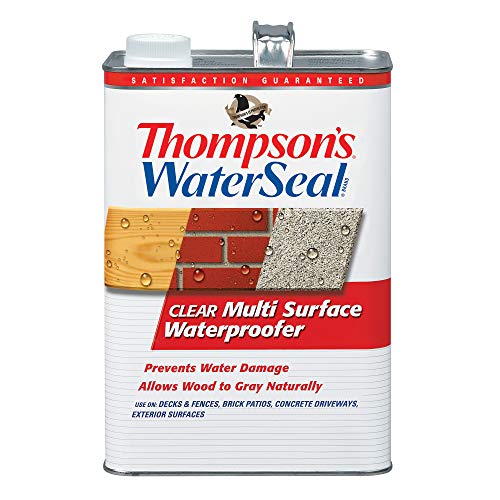
This product is best for outdoor concrete that needs weather protection while preserving a natural look. It waterproofs while allowing the texture to show through the clear finish. It’s fade resistant, thanks to advanced polymers that guard against UV damage. Choose this if you want a clear coating that enhances the surface without altering color dramatically. A limitation is that it is a stain and sealer, so it may not offer the deep penetration of penetrating sealers on very porous or actively damp concrete.
TUFINEIN Rubber Liquid Waterproof Sealant

Best for flexible, rubber-based waterproofing on small cracks and gaps across multiple surfaces, including concrete. This product forms a flexible film once cured, offering lasting waterproof protection in varied temperatures. It’s not ideal for walking surfaces due to tackiness when cured. Use this if you need a flexible seal that can accommodate substrate movement and minor expansion, especially on roofs or vertical concrete walls.
YKF Transparent Waterproof Sealant

This clear, water-based sealant is designed for small repairs and visible surfaces. It cures into a dense protective membrane that blocks water, air, and moisture while preserving the look of the substrate. It’s best for areas where you want a transparent finish without changing appearance—great for decorative concrete edges and repair spots around tiles or window sills. A potential limitation is that it’s best suited for smaller repairs rather than large-scale sealing.
KILZ Basement and Masonry Waterproofing Paint

This product uses nanotechnology to create a strong water barrier on concrete and masonry. It is suitable for both interior and exterior use, making it versatile for basement walls and outdoor masonry. It blocks water pressure up to 12 PSI, which is helpful for areas with moderate moisture intrusion. It’s best for projects where a solid paint film is preferred to resist moisture buildup, though it should not be used where active leaks are present or on floors.
Rain Guard Paint Sealer
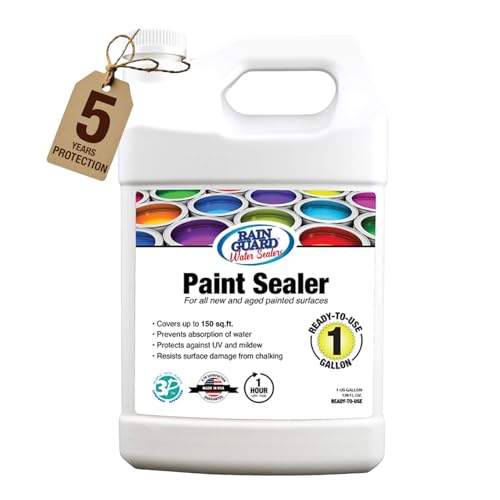
Best for painted concrete and similar surfaces, this silane/siloxane acrylic sealer provides a clear semi-satin finish and low odor. It’s designed to protect painted surfaces from moisture and wear while maintaining a neat appearance. Choose this if your project involves painted concrete that needs ongoing water repellence without a heavy new coating. A caveat is that some surfaces may require reapplication as the finish wears over time.
Rain Guard Concrete Sealer

Best for deep protection of all concrete surfaces, this penetrating sealer uses silane/siloxane chemistry to block water intrusion from within the pores. It provides visible water-beading and helps prevent moisture-related damage like cracking and spalling. This is ideal for driveways, patios, and foundations where long-lasting moisture resistance is needed without altering the surface appearance significantly. It’s less suitable for active leaks unless combined with surface-level sealers.
Buying Guide
Key purchase considerations include surface type, exposure, and desired finish. For exterior, ever-changing weather, penetrating sealers (silane/siloxane) often outperform surface films by blocking water at the source. For interior basement walls, a waterproofing paint with nanotechnology can combine moisture resistance with a decorative finish. If you want a clear look that preserves texture, choose a clear stain or transparent sealant. If you need flexibility to accommodate substrate movement, a rubber-based sealant can be advantageous, though it may be tacky when cured on some surfaces.
Practical questions to guide decisions:
- Do I need a surface finish or deep penetration? If you want a visible finish, consider Thompson’s clear stain or Rain Guard Paint Sealer. For deep protection, Rain Guard Concrete Sealer or KILZ may be better.
- Is water pressure present or a potential active leak? Consider KILZ with nanotechnology or the Rain Guard concrete sealer for strong pore-blocking performance.
- What surface will be treated? Exterior concrete, interior basement walls, or painted surfaces may call for different product chemistries.
- Is odor a concern? Look for low-odor acrylic formulas like the Rain Guard Paint Sealer if indoor use is expected.
FAQ
- What is the difference between a waterproofing paint and a penetrating sealer? A paint creates a film on the surface, while a penetrating sealer soaks into the concrete to block moisture from within.
- Can these sealers fix active leaks? Most sealers are best for prevention and surface protection; active leaks require addressing the source before sealing.
- Do these products change the color of concrete? Clear sealers and stains preserve or lightly alter appearance; opaque paints change color more noticeably.
- How often should sealing be reapplied? Reapplication depends on product type, traffic, and weather; consult manufacturer guidelines for timing.
- Are these sealers safe for indoor use? Some are suitable for indoor use on walls; check ventilation needs and indoor air quality recommendations.