The best Velcro-backed sanding sheets are the ones that match your sander’s shape, dimensions, and dust-hole layout. DUSJVYUE is best for specified Black+Decker Mouse models, Coceca suits 140 mm detail sanders, and AUSTOR offers the broadest grit selection for 3-1/8-inch triangular oscillating pads. Compare the fit and grit range before buying: hook-and-loop backing alone does not guarantee that a sheet will fit your tool.
| Product | Best For | Shape or Size | Grit Range |
|---|---|---|---|
| DUSJVYUE Mouse Detail Sander Sheets | Listed Mouse sander models | Mouse shape, 8 holes | 40–120 |
| Coceca Mouse Detail Sander Sandpaper | 140 mm detail sanders | 140 × 100 mm | 40–240 |
| XXGO Triangular Sanding Pads | Oscillating multi-tools | 80 mm triangle | 60–240 |
| AUSTOR Triangular Sandpaper | Multi-tool users needing many grits | 3-1/8-inch triangle | 40–400 |
| S SATC Mouse Sander Sandpaper | 6 × 4-inch palm sanders | 6 × 4 inches, 11 holes | 40–240 |
DUSJVYUE Mouse Detail Sander Sheets
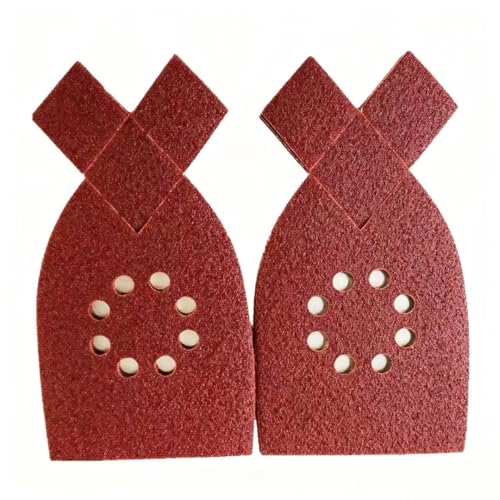
This 50-piece assortment is best for owners of compatible Mouse-style detail sanders who need a set of coarse and medium grits for general surface preparation. The listed grits are 40, 60, 80, 100, and 120. The sheets use hook-and-loop backing for quick changes and include eight dust-extraction holes with a stated hole diameter of 9.5 mm.
The manufacturer lists compatibility with several BLACK+DECKER models, including KA110E, KA220E, KA220G, KA230, and KA270, as well as Mega Mouse, Cyclon, Sandstorm, and Craftsman sanders. Aluminum oxide abrasive is specified, and the product description says two replacement tips are included. Choose this set when your sander matches the listed shape and hole layout.
Limitation: The grit range stops at 120, so it does not provide the finer 180- to 240-grit options available in some other assortments. Confirm the exact model and hole pattern before ordering.
Coceca Mouse Detail Sander Sandpaper

Coceca is best for buyers who want a five-grit assortment for a 140 mm detail sander. The 50-sheet pack contains 10 sheets each in 40, 80, 120, 180, and 240 grit. This selection covers rougher sanding through finer surface preparation, making it a practical choice when a project needs more than one level of abrasion.
Each sheet measures 140 × 100 mm and has hook-and-loop backing for attaching to a compatible sander pad. The manufacturer describes the backing as easy to attach and the sheets as sturdy and long-lasting. Choose this option if the stated dimensions match your tool; the size is more important than the product’s “Mouse” label when checking fit.
Limitation: The listed features do not specify dust-extraction holes or a hole pattern. Avoid this set if your sander requires holes for dust collection unless the sheet layout is confirmed to match.
XXGO Triangular Oscillating Sanding Pads
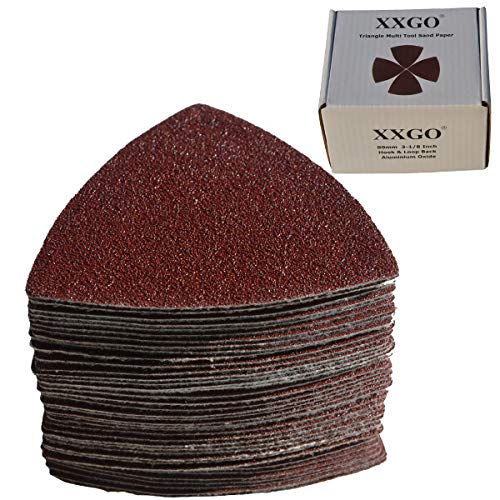
XXGO is best for users of oscillating multi-tools with a 3-1/8-inch triangular sanding pad. The sheets measure 80 × 80 × 80 mm and use a hook-and-loop design. The assortment lists 60, 80, 100, 120, and 240 grit, with 11 pieces of each grit for a total of 55 pads.
The abrasive is aluminum oxide, according to the product features. This set is a straightforward choice when the triangular shape and dimensions match your tool and you need multiple sheets in commonly used coarse-to-fine grades. The 240-grit option gives it a finer finishing choice than an assortment that ends at 120 grit.
Limitation: The available grits do not include 40, 180, or very fine grades such as 320 or 400. The listed features also do not state a dust-hole pattern, so check whether your tool needs holes before choosing these pads.
AUSTOR Triangular Sandpaper Assortment

AUSTOR is best for buyers who want a large assortment for a 3-1/8-inch oscillating multi-tool pad. The 120-piece pack covers nine grits: 40, 60, 80, 120, 150, 180, 240, 320, and 400. It includes 10 sheets each of 40, 60, and 80 grit, plus 15 each of the other six grits.
The sheets measure 80 × 80 × 80 mm, use hook-and-loop backing, and are made with aluminum oxide abrasive. The broad range supports a progression from coarse material removal to finer polishing and surface preparation. Choose AUSTOR over a smaller grit range if you want both coarse options and finer grades in one pack.
Limitation: These are listed as no-hole sheets. Avoid them if your sanding pad requires a matching hole pattern for dust extraction. The product’s dimensions should also be checked against your pad before purchase.
S SATC Mouse Sander Sandpaper

S SATC is best for users whose palm sander takes 6 × 4-inch triangular sheets with an 11-hole dust-removal layout. The 60-piece assortment lists grits of 40, 60, 80, 120, 180, and 240. The product features specify aluminum oxide abrasive and describe the hole design as helping remove sanding dust.
This option offers a useful spread from coarse sanding to finer finishing while focusing on fit for a 6 × 4-inch pad. Choose it when your sander’s dimensions and hole pattern align with the listed sheet design. Its dust-removal layout may also be a better match than a no-hole sheet for a tool designed to collect dust through the pad.
Limitation: The product description says it fits most palm sanders at this size, but it does not name specific models. Measure the pad and compare the holes rather than relying on the general fit statement.
Buying Guide: How to Choose Velcro-Backed Sanding Sheets
How do you check whether a sheet will fit?
Start with the sanding pad, not the package’s general tool category. Measure the pad’s length and width, or check the manufacturer’s stated dimensions. For triangular sheets, compare all three sides and the shape of the point. A sheet that is slightly too large may overhang the pad, while one that is too small can leave parts of the work surface unsanded.
Next, compare the attachment system. These products use hook-and-loop backing, sometimes described as Velcro-style backing. The sheet’s backing must engage with the sander pad securely. If your tool instead uses clamps or pressure-sensitive adhesive, a hook-and-loop sheet may not be the appropriate format.
Do the dust holes need to line up?
Yes, if your sander uses holes in its pad to draw dust into a collection system. Match the number and placement of the holes, not just their general presence. A sheet with no holes may still attach to some pads, but it can block dust-extraction openings. Among the products above, DUSJVYUE lists eight holes, S SATC lists 11, and AUSTOR specifies a no-hole design. Hole details are not given for every option.
Which grit should you choose?
Lower grit numbers indicate coarser abrasive, while higher numbers indicate finer abrasive. Coarse sheets such as 40 or 60 grit are generally used for more aggressive removal. Medium grits such as 80, 120, or 150 can help with surface preparation and smoothing. Finer grits such as 240, 320, or 400 are intended for finer sanding work. Follow the material and finish requirements for your project.
For one general-purpose assortment, choose a set whose grit range suits the whole job. DUSJVYUE stops at 120 grit, while Coceca and XXGO include 240 grit. AUSTOR reaches 400 grit. A wider range can reduce the need to buy separate assortments, but only if the sheets fit your sander.
How many sheets and grit options do you need?
Count both the total sheets and the quantity per grit. A large total pack can still provide only a few sheets in a particular grade. DUSJVYUE and Coceca each offer 50 sheets, XXGO offers 55, S SATC offers 60, and AUSTOR offers 120. For repeated work in one grit, check how many pieces the pack supplies at that grade.
Does abrasive material matter?
Several listed products specify aluminum oxide abrasive, including DUSJVYUE, XXGO, AUSTOR, and S SATC. Abrasive type is one factor in sheet selection, but fit, grit, and the surface being sanded also matter. The product details provided for Coceca do not identify its abrasive material, so compare its stated size and backing if those details are your priority.
What should you inspect before changing sheets?
Switch off the sander before removing or attaching a sheet. Align the triangular tip and edges, make sure the backing engages across the pad, and check that any dust holes are unobstructed. Replace a sheet when it no longer stays attached or when its abrasive surface is too worn for the task. Keep coarse and fine sheets separate to avoid carrying rough particles into finishing work.
Frequently Asked Questions
Are hook-and-loop sanding sheets the same as adhesive-backed sheets?
No. Hook-and-loop sheets attach to a matching textured pad and can be removed for grit changes. Adhesive-backed sheets use a sticky layer and require a compatible surface. Choose the attachment style specified for your sander.
Can triangular sanding sheets fit any oscillating multi-tool?
No. Check the pad dimensions, triangle shape, attachment backing, and dust-hole layout. A listing for a 3-1/8-inch triangle does not establish compatibility with every oscillating multi-tool.
Are sheets with no holes suitable for dust-collection sanders?
They may attach to some pads, but a no-hole sheet can cover dust-extraction openings. If your sander collects dust through the pad, choose a matching hole pattern or verify that the tool can be used safely and effectively without sheet perforations.
Is a higher grit number rougher or finer?
A higher grit number is finer. For example, 240 grit is finer than 80 grit. Select the grit based on the amount of material to remove and the finish required.
Can detail sander sheets be cut to fit another tool?
Some sheets can be cut, but cutting does not ensure a secure fit or correct dust-hole alignment. Use sheets made for the pad’s shape and dimensions whenever possible, especially when the tool relies on matching perforations.