Choosing the right white paint for walls can dramatically impact a room’s brightness, mood, and durability. This guide explains common white paint types, finishes, and practical picks for different spaces. It targets homeowners, renters, and DIYers seeking reliable, low-odor options with easy maintenance. The top five products below are chosen for versatility, indoor suitability, and clear value across common wall scenarios.
Summary of selected products:
- Zinsser 02774 PERMA-WHITE Mold & Mildew Proof Interior Paint, Eggshell White
- Wall Paint, 17.64oz White Touch-up Paint for Walls with Roller Brush, Water-Based
- Rust-Oleum 380220 Linen White Sure Color Interior Paint + Primer, Eggshell
- DWIL White Touch Up Paint – Multi Surface Touch Up Paint Pen, Semi Gloss
- Rust-Oleum Simply Home Interior Wall Paint 332141 – Eggshell Pure White
Best All-Around White For Mold-Resistant Interiors

Product overview: Zinsser 02774 PERMA-WHITE is designed for interior walls requiring mold and mildew resistance. Its self-priming formula avoids sanding, and the film is mildew-proof for up to five years. It resists dirt and moisture on the coating, making it suitable for bathrooms, kitchens, and damp basements where cleanliness matters.
Best for: Buyers who need a maintenance-friendly white option where moisture and mildew exposure is a concern. Ideal for bathrooms and laundry rooms, or basements that see frequent humidity.
Why selected: The combination of mold/mildew protection and a no-sanding, self-priming approach reduces prep time and increases long-term durability in humid environments.
Limitations: Eggshell finish shows some light texture; for ultra-sleek contemporary looks, consider a flatter finish or a different product for high-traffic zones.
Versatile Touch-Up White For Walls And Ceilings

Product overview: Wall Paint by Galitoon is a water-based, low-odor formula designed for high coverage in interior touch-ups. It’s suitable for walls and ceilings and is aimed at quick repairs for scratches, stains, and minor imperfections.
Best for: Renters or homeowners performing frequent touch-ups in living rooms, bedrooms, and hallways where quick, low-odor repairs are preferred.
Why selected: Its emphasis on high coverage and low odor supports fast, unobtrusive fixes in occupied spaces.
Limitations: It is a touch-up product and may not cover large repaint projects as consistently as a full paint job with primer.
Classic Linen White With Primer Included

Product overview: Rust-Oleum 380220 Linen White Sure Color Interior Paint includes primer and is offered in an eggshell finish. It’s a latex-based product that can be brushed, rolled, or sprayed for interior walls, with washable properties and relatively low odor.
Best for: DIYers seeking a paint-and-primer-in-one solution for medium to large wall areas with the need for easier cleanup and maintenance.
Why selected: The built-in primer simplifies projects, reducing steps and time-to-finish, while the linen white tone provides a soft, traditional white.
Limitations: For bare wood or high-adhesion surfaces, extra surface preparation may improve adhesion and hiding power.
Simple White Touch-Up Pen For Multiple Surfaces

Product overview: DWIL White Touch Up Paint Pen offers a semi-gloss finish and is designed for multiple surfaces. It includes a built-in brush and dries quickly, making it suitable for repairs on walls, doors, cabinets, metal, and furniture.
Best for: Quick, precise touch-ups on small areas or trim work where a neat, uniform look is desired without a full repaint.
Why selected: Its multi-surface capability and easy application support quick, targeted fixes with minimal equipment.
Limitations: As a touch-up pen, color match and coverage may be limited on large sections; this is best paired with a larger topcoat where needed.
Pure White Eggshell Interior Paint In A Gallon
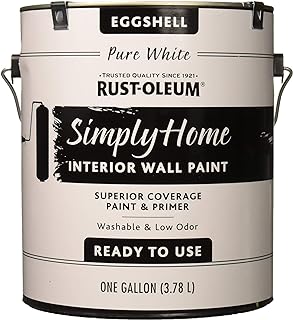
Product overview: Rust-Oleum Simply Home Interior Wall Paint 332141 provides an eggshell finish with latex formulation. It’s described as washable and low odor and can be brushed, rolled, or sprayed for interior walls.
Best for: Homeowners seeking a straightforward, low-odor white for living spaces, bedrooms, and other common areas with moderate traffic.
Why selected: The eggshell finish offers a balanced blend of subtle sheen and scrubbability, which helps maintain a clean look over time.
Limitations: Primer is recommended if surfaces require enhanced adhesion or hiding, especially on bare wood or darker colors.
Buying Guide: How To Choose The Right White Paint For Walls
White wall paint choices hinge on finish, durability, and the room’s humidity. Consider the following to guide your selection:
- Finish and sheen: Flat/Matte hides wall imperfections but is less washable; eggshell or satin provides a subtle sheen and better scrubbability; semi-gloss is highly durable but shows more surface details. Choose based on room use and cleaning needs.
- Primer inclusion: Paints with built-in primers save time in many cases, but bare wood or high-contrast surfaces may still need a dedicated primer for optimal adhesion and coverage.
- Moisture resistance: In bathrooms, kitchens, or basements, select anti-mildew products or paints formulated for humid environments. These reduce fungal growth and staining over time.
- Odor and drying: Low-odor formulas are preferable for bedrooms and nurseries. Quick-drying options minimize downtime in busy homes.
- Ease of touch-ups: For spaces with frequent scuffs or potential damage, consider touch-up pens or easy-to-recoat paints to maintain a consistent look without full repainting.
- Application method: Some paints are versatile for brushing, rolling, or spraying. If you have DIY experience, you can match the method to your project size and comfort level.
Common Scenarios And Recommendations
- Humid bathrooms or kitchens: Use a mold- and mildew-resistant formula with a washable finish. A self-priming option can reduce effort in high-humidity spaces.
- Renters and quick repairs: High-coverage touch-up paints are ideal for frequent scuffs and small repairs on walls and ceilings.
- New walls or bare wood: Primers are important for even color and hiding dark stains. Consider a product with primer included if surface conditions are straightforward.
- Large rooms with lots of natural light: Lighter whites with subtle warm undertones can enhance brightness and space perception.
Frequently Asked Questions
- What white paint finish is easiest to clean on walls? – Satin or eggshell finishes balance durability and cleanability while concealing minor imperfections better than flat finishes.
- Do I need primer if I use a white paint with primer built in? – Built-in primer helps in many cases, but priming is still beneficial on bare wood, stained surfaces, or severe color transitions.
- Is a mold-resistant white paint worth it for all rooms? – It’s particularly valuable in moisture-prone areas like bathrooms and basements, but not always necessary in dry living spaces.
- Can I use white paint on ceilings too? – Yes, many white wall paints are suitable for ceilings. Check the product’s label for ceiling compatibility and recommended roller type.
- How do I choose between an eggshell and a satin finish for a hallway? – Eggshell hides imperfections with a subtle sheen; satin is more durable and easier to wipe clean, making it a good choice for high-traffic zones.
- What should I consider for a rental apartment with white walls? – Low-odor, washable finishes with good touch-up options are ideal to minimize disruption and maintain aesthetics during a lease.