For most stair-edge projects, choose rubber or vinyl stair-nosing trim with a textured surface and adhesive backing; the right option depends on the stair width, surface, and amount of coverage needed. The Pangda trim is best for covering many steps with its 50-foot roll, while the brown 40-foot option suits buyers who want a longer, wider-looking stair-edge strip. The quarter-round molding is better for small finishing details than for non-slip stair nosing. Note that stair-nosing trim covers the front edge of a tread, not the vertical riser face.
| Product | Best for | Listed length |
|---|---|---|
| Stair Edge Trim, Brown | Long runs and grooved edge coverage | 40 ft |
| Risunpet Quarter Round | Small flexible finishing profile | 10 ft |
| Elvone Stair Nosing | Visible white stair-edge protection | 10 ft |
| Pangda Stair Edge Protector | Covering multiple steps | 50 ft |
| 24Ft Stair Edge Protector | Waterproof black edging | 24 ft |
Stair Edge Trim Self Adhesive Rubber Stair Nosing
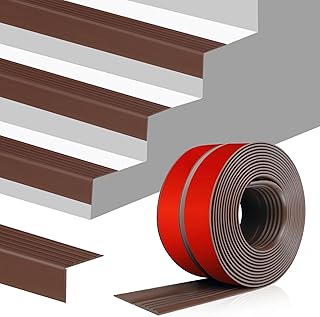
This brown stair-nosing trim comes as a 4-inch-by-40-foot roll. Its listed features include a grooved surface intended to increase friction, waterproof and stain-resistant material, and adhesive backing for installation on smooth surfaces. The long roll can be useful when several stair edges need a consistent finish or when a continuous length is preferred over shorter pieces.
Best for: Buyers who want a long run of brown, grooved edging for indoor or outdoor stair edges. It was selected for its stated combination of length, non-slip texture, and weather-related practicality. The manufacturer describes the material as resistant to wear and easy to clean.
Consider: The adhesive is specified for smooth surfaces, so a rough, dusty, damp, or uneven stair edge may not provide the intended bond. Measure each step and check the 4-inch width against the tread profile before ordering. This product is stair-edge trim, not a decorative strip for the full vertical riser.
Risunpet Flexible Peel-and-Stick Quarter Round

Risunpet’s white quarter-round molding has a 1/2-inch-by-1/2-inch profile and comes in one continuous 10-foot roll. The soft rubber trim is described as flexible enough for straight edges and gentle curves. Adhesive strips on both rear surfaces are intended to attach to adjoining surfaces, and the listed applications include stair edges, wall-floor seams, cabinets, countertops, and window sills.
Best for: Buyers who need a small, flexible finishing detail rather than a broad stair nosing. Its compact profile may suit narrow seams or edges where a larger strip would look oversized. It was selected because it explicitly lists stair edges among its applications and offers a defined profile for planning.
Consider: This is quarter-round molding, not a wide, grooved anti-slip tread protector. The product information recommends clean, dry, smooth, stable surfaces for adhesion. Confirm that a 1/2-inch profile and 10-foot length are adequate for the project, and do not assume it provides the same grip surface as textured stair-nosing products.
Elvone White Self-Adhesive Stair Nosing

Elvone stair nosing is a 10-foot white rubber-edging guard made from thick PVC, according to the listed features. The product description says the material is designed to resist curling, tearing, and buckling in high-traffic areas. It also describes the strip as visible and slip-resistant, with adhesive backing for stair-edge installation. The instructions call for cleaning the area, applying the supplied adhesive aid evenly, and installing the strip.
Best for: Buyers who want a white, visible stair-edge strip in a shorter roll. It was selected for its stated PVC construction, indoor-and-outdoor use, and installation guidance. A contrasting white edge may be useful when a visible boundary is desired, provided the color suits the stair finish.
Consider: The listed length is 10 feet, which may require multiple sections for a staircase. Check the total edge length before purchase and follow the preparation instructions; the product information does not establish that the adhesive will bond to every surface. Its white color may also stand out on darker stairs.
Pangda 50-Foot Black Stair Edge Protector

This black stair-edge protector is listed as 50 feet long and 3.6 inches wide. Its raised diamond-pattern texture is intended to increase friction, including in damp conditions. The product description says the pre-applied adhesive can be used on wooden, concrete, metal, and tile stairs. Installation involves measuring, cutting, peeling the backing, and pressing the trim into place.
Best for: Buyers who need substantial coverage across multiple steps and prefer a black finish. The 50-foot roll is the longest listed option in this selection, and the 3.6-inch width is specified for planning. It was chosen for its stated combination of broad coverage, textured grip, and tool-free installation.
Consider: Measure the actual stair edges rather than relying on a general “standard” fit. The manufacturer lists several surface types, but clean and suitable preparation remains important for adhesive installation. Avoid choosing this option if black edging or a 3.6-inch strip does not suit the appearance or dimensions of the stairs.
24-Foot Black Waterproof Stair Edge Trim

This 24-foot black stair-edge protector is described as flexible vinyl or PVC with a grooved anti-slip surface. Its features state that it is waterproof and designed to resist impact, curling, tearing, and buckling under heavy foot traffic. The self-adhesive backing is intended for most clean, smooth surfaces, and the listed installation method is to peel the liner and press the strip into place.
Best for: Buyers seeking a black, grooved edge strip with more length than a small 10-foot roll but less than a 50-foot roll. It was selected for its stated waterproof construction and straightforward peel-and-press installation. The grooved surface differentiates it from plain decorative molding.
Consider: The product description says “most” clean, smooth surfaces rather than every stair material. Check the stair finish and prepare it carefully before applying adhesive. The listed details do not specify a width, so verify the product dimensions before deciding whether the profile will cover the intended edge.
Buying Guide: How to Choose Trim for Stair Risers
Do you need stair-nosing trim or riser trim?
Stair nosing covers the front edge of a tread, where the horizontal walking surface meets the vertical riser. The products in this selection are primarily stair-edge protectors or nosing strips. They are not full-height panels for covering the vertical face of a riser. If the goal is to decorate or protect that vertical face, look for riser-specific material and confirm its dimensions and installation method.
For added traction at the tread edge, compare products with grooves or raised textures. For a narrow joint or a small finishing detail, flexible quarter-round molding may be more appropriate. Do not treat decorative quarter round as equivalent to a wide anti-slip stair nosing.
How much trim should you measure?
Measure the exposed front edge of every step that needs coverage, then add a small allowance for cuts and mistakes. Compare that total with the roll length: the options listed here range from 10 to 50 feet. A longer roll can reduce the need to combine separate rolls, but it does not eliminate the need to measure individual steps and plan cut lengths.
Check width and profile as well as length. The listed products include a 4-inch-wide option, a 3.6-inch-wide option, and quarter-round molding with a 1/2-inch-by-1/2-inch profile. The 24-foot product’s listed features do not state a width, so confirm that dimension before buying.
Which surface and adhesive details matter?
Peel-and-stick trim depends on contact between its adhesive and the stair surface. Several product descriptions specify clean, dry, smooth, or stable surfaces. Remove dust and residue, and allow surfaces to dry before installation. Follow the product’s own preparation instructions, especially where an adhesive aid is mentioned.
Do not assume that a self-adhesive product will bond equally well to every finish. Rough, loose, damp, or uneven surfaces can complicate adhesion. If the stair surface is damaged or has a coating that may detach, address that condition before applying trim.
Should you choose rubber, vinyl, or quarter round?
The listed stair-edge products are described as rubber, PVC, or vinyl-based materials. Their features emphasize grip texture, water resistance, or durability. The Risunpet product is flexible rubber quarter-round molding intended for edge finishing; its small profile and adhesive arrangement serve a different purpose from wider nosing strips.
Use the material description as a starting point, not a substitute for checking the dimensions and surface requirements. Choose a textured stair-edge protector when traction at the step edge is the priority. Choose a compact molding profile when the goal is to finish a small seam or edge.
What color and finish will work on the stairs?
Black, brown, and white options are included here. Consider whether the trim should blend into the stair or create a visible edge. A contrasting color may make the boundary easier to see, while a closer color match can create a more continuous appearance. Also check whether the selected width will look proportionate to the tread.
Can adhesive stair trim be used outdoors?
Some products are described for indoor and outdoor use, and several list waterproof or water-resistant features. Those descriptions do not mean that every outdoor stair surface will be suitable for adhesive application. Check the surface-preparation directions and product details, and consider exposure to moisture and traffic when selecting an option.
Frequently Asked Questions
What is the difference between a stair riser and stair nosing?
The riser is the vertical face between steps. Stair nosing covers or protects the front edge of the horizontal tread. The products listed here are mainly edge trim, not full-face riser panels.
Is peel-and-stick stair trim suitable for every stair surface?
No. The product details specify smooth, clean, dry, or stable surfaces for adhesion, and suitability varies by product and surface. Review the installation directions and prepare the stairs before applying the strip.
Which option provides the most listed coverage?
The Pangda stair-edge protector is listed as 50 feet long, the greatest stated length among these five products. Measure the full project before selecting a roll.
Which product is best for a narrow finishing detail?
The Risunpet quarter-round molding has a 1/2-inch-by-1/2-inch profile and is intended for small edge-finishing applications. It is not a broad grooved stair-nosing strip.
Should stair-edge trim cover the whole tread?
Not necessarily. These products are described as edge protectors or nosing, so their purpose is to cover the front edge rather than the entire walking surface. Confirm the width and placement instructions for the product you choose.


