Timber oil deck stain is designed to protect wood surfaces from moisture, UV rays, and weathering while enhancing natural grain. This guide highlights five top timber oil products to consider, with clear why-to-buy guidance for different project needs. Ideal buyers include DIY homeowners, professional deck builders, and outdoor furniture enthusiasts seeking durable, natural-looking finishes.
| Product | Size | Best For |
|---|---|---|
| Cabot Australian Timber Oil Wood Stain and Protector, Jarrah Brown | 1 Gallon | Large decks and exterior wood where deep penetration is key |
| Cabot Australian Timber Oil Wood Stain and Protector, Jarrah Brown | 1 Quart | Smaller projects or touch-ups needing the same color |
| Cabot 140.0019458.007 Australian Timber Oil Water Reducible, Honey Teak | 1 Gallon | Eco-conscious projects needing lower odor and water-based format |
| Cabot Australian Timber Oil Wood Stain and Protector, Amberwood | 1 Gallon | Natural warmth with strong protection for busy outdoor spaces |
| Woodrich Brand Timber Oil Deep Penetrating Stain, Signature Brown | 1 Gallon | High-penetration finish for fences, decks, and siding |
Cabot Australian Timber Oil Jarrah Brown — 1 Gallon

Best for: Larger outdoor decks and heavy-traffic wood surfaces that require deep protection. This timber oil delivers 3-way oil protection for superior penetration, enabling long-lasting defense against moisture, UV, and weathering. The formulation aims to seal the wood while preserving a natural look with a rich Jarrah Brown hue.
Why selected: It combines deep penetration with a natural color that highlights grain. The 3-way oil blend is designed for outdoor exposure and resin-rich woods, making it a solid all-around choice for traditional decks and patios.
Caution: Application may require proper surface prep and multiple coats for full protection on very porous wood. Follow weather window guidelines to avoid wash-off in rain soon after application.
Cabot Australian Timber Oil Jarrah Brown — 1 Quart
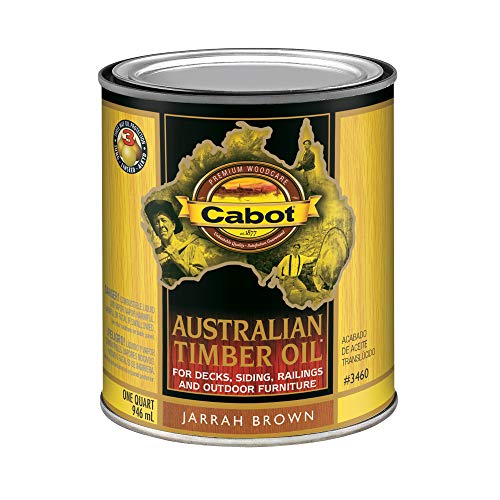
Best for: Small decks, fences, or touch-ups needing the same Jarrah Brown tone. The quart size provides the same penetration and color in a compact package for easier handling on smaller projects.
Why selected: It mirrors the gallon formulation in color and protection, offering consistency across different project scales. This makes it easier to match finish on a patch repair without color variance.
Caution: As with larger quantities, prep and even application are important to prevent streaking on uneven surfaces. Use the same technique for best results on touch-ups.
Cabot 140.0019458.007 Australian Timber Oil Water Reducible — Honey Teak

Best for: Projects prioritizing lower odor, quick cleanup, and a water-based option while still achieving timber oil protection. Honey Teak provides a translucent, warm tone suitable for modern outdoor spaces.
Why selected: The water-reducible formula can be easier to apply in enclosed or sensitive environments, reducing fumes while delivering 3-way oil protection and deep wood penetration.
Caution: Color depth may be lighter than solvent-based versions; multiple coats can enhance color and protection but may increase dry time.
Cabot Australian Timber Oil Amberwood — 1 Gallon

Best for: Outdoor spaces where a rich, amber-toned finish is desired while keeping natural wood texture visible. Good for decks with moderate to heavy exposure.
Why selected: Amberwood blends warmth with strong wood protection, sustaining color depth and grain detail over time. The 3-way oil protection remains a core feature for durable outdoor surfaces.
Caution: For very light woods, deeper tinting may appear; test a small area first to ensure color alignment with adjacent boards.
Woodrich Brand Timber Oil Deep Penetrating Stain — Signature Brown

Best for: Surfaces that require deep oil penetration to replenish natural wood oils, including decks, fences, siding, and log cabins. Signature Brown provides a natural, earthy tone with UV resistance.
Why selected: The product emphasizes deep penetration and a paraffinic oil base that minimizes lap marks and runs, which is advantageous for first-time users and large-area applications.
Caution: Slightly longer drying times may be observed in cooler or more humid conditions; ensure adequate ventilation during application and curing.
Buying Guide: Timber Oil Deck Stain Essentials
- Finish type: Choose traditional solvent-based timber oil for deeper color and strong penetration, or water-reducible for lower odor and easier cleanup. Consider project location and ventilation needs.
- Wood compatibility: Ensure the product is labeled for decks, siding, railings, or outdoor furniture as needed. Dense, resin-rich woods may require longer penetration.
- Color and appearance: Look for colors that highlight grain without obscuring natural wood texture. Honey Teak, Jarrah Brown, Amberwood, and Signature Brown offer varied warmth levels.
- Protection level: Seek products offering three-way oil protection for balanced sealing, penetration, and color retention against moisture, UV, and weathering.
- Application considerations: Check drying times, required number of coats, and recommended weather windows. Some formulas tolerate slightly lower temperatures; others require warm, dry days.
- Maintenance: Timber oil finishes typically require reapplication every 2–5 years, depending on wear and exposure. Prep surfaces properly before re-coating.
- Environmental and safety: If odor or VOCs are a concern, prefer water-based options or products with lower odor ratings, and follow all safety guidelines during application.
Frequently Asked Questions
- Q: What is timber oil deck stain best for? A: It provides deep penetration, weather resistance, and a natural wood look, suitable for decks, fences, siding, and outdoor furniture.
- Q: Do I need to remove old finishes before applying timber oil? A: Yes, prepare the surface by cleaning and lightly sanding to ensure proper adhesion and even color.
- Q: Can I use timber oil on pressure-treated wood? A: Yes, but ensure the wood is clean and dry; timbers may require longer drying times before staining.
- Q: How many coats should I apply? A: Typically two coats provide better protection and color depth, especially on new or highly porous wood.
- Q: Is there a difference between oil-based and water-based timber oils? A: Oil-based formulations generally offer deeper penetration and richer color; water-based versions tend to have lower odor and easier cleanup.
- Q: How do I maintain the finish? A: Regular cleaning and timely re-application when water resistance diminishes or color fades helps maintain protection.
Note: All product references are for informational purposes. Availability and exact formulations may vary by region and over time. This guide presents considerations and selections to help buyers compare timber oil deck stains and choose finishes aligned with project needs.