The best stick-on contact paper depends on the surface and finish you want: Heroad suits small projects in white wood grain, tiltil and Abyssaly offer black wood looks, WADILE provides a light gray grasscloth texture, and COSNIGHT is a brown wood-grain option for longer runs. All five are self-adhesive vinyl products described for smooth surfaces. Measure your project first, then compare each roll’s listed dimensions and finish.
| Product | Best For | Listed Roll Size |
|---|---|---|
| Heroad White Wood Grain | Small, brightening projects | 17.5 × 78.7 inches |
| tiltil Black Wood | Dark wood-look coverage | 17.7 × 118 inches |
| Abyssaly Black Wood | Narrow areas and DIY | 11.8 × 78.7 inches |
| WADILE Light Gray Grasscloth | Textured, fabric-inspired finish | 15.7 × 78.7 inches |
| COSNIGHT Brown Wood Grain | Longer wood-look projects | Dimensions vary in listing |
Heroad White Wood Grain Contact Paper

Best for: Small furniture and drawer projects that need a light-colored wood effect. This self-adhesive paper has a white faux wood finish with a simple grain texture, which can make compact surfaces look brighter.
Each roll measures 17.5 by 78.7 inches and is listed as covering about 9.49 square feet. The brand suggests it for drawers, shelves, small tabletops, nightstands, desk sides, and accent walls. It can also be cut into smaller pieces for details such as picture frames or switch plates.
Why it was selected: The stated coverage and range of small-project uses make it a practical option when a full-size roll would be unnecessary. The white finish also stands apart from the black and brown wood options in this selection.
Limitation: One roll covers a relatively compact area, so larger surfaces may require multiple rolls and careful attention to grain alignment.
tiltil Black Wood Contact Paper

Best for: Buyers seeking a dark, wood-inspired finish for furniture or kitchen surfaces. The listing describes a vinyl or PVC material with a realistic wood sensation and says the surface is waterproof, oil-proof, easy to clean, and wear-resistant.
The roll measures 17.7 by 118 inches and is listed as covering 14.5 square feet. Suggested uses include kitchen counters, backsplashes, furniture, drawers, bookcases, doors, walls, crafts, and notebooks. The longer roll can be useful for projects that need more continuous coverage than a short roll provides.
Why it was selected: It combines a dark wood look with a longer listed roll length and features aimed at wipe-clean use. Choose it if those traits matter more than a light or fabric-inspired finish.
Limitation: The listing does not provide installation instructions beyond describing the product as peel-and-stick. Plan the layout and test a small area before covering a prominent surface.
Abyssaly Black Wood Contact Paper

Best for: Narrow projects, such as drawer fronts or smaller furniture panels, where a black wood pattern is desired. This roll measures 11.8 by 78.7 inches, making it narrower than the other wood-look options here.
Abyssaly describes the paper as self-adhesive and intended for smooth surfaces. Its suggested applications include kitchen counters, furniture, notebooks, dresser drawers, bedside tables, crafts, bookcases, doors, and walls. The listing also refers to added ventilation holes intended to help reduce bubbles during installation.
Why it was selected: Its narrower width may be easier to handle on small pieces, and the listed bubble-reduction feature is relevant to first-time DIY users. Choose it when the surface width suits the roll.
Limitation: The narrower roll means more seams may be needed on wider surfaces. Check the planned layout before buying enough material for a large project.
WADILE Light Gray Grasscloth Contact Paper
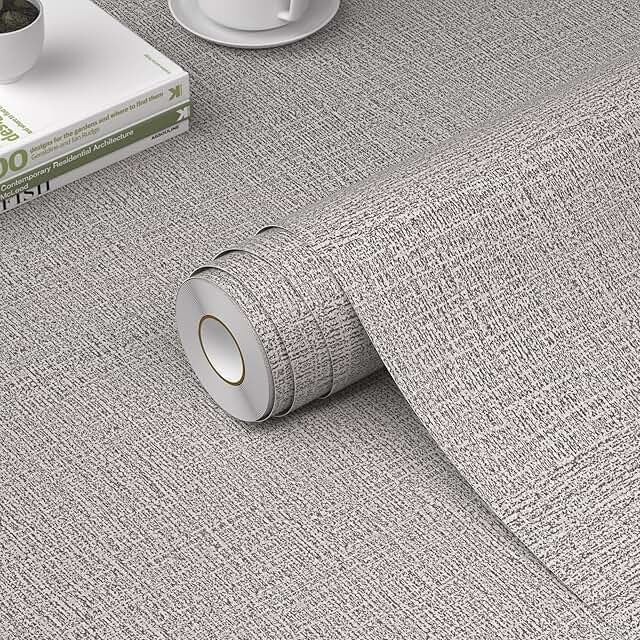
Best for: Buyers who want a textured, linen-inspired look rather than a wood pattern. The light gray color and faux grasscloth surface offer a distinct decorative choice for cabinets, walls, or other suitable smooth surfaces.
The vinyl roll measures 15.7 by 78.7 inches and is listed as covering 8.61 square feet. The product is described as thicker than average and less likely to tear. Its backing has a grid for cutting, and the listing says it needs no extra glue. It is also described as oil-resistant, waterproof, and cleanable with a damp cloth.
Why it was selected: It broadens the comparison beyond wood finishes and provides specific cutting and cleaning details. Choose it when a soft, woven appearance is a better match for the room than faux timber.
Limitation: Its roll covers less than nine square feet, so it is better suited to smaller areas unless multiple rolls are planned.
COSNIGHT Brown Wood Grain Contact Paper

Best for: Projects that call for a brown wood-grain appearance, such as cabinets, desks, drawers, shelves, or other smooth surfaces. The listing describes the material as self-adhesive and removable and says it can be applied to most flat, dry surfaces.
The product title lists a 15.7-by-118-inch roll, while the feature details give dimensions of 17.7 by 118 inches and state coverage of 12.86 square feet. The listing also describes a protective surface film, a durable finish, and removal without glue residue if the paper is removed as described.
Why it was selected: It provides a brown wood look and a stated removable-use feature, making it worth comparing for rental-friendly or changeable décor projects. The listing names uses across rooms, including walls, countertops, laundry areas, and bathrooms.
Limitation: The listed width differs between the title and product details. Confirm the current dimensions and coverage on the product page before calculating how many rolls the project needs. The listing also notes that displayed and actual colors may differ slightly.
Buying Guide: How to Choose Stick-On Contact Paper
What finish and color suit the project?
Start with the look you want to achieve. White wood grain can brighten small furniture, while black wood creates a darker visual effect. Brown wood grain is a traditional alternative, and faux grasscloth provides a textile-inspired appearance without the wood pattern. Compare the product image with the room’s lighting and nearby finishes. Screen settings and lighting can affect how a color appears, so treat online images as a guide rather than a guarantee.
How much contact paper should you buy?
Measure the surface’s width and length, then calculate the area. Compare that figure with the stated roll coverage, but also account for trimming, mistakes, and pattern placement. A roll’s total area does not always translate into a seamless fit: the roll width determines whether a surface needs one strip or several. For patterned finishes, allow extra material to align the grain consistently across adjacent pieces.
- Measure each surface separately, including edges that will be wrapped.
- Check both roll width and roll length, not just the coverage number.
- Allow extra material for trimming and alignment.
- Verify dimensions when the title and feature details disagree.
Which surfaces are suitable?
The products in this comparison are described for flat or smooth surfaces, and COSNIGHT specifically refers to flat, dry surfaces. Before applying contact paper to a cabinet, drawer, or countertop, make sure the surface is clean and dry. Textured, uneven, dusty, or damaged surfaces may make application more difficult. If the surface is valuable or sensitive, test a small, inconspicuous area first, especially when removability matters.
Is waterproof contact paper suitable for every wet area?
Some listings describe their products as waterproof or oil-resistant, but those claims do not establish suitability for every location or type of exposure. Check the product details and use the material within the stated applications. A waterproof surface description should not be treated as proof that seams, edges, or the underlying surface are protected from prolonged moisture.
How can you reduce bubbles and misalignment?
Cut the material to the needed size before installation and work gradually rather than exposing the entire adhesive backing at once. Press the paper down evenly as you go, keeping the edge aligned. The Abyssaly listing mentions ventilation holes intended to reduce bubbles, while WADILE describes a grid on the backing to guide cutting. Product-specific instructions should take priority over general application advice.
Should you prioritize removability or durability?
If you may change the décor later, look for an explicit removable feature, such as the one described by COSNIGHT, and test removal on a hidden area. If the surface will need regular cleaning, compare the stated care features: tiltil is described as easy to clean, and WADILE says it can be wiped with a wet cloth. These descriptions are not substitutes for checking the product’s full instructions.
Frequently Asked Questions
Can stick-on contact paper be used on cabinets?
Yes, several products in this list are described for cabinets or furniture. Apply them to a clean, dry, smooth surface and confirm that the product’s dimensions and finish suit the cabinet project.
Which option is best for a small drawer project?
Heroad is a suitable option for compact projects because it is specifically suggested for drawers and small surfaces. Abyssaly may also suit narrow drawer fronts because its roll is 11.8 inches wide.
Which product has a textured, non-wood finish?
WADILE has a light gray faux grasscloth texture inspired by linen. It is the choice in this selection for buyers who prefer a fabric-like appearance over wood grain.
Can contact paper be cut to size?
Yes. These products are intended to be cut for application. WADILE specifically describes a grid on the backing for cutting, and the other listings also describe cutting or sizing the material for projects.
How do I estimate the number of rolls needed?
Measure the surface, calculate its area, and compare that amount with each roll’s stated coverage. Include extra material for trimming and seams, and verify the roll dimensions on the listing before ordering.
Does removable contact paper leave residue?
Removal results can depend on the product and surface. COSNIGHT says its paper can be removed without leaving glue when removed as described, but testing a small hidden area first is prudent.