Answering buyers’ needs for a durable, efficient staining tool set, this guide highlights five proven stain roller options that work well on wooden fences. These selections are ideal for DIY homeowners, contractors tackling outdoor fences, and anyone seeking a faster, cleaner way to apply stain or sealer. Each product is evaluated for coverage, ease of use, and suitability for outdoor wooden surfaces. Below is a quick summary table to compare the best choices at a glance.
Quick Comparison Table
| Product | Best For | Key Benefit | Limitations |
|---|---|---|---|
| Pro Grade Paint Roller Kit | Professionals and homeowners | All-in-one kit with multiple rollers and brushes | Large kit; more storage space needed |
| Mister Rui Foam Paint Roller 8 Pack | Small to medium surfaces | High-density foam for smooth, even finishes | Foam lacks long-term resilience for rough surfaces |
| Magimate Deck Brush | Staining between fence boards | Wide 5” brush with thick filaments | Best for stain/sealant; not a roller |
| Pro Grade 1/2 x 9 Inch Microfiber Covers | Even, splatter-free staining | No-shed microfiber with good coverage | Replacement covers needed over time |
| PinStone 6pcs Roller Kit | Reach high areas with extendable frame | Extendable 9″ frame; multiple microfiber refills | Frame weight may be heavier when extended |
Pro Grade Paint Roller Kit, Brush & Roller

The Pro Grade 10-piece set includes a plastic tray, two 9-inch microfiber roller covers, two 4-inch microfiber covers, and three brushes. Best for: projects requiring both large-surface coverage and detail work, suitable for walls and fences. The kit provides a complete start-to-finish solution for home improvement tasks. Caution: the assortment may overwhelm first-time buyers who only need a simple roller.
Mister Rui Foam Paint Roller, 8 Pack

Includes four-inch foam rollers with five covers, a roller frame, and a tray liner. Best for: quick, smooth finishes on flat outdoor surfaces such as fences and doors. The high-density foam minimizes fiber shedding. Caution: foam rollers are best used with water- or oil-based paints, and may wear faster on rough wood.
Magimate Deck Brush for Stain
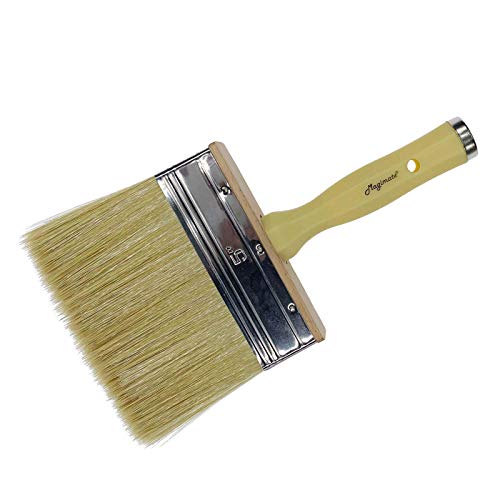
5-inch deck brush with soft synthetic filaments designed for stain and sealer application. Best for: applying between fence planks or railings where a roller cannot reach. Also suitable for large deck or fence surfaces when a brush provides better control. Caution: not a replacement for roller coverage on large flat areas; use in combination with rollers for best results.
Pro Grade Paint Roller Covers – 1/2 X 9 Inch Microfiber

No-shed microfiber covers designed for even, full coverage on smooth to semi-smooth surfaces. Best for: achieving a consistent finish on fence boards without lint. Caution: microfiber covers require proper cleaning to extend reuse life and avoid brush marks on rough textures.
PinStone House Paint Roller Kit
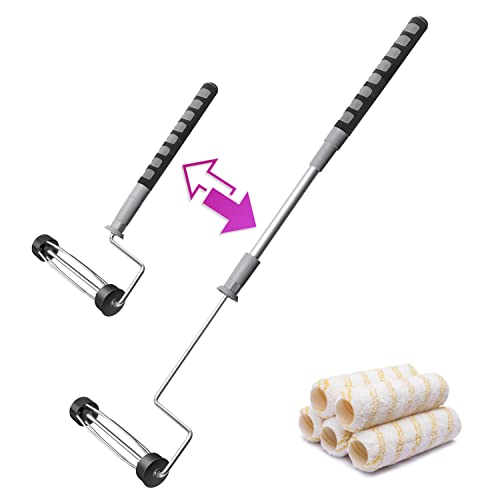
Six-piece kit with a 9-inch extendable frame and five microfiber refills. Best for: reaching high surfaces without ladders and delivering smooth, even coats. The extension feature helps cover large fence panels efficiently. Caution: the extendable mechanism adds weight; use with caution on tall or trestle work.
Buying Guide
What should you consider when choosing a stain roller for a fence?
- Surface type: Smooth boards respond well to microfiber covers; rough or textured wood benefits from foam rollers or brush use for tighter grip in gaps.
- Roller size: Larger rollers cover fence panels faster; smaller rollers are better for rails, posts, and edges.
- Nap length and material: 1/2″ nap is common for interior walls; for stains and sealants on wood, a low to mid nap minimizes fiber shedding.
- Extendable frames: Helpful for high sections or tall fences; balance reach with control to avoid drips.
- Compatibility: Ensure tools work with oil-based or water-based stains, sealants, and primers you plan to use.
Practical Tips For Fence Staining
- Prepare the surface: clean and dry the wood before applying stain.
- Test in a small area to ensure color and penetration meet expectations.
- Apply in the direction of the wood grain for uniform results.
- Maintain a consistent coat thickness to avoid lap marks.
- Clean tools promptly after use to maximize longevity.
FAQ
- What size roller is best for fences?
– A 9-inch roller is common for large fence panels, while a 4-inch roller is better for edges and rails. - Can foam rollers be used for stain?
– Yes, high-density foam rollers work well with stains and sealants on flat surfaces. - Are microfiber covers good for outdoor use?
– Microfiber covers provide smooth, even finishes and are washable for reuse, making them a good outdoor option. - Should I use an extendable roller for tall fences?
– An extendable frame helps reach high areas without ladders, but ensure it remains stable during use. - Is a brush necessary if I have a roller kit?
– A brush helps reach between boards and edges; combine with a roller for best coverage on fences.