The best stain pencil for wood depends on the scratch size and the color you need: choose a single-color Minwax pencil for a focused touch-up, or a DAIXISM kit for more color options and wax fillers. The picks below cover light and dark finishes, small nicks, scuffs, and broader furniture repair needs. Match the product color to the wood, then test it on an inconspicuous area before applying it to a visible surface.
| Product | Best For | Format |
|---|---|---|
| DAIXISM 13-Piece Repair Kit | Common wood-tone touch-ups | Markers and wax sticks |
| Minwax Blend-Fil Mahogany | Mahogany-colored repairs | Stain pencil |
| Minwax Blend-Fil Natural Bleached Wood | Light, pale wood repairs | Stain pencil |
| DAIXISM 21-Piece Repair Kit | More color choices and filler | Markers and wax sticks |
| Minwax Dark Walnut Stain Marker | Quick dark walnut touch-ups | Liquid stain marker |
DAIXISM 13-Piece Wood Repair Kit

Best for: Homeowners who want several familiar wood colors plus both marker and wax-stick formats. The kit contains six repair markers, six paper-wrapped wax sticks, and a wax stick sharpener.
The six listed colors are maple, oak, cherry, walnut, mahogany, and black. The markers are intended for scratches, nicks, scuffs, and discoloration on furniture and other wood items, including cabinets, tables, and beds. Wax sticks provide a separate filler option for marks that may be better addressed with a crayon-style product.
Why it was selected: It combines color choices with two application types, making it more flexible than a single-color pencil when repairing different pieces around the home. Choose this if you need common wood shades and want a sharpener included for the wax sticks.
Limitation: The listed colors may not match every wood finish. Test the closest shade first, since a visible repair can look different from the surrounding surface.
Minwax Blend-Fil Mahogany Pencil

Best for: A targeted touch-up on a wood surface whose finish is close to mahogany. This is a single-color Blend-Fil wood repair stain pencil, rather than a multi-color kit.
Its listed features emphasize no-mess application, maintaining the beauty of wood, and easy touch-up. A single-color pencil can be a straightforward choice when you already know the shade you need and do not require markers or wax sticks in other colors.
Why it was selected: Mahogany is one of the named colors in the broader kits, and this pencil offers a simple alternative for buyers seeking that specific shade without a mixed-color set. It is better for small, focused repairs than for matching several different finishes.
Limitation: The product information lists only one color. Avoid choosing it for a surface that is clearly lighter, darker, or a different tone without testing first.
Minwax Blend-Fil Natural Bleached Wood Pencil

Best for: Small repairs on pale or bleached-looking wood where a dark brown filler would be too noticeable. This Minwax Blend-Fil pencil is identified as Natural Bleached Wood.
The listed product features are no-mess use, helping maintain the beauty of wood, and easy touch-up. The single shade keeps the choice simple if it aligns with the finish you are repairing. It may be a more suitable starting point for a light surface than a mahogany or dark walnut option.
Why it was selected: The range includes both dark and light single-color choices, and this pencil addresses a distinct light-wood need. Choose it when the surface is pale and a matching light tone is more important than having several colors available.
Limitation: “Natural Bleached Wood” is a specific shade, not a universal match for all light woods. Check the color on a hidden spot before working on the visible scratch.
DAIXISM 21-Piece Wood Repair Kit

Best for: Buyers who want a wider color range and both marker and crayon-type filler for furniture repairs. The listing describes use for scratches, discoloration, holes, and separation gaps on wooden furniture.
The kit offers ten listed colors: maple, oak, cherry, walnut, mahogany, white, grey, chestnut, burnt sienna, and black. Its marker-and-wax combination gives buyers two ways to approach touch-ups. The stated application range includes furniture, cabinets, tables, and beds.
Why it was selected: Compared with the 13-piece set, its ten listed colors include additional shades such as white, grey, chestnut, and burnt sienna. Choose this if you need more color options or want a filler format alongside markers.
Limitation: A larger color selection still cannot guarantee an exact match for a particular grain or finish. The listing does not specify a precise color-matching method, so test shades before applying them broadly.
Minwax Dark Walnut Stain Marker
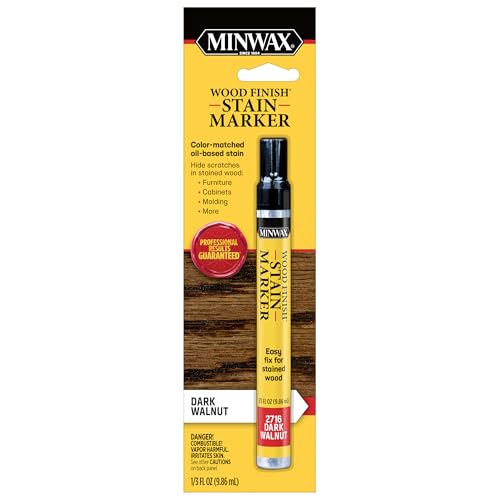
Best for: Quick touch-ups on small nicks and scratches in dark walnut-colored wood. The marker contains 0.33 fluid ounces and is described for furniture, molding, cabinets, doors, floors, and other wood surfaces.
Minwax lists this as a fast-drying wood finish stain marker. The instructions described in the product features are to apply the stain and wipe away excess with a cloth. The marker is also identified for small hobby and wood craft projects and decorative touches on larger projects.
Why it was selected: It is a convenient option when the desired shade is dark walnut and the repair is small. It differs from the Blend-Fil pencils and wax kits because it applies liquid stain through a marker format.
Limitation: This is a dark walnut shade, not a multi-color repair set. Avoid using it on light or differently toned wood without testing, and follow the listed wipe-off step to remove excess stain.
Buying Guide: How to Choose a Wood Stain Pencil
Should you choose a pencil, marker, or wax stick?
Start with the mark you need to cover. A stain pencil or marker is a focused choice for small scratches and nicks. A kit with markers and wax sticks gives you more than one format for different touch-ups. The DAIXISM kits combine both, while the Minwax Blend-Fil products offer single-color pencil options and the Dark Walnut product is a liquid stain marker.
Do not assume that every product format fills damage in the same way. The DAIXISM 21-piece listing specifically describes wax filler for holes and separation gaps as well as scratches and scuffs. For a deeper or wider defect, check the product’s stated use and decide whether a wax-style filler is more appropriate than a stain-only touch-up.
How important is color matching?
Color is one of the most important selection factors. Compare the product’s named shade with the wood around the damage, not just with the name of the furniture or the wood species. Finishes vary, and a product labeled walnut or oak may not be an exact match for every walnut- or oak-colored surface.
For one known shade, a single-color Minwax product can keep the choice focused. For several pieces or uncertain colors, a kit with multiple shades offers more options. The DAIXISM 13-piece set lists six colors, while the 21-piece set lists ten. Neither range guarantees a perfect match, so test a discreet area first.
What should you consider about the repair area?
Look at the size, shape, and depth of the defect. A narrow surface scratch may need only a small amount of color. A nick, hole, or gap can require a different approach from a light scuff. Use product features as a guide, and do not treat a touch-up marker as a substitute for a more substantial repair when the damage is beyond the stated use.
Also consider the location. The listed products mention furniture and other surfaces such as cabinets, tables, beds, doors, floors, or molding. Choose a product whose described uses fit the item, and follow its package directions. Keep the application limited to the damaged area where practical, and remove excess when the instructions call for it.
When is a multi-color kit worth considering?
A multi-color kit is useful when you have several wood items with different finishes or are not certain which shade will blend best. The 13-piece DAIXISM kit covers common colors such as maple, oak, cherry, walnut, mahogany, and black. The 21-piece kit adds colors including white, grey, chestnut, and burnt sienna.
If you need only one shade, a kit may offer more options than necessary. A single-color pencil or marker can be a simpler fit when the target finish is already known. Compare the color list and application format, not just the number of pieces.
How can you reduce the chance of a noticeable repair?
Clean and prepare the surface according to the product directions. Test the shade in a hidden area before applying it to the scratch. Use a small amount first and check how it looks after application; some products may need excess stain wiped off with a cloth, as described for the Minwax stain marker.
Work carefully around the edges of a mark so the repair does not spread onto undamaged wood. Follow the package instructions for application and handling. Because the listed products differ in format and shade, the right technique for one should not automatically be assumed to apply to another.
Frequently Asked Questions
What is a wood stain pencil used for?
A wood stain pencil is used for small touch-ups, such as covering scratches, nicks, or scuffs on wood. The exact uses depend on the product; check its listed features and directions before use.
Are stain pencils and wax repair sticks the same?
No. The products in this selection include stain pencils, liquid stain markers, and wax sticks. Some kits include both markers and wax sticks, so check the product format and intended repair uses before choosing.
Which option is best for light-colored wood?
The Minwax Blend-Fil Natural Bleached Wood pencil is the specifically identified light shade among these picks. Test it first, because a named shade may not match every pale wood finish.
Which option offers the most listed colors?
The DAIXISM 21-piece kit lists ten colors, including white, grey, chestnut, and burnt sienna. Its color range is broader than the six colors listed for the DAIXISM 13-piece kit.
Can a wood stain marker be used on floors or cabinets?
The Minwax Dark Walnut marker’s listed uses include floors and cabinets, as well as furniture, molding, and doors. Confirm the package directions and test the color on a discreet area before treating a visible surface.
Should I test a wood touch-up product first?
Yes. Testing a hidden spot helps you check whether the color and appearance suit the surrounding finish before applying the product to a visible scratch.


