Answering the common buyer question: which spray primer is best for metal surfaces? This guide highlights five Rust-Oleum options that balance adhesion, rust prevention, and ease of use. Best for DIY projects, outdoor metal furniture, automotive touch-ups, and interior metal surfaces. Each pick includes who it’s best for and a clear reason to choose it, along with a practical limitation when relevant.
| Product | Best For | Why It Stands Out |
|---|---|---|
| Rust-Oleum Painter’s Touch 2X Ultra Cover Primer | General interior/exterior metal projects | Low odor oil-based formula with wide surface compatibility; fast dry |
| Rust-Oleum Stops Rust Rusty Metal Primer | Heavily rusted metal surfaces | Heavy rust protection; strong bond for rust-prone metal |
| Rust-Oleum Automotive Sandable Primer | Vehicles, metal furniture, fiberglass work | Sandable for smooth top coats; quick dry time |
| Rust-Oleum Clean Metal Primer | Exterior/interior metal, wood, masonry | Excellent adhesion and weather resistance |
| Rust-Oleum 2-in-1 Filler & Sandable Primer | Metal parts needing filler prior to top coat | Time-saving 2-in-1 formula with filler and primer |
Rust-Oleum Painter’s Touch 2X Ultra Cover Primer

- Ideal for interior/exterior surfaces including wood, plastic, plaster, metal, masonry and unglazed ceramic.
- Oil-based formula is low odor and provides long-lasting protection against chips.
- Dries to touch in 20 minutes and covers up to 12 sq. ft. per can.
Best for: general metal projects where a versatile primer is needed. Choose this if you want broad substrate adhesion with quick handling and low odor. Avoid if you require a water-based option or extreme rust protection beyond light to moderate rust exposure.
Rust-Oleum Stops Rust Rusty Metal Primer
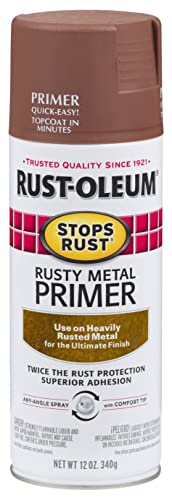
- Designed to prime exterior or interior heavily rusted metal surfaces only.
- Oil-based formula provides a durable protective coating with excellent rust prevention.
- Dries to the touch in 15-30 minutes; covers about 10-12 sq. ft. per can.
Best for: surfaces with heavy rust prior to top coating. Better for: problematic rust areas where adhesion and corrosion resistance are priorities. Limitations: not ideal for lightly rusted or bare metal that does not require heavy rust treatment.
Rust-Oleum Automotive Sandable Primer

- Wet and dry sandable primer suitable for wood, metal and fiberglass.
- Oil-based paint with Stops Rust formula provides rust-resistant base coat for vehicles and other projects.
- Covers up to 15 sq ft; dries to the touch (recoatable) in 10 minutes.
Best for: projects that require a smooth, sandable finish before top coating. Better for: automotive and metal piece refinishing. Limitations: longer cure times may be needed for very large surfaces; ensure proper ventilation due to oil-based formulation.
Rust-Oleum Clean Metal Primer

- Weather and corrosion resistant primer bonds to exterior/interior surfaces like wood, metal, concrete, masonry, and more.
- Oil-based formula provides a durable protective coating with excellent rust prevention.
- Dries to touch in 15 minutes and covers up to 12 sq. ft.
Best for: mixed-material projects where metal needs a strong, versatile base coat. Better for: outdoor metal items exposed to weather. Limitations: oil-based nature may require longer curing in humid environments.
Rust-Oleum Automotive 2-in-1 Filler & Sandable Primer

- Filler and sandable primer suitable for wood, metal, and fiberglass.
- Oil-based 2-in-1 paint with Stops Rust formula for a rust-resistant base coat.
- Covers up to 10 sq. ft.; dries to the touch and can be recoated in 10 minutes.
Best for: projects needing filler to smooth imperfections before top coating. Better for: metal pieces with dents or surface irregularities. Limitations: may require more sanding for a perfectly smooth finish on rough surfaces.
Buying Guide: Key Considerations For Metal Primers
- Surface condition and rust level: Heavily rusted metal benefits from primers specifically labeled for rust protection, while lightly prepared metal may only need a universal metal primer.
- Finish expectations: If you plan a smooth top coat, consider sandable or filler primers; for quick projects, non-sandable primers may suffice.
- Drying time and recoat window: Oil-based primers typically dry slower and require more ventilation; water-based options dry faster but may have different adhesion profiles.
- Topcoat compatibility: Most Rust-Oleum primers pair well with their own topcoats; always verify compatibility with the intended finish.
- Application environment: Exterior projects require weather-resistant primers; interior projects may benefit from low-odor formulas.
- Coverage and economy: Larger cans cover more area but weigh more; consider the square footage you need to cover and recoat intervals.
Frequently Asked Questions
- What primer is best for heavily rusted metal? A rust-specific primer like Stops Rust Rusty Metal Primer is designed for heavy rust and provides strong corrosion protection.
- Can I use automotive primers on non-automotive metal? Yes, automotive primers can work on metal surfaces beyond vehicles when compatibility is confirmed with the topcoat.
- Do I need to sand primers before painting? Sanding is recommended for certain primers, especially sandable types, to achieve a smooth finish before applying the topcoat.
- How long should I wait before applying a topcoat? Drying times vary by product; follow the label, but many primers are recoatable in 10-15 minutes for quick projects or longer for heavier coats.
- Are water-based primers suitable for metal? Water-based primers exist, but oil-based primers generally provide stronger rust resistance on bare or rusty metal.
- Can these primers be used on masonry or concrete? Some primers are multi-surface and work on wood, metal, masonry, and concrete; check the product label for substrate compatibility.