If you’re looking for a solid-color deck stain that hides wood grain while delivering durable protection, you’ll want options that seal against water and UV damage. This guide highlights five top solid-color deck stains suitable for American outdoor spaces. It targets buyers who want a one-coat look, strong fade resistance, and easy maintenance. Whether you’re sealing a new deck or refreshing an aging surface, choose products that balance color, protection, and ease of application.
| Product | Best For | Key Benefit |
|---|---|---|
| Thompson’s WaterSeal Solid Color | Residential yards and patios | Solid color with waterproofing sealant |
| Ready Seal Exterior Wood Stain | Anyone seeking no-back-brushing | No laps or runs, quick moisture protection |
| Cabot Solid Color Decking Stain (Driftwood Gray) | High-traffic decks | Maximum-pigmented, water-repellent |
| Cabot Solid Color Decking Stain (Cordovan Brown) | Rich brown aesthetics | Heavy-duty pigment and water resistance |
| SaverSystems Premium Solid Color | Long-lasting, opaque finish | Opacity with UV protection |
Thompson’s WaterSeal Solid Color Chestnut Brown Stain

This solid-color formula provides a true, opaque finish that hides wood grain while letting texture show through. It functions as both a color stain and a deck sealer, helping block water intrusion. Best for areas needing a rich, uniform tone with added waterproofing. Choose this for classic brown decks or fences that require year-round moisture resistance.
Best for: Homeowners seeking durable waterproofing and a bold chestnut look. Limitations: Pigment-rich formulas may require proper surface prep to avoid lap marks on rough boards.
Ready Seal Exterior Wood Stain – Natural Cedar (5 Gallon)

This product blends staining and sealing in one step with a semi-transparent oil-based formula. It’s designed for outdoor decks, fences, and wood siding, providing UV protection and moisture resistance. It’s particularly suited for larger projects due to its 5-gallon size and Goof Proof application—no back brushing required. Best for: DIYers who want fast, even coverage with minimal tool cleanup.
Better for: Projects where direct sun exposure is common and quick rain resistance is desirable. Limitation: Semi-transparent finish shows some wood grain through the color, not a fully opaque look.
Cabot Solid Color Decking Stain – Driftwood Gray

Cabot’s Driftwood Gray offers a maximum-pigmented formula designed to withstand heavy foot traffic. The stain is 100% acrylic and water-repellent, delivering a solid, uniform gray that resists fading. Best for: Decks exposed to frequent use and sun exposure, where a strong, uniform color is prioritized. Limitation: Heavier pigmentation may require careful surface preparation on very weathered wood.
Cabot Solid Color Decking Stain – Cordovan Brown

This product emphasizes a heavy-duty pigment load with a 100% acrylic base and water-repellent properties. It’s ideal for decks needing a deep brown hue and strong resistance to moisture. Best for: Traditional brown aesthetics on busy outdoor spaces. Caution: The rich pigment can obscure subtle wood textures on very smooth boards; consider a lighter color if you prefer more grain visibility.
Thompson’s WaterSeal Solid Color Natural Cedar

This Thompson’s variant provides the same waterproofing and color-blocking advantages as the Chestnut option, but with a Natural Cedar tone. It’s best for those who want a classic cedar look with robust water resistance. Best for: Decks that need a reliable cedar finish without revealing underlying grain. Limitation: Some customers find cedar tones can appear lighter or darker depending on wood type and climate.
Thompson’s WaterSeal Solid Color Sedona Red

Sedona Red provides a bold, uniform color with water-repellent properties and fade resistance. It’s suited for decorative decks and coastal areas where color impact matters. Best for: Areas where a vibrant red can accent exterior architecture. Limitation: Darker hues may show water spotting more readily on rough surfaces; prep and even application help mitigate this.
SaverSystems #1 Deck Premium Semi-Transparent
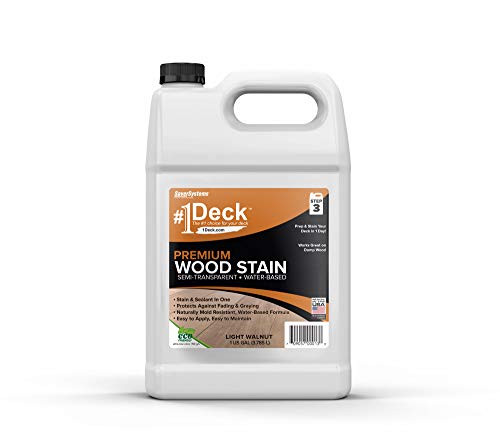
This option blends color with a transparent layer that reveals more wood grain while providing UV protection. It’s water-based and has a lower VOC, making it suitable for light-duty to moderate outdoor spaces. Best for: Decks that want grain visibility with long-term protection. Limitation: Not a full opaque finish, so color depth will be less than solid stains.
SaverSystems #1 Deck Premium Solid Color (Gray)

This product offers an opaque gray finish with UV protection and mildew resistance. It’s designed to cover existing wood while promoting long-term color stability. Best for: Decks needing a modern gray aesthetic with solid coverage. Caution: Some users may require multiple coats for an even, fully opaque look on weathered wood.
Buying Guide: Solid Color Deck Stains
What should you consider when choosing a solid deck stain?
- Opacity vs. grain visibility: Do you want a fully opaque color or some wood texture to show through?
- UV and water resistance: Look for fade-resistant formulas and water repellents to extend deck life.
- Base and compatibility: Oil-based stains offer deeper penetration; water-based options are lower in VOCs and easier clean-up.
- Color permanence: Pigment load and weather conditions influence color retention; choose darker tones for more hiding power.
- Application ease: Some formulas require no back-brushing, while others benefit from brushing for even coverage.
- Maintenance needs: Consider recoat frequency and whether the finish can be applied over existing finishes.
Comparison at a glance can help: opaque finishes maximize concealment and protection, while semi-transparent options emphasize wood grain with color. Surface prep, climate, and sun exposure all influence performance.
Frequently Asked Questions
- Is solid color better than semi-transparent for decks?
Solid colors hide grain and offer uniform color and protection, while semi-transparent finishes emphasize wood texture and may require more maintenance.
- Can these stains be used on fences or siding?
Yes. Many are formulated for exterior wood surfaces, including decks, fences, and siding, but always check product guidance for surface compatibility.
- Do solid color stains require primer?
Typically, solid color decks stains do not require a separate primer, but proper surface prep—cleaning, dry wood, and removing old coatings—improves adhesion and finish.
- How long does a solid deck stain last?
Durability depends on climate, sun exposure, and maintenance. Recoating timelines vary; look for fade resistance and UV protection in product features.
- Are water-based stains better for the environment?
Water-based options generally have lower VOCs and easier cleanup, but oil-based formulas often provide deeper penetration and longer durability in hot or dry climates.
- What colors look best on a small deck?
Neutral to medium tones such as gray or cedar can visually expand space, while darker tones may make a small area feel cozier.