Yes—semi-gloss wood finishes are ideal for interior projects that need a durable, modern look with a slight shine. This guide highlights five top products suited for furniture, cabinets, trim, and woodwork. The selections cover water-based and oil-based formulas, offering fast dry times, easy cleanup, and strong protection against scratches and spills. The buyers most likely to benefit are DIY homeowners refinishing furniture, hobby woodworkers updating trim, and professionals finishing indoor wood surfaces who want a clear, contemporary sheen without yellowing.
Summary table of selected products:
| Product | Finish Type | Best For | Notes |
|---|---|---|---|
| Varathane Water-Based Crystal-Clear Ultimate Polyurethane (Half Pint) | Water-based Semi-Gloss | Indoor furniture, cabinets, trim | Fast dry, soap-and-water cleanup, low odor |
| Varathane Water-Based Crystal-Clear Ultimate Polyurethane (Quart) | Water-based Semi-Gloss | Medium to large indoor projects | Good coverage, quick recoat |
| Minwax Fast Drying Polyurethane (Oil-Based, Quart) | Oil-based Semi-Gloss | Heavy-traffic wood surfaces | Durable, traditional warm tone |
| Minwax Polycrylic (Water-Based, 1/2 pt) | Water-based Semi-Gloss | Non-yellowing protection over stains | Low odor, crystal-clear finish |
| Varathane Oil-Based Ultimate Polyurethane (Half Pint) | Oil-based Semi-Gloss | Rustic or warm-toned projects | Fastest dry times among oil-based options |
Varathane Water-Based Semi-Gloss (Half Pint)

Products in this line use a water-based formula that dries quickly and cleans up with soap and water. The finish is semi-gloss and designed to protect indoor wood surfaces such as furniture, windows, cabinets, and trim. Best for: homeowners finishing light-colored woods or projects where ease of cleanup and low odor are priorities. Caution: while water-based finishes reduce ambering, they can raise grain on bare hardwood if not properly sanded between coats.
Varathane Water-Based Semi-Gloss (Quart)
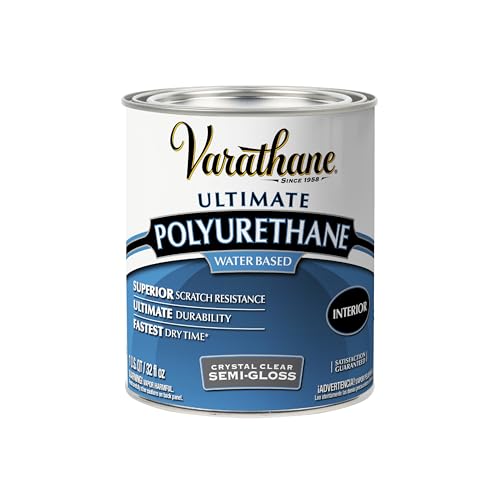
This quart-size option covers more area and shares the same fast-drying, soap-and-water cleanup benefits as the half pint. It’s best for larger indoor projects like sizable cabinet refinishing or multiple pieces in a room. Caution: recoat times are relatively short, so plan coats carefully to avoid lap marks on large surfaces.
Minwax Fast Drying Polyurethane (Oil-Based, Quart)

Oil-based polyurethane offers durable protection and a warm tone that enhances wood grain. This semi-gloss finish is suitable for high-use surfaces such as floors, doors, and cabinets. Best for: projects needing long-lasting protection against scratches and spills. Caution: oil-based finishes have stronger odor and longer drying times compared to water-based options.
Minwax Polycrylic (Water-Based, 1/2 Pt)

Polycrylic is a water-based finish that dries quickly with a crystal-clear appearance and a non-yellowing, low-odor profile. It’s ideal for over both oil-based and water-based stains on interior wood. Best for: projects demanding a non-yellowing, light-reflective semi-gloss sheen on maple, birch, or other pale woods. Caution: very high-traffic floors may benefit from a more robust, oil-based topcoat.
Varathane Oil-Based Ultimate Polyurethane (Half Pint)

This oil-based option is the fastest-drying among Varathane’s oil-based offerings and creates a hard, warm finish that helps highlight wood grain. Best for: projects where a quick-dry, durable, golden-toned coating is desired. Caution: oil-based finishes emit stronger fumes and take longer to cure fully, so ensure proper ventilation during application and curing.
Buying Guide: Choosing the Right Semi-Gloss Wood Finish
What finish type should I choose—water-based or oil-based? Water-based finishes generally dry faster, have lower odor, and cleanse with soap and water, making them ideal for indoor spaces and projects where easy recoat cycles matter. Oil-based finishes tend to deepen wood tones, offer superior abrasion resistance, and are preferred for heavily used surfaces like tables or floors, though they require longer drying times and ventilation.
How important is dry time and recoat window? For most indoor projects, a 30-minute dry-to-touch and a 2-hour recoat window (as seen with several Varathane products) enables quicker completion. If you’re refinishing multiple pieces or a large surface, factor in a longer cure time before light use.
What sheen level should I expect from semi-gloss? Semi-gloss provides a balanced sheen that highlights grain without a high glare. It shows some depth and durability, making it a versatile choice for cabinetry, trim, and furniture in living spaces and kitchens.
Are there benefits to using a clear protective finish over stain or paint? Yes. Clear finishes preserve the color of stains and woods while adding a protective layer. Water-based polyurethanes resist yellowing and are better for light woods, while oil-based products tend to enhance warmth and depth on darker woods.
What should I consider for room-specific applications? For rooms with high humidity or moisture exposure (kitchens, bathrooms), water-based products reduce odor and cleanup effort but ensure proper sealing against moisture. For floors and high-traffic surfaces, a durable oil-based option may offer longer-lasting wear, provided ventilation is managed.
Frequently Asked Questions
- What is the difference between water-based and oil-based semi-gloss finishes? Water-based finishes dry faster, clean up with soap and water, and are less likely to yellow; oil-based finishes tend to deepen wood tones and offer durable protection but require solvents and longer drying times.
- Can I apply multiple coats in one day? With water-based finishes, you can often recoat after 2 hours; oil-based finishes typically require longer intervals and careful ventilation between coats.
- Is semi-gloss suitable for all interior woods? Generally yes for most interior wood types, but select a finish based on use-case (high-traffic surfaces may benefit from heavier-duty oil-based coatings).
- Do these finishes protect against scratches and spills? Yes, all listed products provide protective topcoats, with oil-based formulas offering strong abrasion resistance and water-based options delivering easy maintenance.
- Will these finishes yellow over time? Water-based finishes are less prone to yellowing, especially on light woods. Oil-based finishes can impart warm tones and may yellow slightly with age.
- Do I need to sand between coats? Yes, light sanding between coats improves adhesion and results in a smoother final finish for most polyurethanes and polycrylics.