When preparing drywall for paint, choosing the right sealing primer matters. This guide highlights top sealing primers suited for drywall, addressing common issues like damaged paper, patches, and stain blocking. Ideal buyers include DIY homeowners, value-conscious renovators, and pros seeking reliable interior primers that bite well on bare, patched, or stained drywall. The selections emphasize products that create a uniform surface, minimize subsequent coats, and reduce edge lift or peeling in high-humidity spaces.
Summary of selected products:
| Product | Best For | Why It Stands Out |
|---|---|---|
| Zinsser Gardz Water-Based Problem Surface Sealer | Damaged drywall with torn paper | Seals damaged surfaces and stabilizes paper, reduces bubbles |
| Zinsser Bulls Eye 1-2-3 Water-Base Primer & Sealer | General interior/exterior use | Stain-blocking, bonds to glossy surfaces |
| Zinsser Bulls Eye 1-2-3 Plus Spray Primer | Spray-on priming on challenging surfaces | Fast coverage, sticks to many substrates without sanding |
| Glidden Interior Drywall Primer Flat | New drywall and patches | Seals patches, prepares surface for paint |
| Zinsser Bulls Eye Water-Base Primer & Sealer | Interior walls and surfaces | Low odor, strong stain blocking, fast drying |
Zinsser Gardz Problem Surface Sealer

Zinsser Gardz is designed to harden and seal damaged drywall, torn paper, and patched areas. It creates a stable base that minimizes bubbling and helps seal skim coats and spackling. Best for repairs before priming and painting, especially on surfaces with paper damage or movement. This product suits DIYers repairing damaged sections and professionals preparing affected walls for a uniform topcoat.
- Best for repairing torn paper and sealing skim coats on drywall.
- Better for surfaces with compromised paper where traditional primers might fail to bond evenly.
- Caution: Not a stain-blocking product; apply a dedicated stain-blocker if visible stains exist after Gardz.
Zinsser Bulls Eye 1-2-3 Water-Base Primer & Sealer
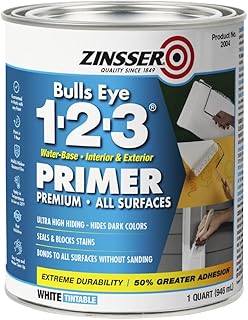
This all-surface, water-based primer and sealer is designed for interior and exterior use and bonds to glossy surfaces without extensive sanding. It is a solid choice when you need a versatile undercoat that blocks stains and provides good adhesion on new or previously painted drywall. It is also suitable for surfaces like wood, metal, and masonry in mixed projects. Best for general-purpose priming and stain-blocking tasks.
- Best for interior and exterior surfaces, including glossy finishes.
- Better for jobs where minimal surface preparation is available and quick adhesion is desired.
- Caution: If you expect heavy staining, you might still require a dedicated stain blocker in addition to this primer.
Zinsser Bulls Eye 1-2-3 Plus Spray Primer

This spray primer is ideal for interiors or exteriors on drywall, concrete, wood, masonry, metal, and other challenging surfaces. The oil-based feel on this spray ensures uniform adhesion and can reduce the need for sanding. It dries quickly and covers considerable area, making it efficient for large patches or whole-room priming projects. Choose this if you want fast, even coverage with minimal tool contact.
- Best for spraying hard-to-reach areas or large drywall sections.
- Better for smooth, even coverage on glossy or difficult surfaces without sanding.
- Caution: Oil-based formula may have stronger odor and longer cure times in confined spaces.
Glidden Interior Drywall Primer Flat

Glidden Interior Drywall Primer Flat is a straightforward option for new drywall and patches. This interior latex primer helps seal patches and primes the surface for paint, providing a smooth base with low sheen. It is a straightforward choice for rooms that require a simple, effective primer to ensure even color uptake and finish quality.
- Best for new drywall patches and light to moderate repairs.
- Better for users seeking a latex-based, easy-to-clean primer with a flat finish.
- Caution: Flat finishes may show texture more than satin or eggshell sheens; consider topcoat sheen impact on appearance.
Zinsser Bulls Eye Water-Base Primer & Sealer

This low-odor, water-based primer is designed to provide strong stain blocking on drywall, wood, and painted surfaces. It dries to the touch in about 30 minutes and covers a broad area per quart, which helps speed up project timelines. It is particularly effective where off-white or light paint is used and where you need dependable stain suppression under multiple coats of finish.
- Best for interior walls prone to staining or bleed-through.
- Better for rooms requiring quick turnarounds due to fast drying and low odor.
- Caution: For heavy water stains or nicotine, additional stain-blocking products may be required beyond this primer.
Buying Guide: Key Considerations For Sealing Primers On Drywall
What should you evaluate when choosing a sealing primer for drywall?
- Surface condition: If drywall is patched, torn, or skim-coated, select primers that seal and stabilize damaged areas (like Gardz). If surface is relatively intact, a standard stain-blocking primer may suffice (like Bulls Eye 1-2-3).
- Stain blocking vs. sealing: For smoke, water, or heavy color bleed, prioritize primers with strong stain-blocking properties. For patched areas, choose sealing primers that minimize future cracks or paper lifting.
- Finish and odor: Water-based primers offer low odor and easy cleanup, while oil-based or solvent-influenced formulas may provide stronger adhesion on glossy or challenging surfaces. Consider room usage and ventilation.
- Drying time and coverage: Quick-dry options are beneficial for small rooms; larger projects may benefit from primers with broader coverage per quart.
- Compatibility: Ensure the primer adheres well to the substrate (drywall, patched areas, skim coats) and is compatible with the intended topcoat finish you plan to apply.
- Application method: Sprays can speed up large areas or intricate surfaces; brushes and rollers suit detailed work and touch-ups.
FAQ
- Q: Do I need a primer if my drywall looks clean and new?
A: A primer helps seal the surface and improves paint adhesion, especially on new drywall with chalky dust or slight patches. - Q: What is the difference between sealing and stain-blocking primers?
A: Sealing primers stabilize the surface and prevent dust/runny spackling from showing through; stain-blocking primers prevent bleed-through from dyes, moisture, or smoke. - Q: Can I use primer on concrete or metal surfaces?
A: Some primers are designed for all-surface use, including concrete and metal; verify the product data sheet for substrate compatibility. - Q: How long should I wait between applying primer and paint?
A: Drying times vary; many water-based primers dry to the touch within 30 minutes, but follow the product’s guidance for recoat windows. - Q: Is low-odor primer better for interior spaces?
A: Yes, low-odor formulas are preferable for living areas and spaces with limited ventilation. - Q: Should I sand between coats?
A: Light sanding is sometimes recommended between coats for some difficult surfaces; always follow the product instructions.