Answering the need for reliable basement wall sealing, this guide highlights five top products designed to stop leaks and protect foundations. Each option targets different situations—from new construction to DIY repairs—so you can choose based on project scope, surface, and climate. Whether you want a clear sealant for preserving wall aesthetics or a robust rubber membrane for heavy moisture, these picks cover common basement scenarios and give you a clear rationale for who benefits most.
The following summary table presents the key choices, helping you compare at a glance. Use this as a quick reference when you’re narrowing down options based on surface compatibility, curing behavior, and ease of application.
| Product | Best For | Surface Compatibility | Notes |
|---|---|---|---|
| TUFINEIN Transparent Waterproof Coating (35 oz) | Light to moderate moisture basements with aesthetic needs | Concrete, masonry, wood, metal | Clear membrane, self-leveling, long-lasting |
| Liquid Rubber Basement Sealant (5 Gallon) | Active leaks and foundation repair | Concrete, masonry, wood, metal | High elasticity, 900% elongation, complete system |
| Ames Block & Wall Liquid Rubber | DIY basement and foundation sealing | Concrete, masonry | Multi-use white coating, convenient gallon size |
| KILZ Basement & Masonry Waterproofing Paint | Stain resistance with nanotech barrier | Concrete, brick, block, stucco | Interior/exterior, below-grade caution |
| TUFINEIN 70 oz Clear Waterproof Coating | Clear sealant for aesthetic-preserving basements | Wood, concrete, brick, metal | Semi-transparent, versatile indoor/outdoor use |
TUFINEIN Transparent Waterproof Coating (35 oz)

This clear, water-based sealant cures into a dense membrane that blocks air, water, and moisture. It’s designed for both indoor and outdoor use, offering a non-texture-altering finish that preserves wall appearance. Best for basements where aesthetics matter and moisture is moderate. > Suitable for concrete, masonry, wood, and metal. It self-levels to fill small gaps and cracks, providing a durable seal without altering surface texture. A potential limitation is that it may require multiple coats for larger leaks or active hydrostatic pressure.
Liquid Rubber Basement Sealant – 5 Gallon

This professional-grade membrane provides a permanent waterproofing solution for basement leaks and foundation repair. Its elasticity (up to 900% elongation) helps adapt to movement and temperature changes, making it well-suited for spaces with shifting concrete. It adheres to concrete, masonry, wood, metal, and foundation surfaces, and pairs well with self-leveling concrete. Best for: larger leaks, active dampness, and DIY projects needing a robust, flexible seal. Limitation: the product’s flexible rubber finish may require careful application to avoid surface tackiness in high-use areas.
Ames Block & Wall Liquid Rubber
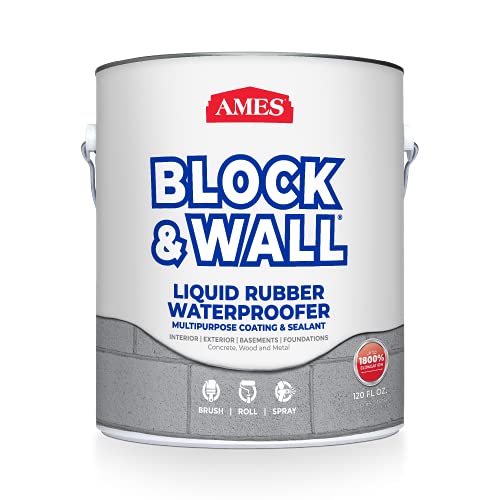
Block & Wall Liquid Rubber is a versatile, white multi-use coating that provides a practical basement and foundation sealant option. It’s designed for use on concrete and masonry surfaces, delivering a protective layer against moisture. Best for: homeowners seeking an affordable, accessible coating in gallon-sized packaging. Caution: color is white, which may require additional surface prep for appearance if you prefer a uniform finish throughout the space.
KILZ Basement & Masonry Waterproofing Paint

This option combines waterproofing with a paint finish that resists moisture in high-humidity areas. Engineered with nanotechnology, it blocks water pressure up to 12 PSI on concrete and masonry. It’s suitable for interior and exterior basement walls, brick, concrete blocks, and stucco. Best for: projects where a decorative finish is desired alongside protection. Limitation: not intended for walls with active leaks and it should be used after filling larger holes with hydraulic cement.
TUFINEIN Rubber Sealant 53 oz

This neutral gray sealant provides elasticity and quick film formation, forming a flexible rubber coating within hours. It remains stable across a wide temperature range and adheres to multiple surfaces, keeping future cracks from forming. Best for: roof gutters, basements, and other moisture-prone areas where a quick-drying, flexible membrane is advantageous. Limitation: not ideal for walking surfaces due to tackiness when cured.
TUFINEIN 70 oz Clear Waterproof Coating

This transparent, water-based coating forms a durable sealing membrane after curing, suitable for indoor and outdoor use on roofs, walls, basements, sheds, and more. It’s designed to maintain surface aesthetics while providing an effective barrier against air, water, and moisture. Best for: projects where low-visibility protection is needed. Caution: ensure surface is clean and dry for optimal bonding; excessive humidity may slow cure time.
Buying Guide: Key Purchase Considerations
- Moisture level and active leaks: For active leaks or severe basement dampness, choose high-elasticity products like liquid rubber sealants, which tolerate movement.
- Surface type: Concrete, masonry, brick, and metal surfaces have different adhesion profiles. If you have wood framing or drywall adjacent to the wall, opt for clear or white coatings that don’t alter room aesthetics.
- Aesthetic needs: If appearance matters, select clear or white sealants that won’t noticeably change wall color or texture.
- Cure time and temperature tolerance: Some products cure quickly but require dry conditions; others tolerate cold temperatures but may cure slower. Check application windows for your climate.
- Application scale: For large basements, consider 5-gallon or 1-gallon kits depending on the area and method (brush/roller vs. spray). Self-leveling features help in covering small gaps with less labor.
- Safety and ventilation: Water-based products typically emit fewer odors and solvents. Ensure adequate ventilation during application and curing.
Frequently Asked Questions
- What is the best sealant for basement walls with active leaks?
– A high-elasticity sealant like a liquid rubber membrane is often most effective for active leaks and foundation repair due to its movement tolerance. - Do I need to remove old paint before applying a basement sealant?
– In most cases, you should clean the surface and prime if required by the product. Some coatings adhere well to clean masonry without stripping old paint, but follow manufacturer instructions. - Can I use basement sealant on both interior and exterior walls?
– Many products are designed for indoor and outdoor use, but verify the label for specific interior or exterior suitability and any below-grade limitations. - How long does it take for these sealants to cure?
– Cure times vary; some sealants form a film within a few hours, while others require longer, depending on humidity, temperature, and surface porosity. - Will sealants impact wall appearance?
– Clear and white sealants minimize visual changes. Transparent coatings allow you to preserve wall texture and color, while white or pigmented products may slightly alter appearance. - Are these products compatible with insulation behind basement walls?
– Most products are compatible with standard basement setups, but ensure they do not trap moisture between the coating and insulation. Follow product guidelines for best results.