Answer: For sealing a concrete basement floor, choose a proven penetrating or rubberized sealant designed to stop moisture intrusion and prevent future cracking. This guide highlights five top options and explains who each is best for. Ideal buyers include DIY homeowners waterproofing a damp basement, landlords maintaining foundations, and professionals seeking long-lasting internal seals. Below is a quick comparison of the five featured products to help you decide.
| Product | Type | Best For | Key Benefit |
|---|---|---|---|
| Liquid Rubber Basement and Foundation Repair Sealant | Liquid Rubber Sealer | Active leaks, foundation repair | Permanent waterproof membrane with high elongation |
| RadonSeal Plus Concrete Sealer – 5 Gallon | Deep-penetrating sealer | Basements & foundations with moisture concerns | Internal, long-lasting seal |
| OAIEGSD 1 Gallon Concrete Sealer | Water-based silane/siloxane | Outdoor and indoor concrete surfaces | VOC-free, invisible protection |
| KILZ 1-Part Epoxy Acrylic Concrete & Garage Floor Paint | Epoxy acrylic paint | Basement floors needing finish and protection | Durable, scuff and wear resistance |
| DOMINATOR Concrete Sealer for Driveway | Water-based penetrating sealer | Outdoor concrete surfaces | Zero sheen, natural look with strong water resistance |
Note: The table above summarizes how these products align with common basement sealing goals. Always follow manufacturer instructions for surface preparation and curing times to maximize protection.
Liquid Rubber Basement and Foundation Repair Sealant

Best for active leaks and foundational crack repair, this seamless rubber coating creates a waterproof membrane with high elongation (900%). It delivers durable adhesion to concrete, masonry, wood, metal, and foundation surfaces, supporting basement waterproofing and long-term protection. This option is particularly effective for DIY projects aiming to prevent future water intrusion when applied to self-leveling concrete. A possible limitation is that complete curing requires proper surface preparation and climate control during application, which may influence drying time.
RadonSeal Plus Concrete Sealer – 5 Gallon
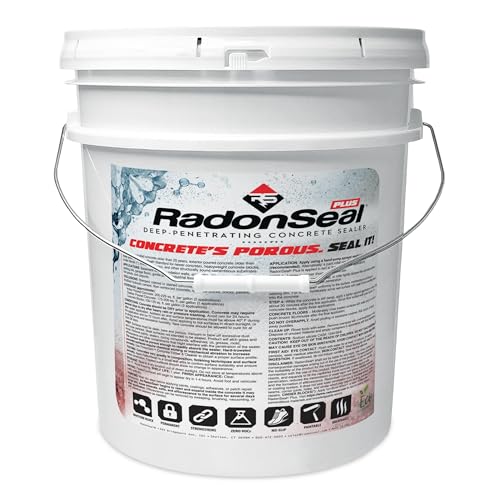
Best for long-term internal sealing in basements and foundations, RadonSeal Plus penetrates deeply into concrete and reacts within the pore structure to seal capillaries. It helps reduce moisture intrusion and moisture vapor transmission without forming a surface film. Choose this if you want a durable internal seal that resists peeling or wear over time. A potential limitation is the need for thorough ventilation during application due to the penetrating nature of the product.
OAIEGSD 1 Gallon Concrete Sealer

Best for invisible protection and everyday indoor/outdoor use, this water-based silane/siloxane penetrating sealer forms a protective barrier that resists water absorption and stains. It is well suited for garages, driveways, patios, and masonry. It extends surface life by reducing freeze-thaw damage and cracking. A limitation is that it does not provide a visible finish or color change, which may be a consideration if you want a visible topcoat or color.
KILZ 1-Part Epoxy Acrylic Concrete & Garage Floor Paint

Best for finishing basement floors with a durable surface, this epoxy acrylic paint resists hot tire pickup, scuffing, cracking, peeling, and fading. It is designed for interior and exterior horizontal concrete surfaces and works well on basements, garages, porches, driveways, and pool decks. Choose this if you want a finished look with strong wear resistance, but avoid if you require a penetrating sealer rather than a surface coating.
AMES Block & Wall Liquid Rubber Pro Sealant
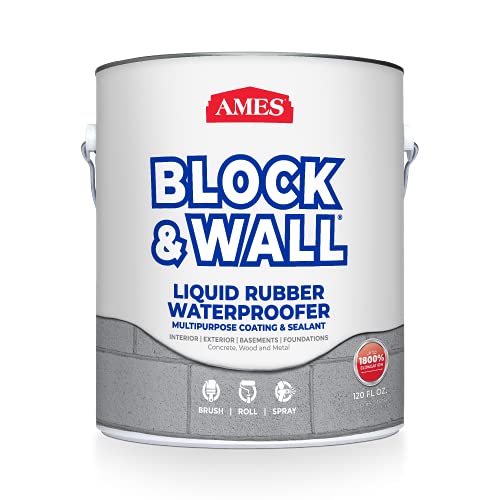
Best for multi-purpose waterproofing, this white liquid rubber coating serves as a concrete sealer and general waterproofer for basements and foundations. Its quick-drying quality and strong adhesion support DIY projects needing a flexible, durable coating. One limitation is that color may not be suitable for all aesthetic preferences, as it is a white sealant that can show through in some applications.
DOMINATOR Concrete Sealer for Driveway

Best for outdoor concrete surfaces, this penetrating water-based sealer uses silane/siloxane technology to protect driveways, pavers, and patios from cracking, staining, and spalling. It provides a natural look with zero sheen and no film formation, which is ideal for preserving the original appearance of concrete. Avoid if you need a thicker film for heavy traffic areas, as this is a penetrating, low-film option.
Buying Guide: Concrete Basement Floor Sealing Essentials
- Surface type and condition: Determine whether you need a penetrating sealer, a rubberized coating, or a finished epoxy paint based on moisture levels, crack presence, and desired appearance.
- Sealer type and mechanism: Deep-penetrating sealers stop moisture at the source; rubberized sealants create a flexible membrane; epoxy/alkyd paints provide a durable topcoat with color and texture.
- Curing and ventilation: For penetrating and rubber sealants, ensure proper surface prep and curing conditions; some products require ventilation during application.
- Maintenance and aesthetics: Decide whether you want a clear finish or a colored/topcoat look; consider future cleaning and resurfacing needs.
- Longevity and internal protection: Internal seals that react within concrete generally resist peeling and wear longer than surface coatings in damp environments.
Frequently Asked Questions
- What is the most effective type for a damp basement floor?
– Deep-penetrating sealers or rubberized membranes that both stop moisture ingress and accommodate foundational movement tend to perform best in damp basements. - Do I need a primer before applying a sealer?
– Surface preparation requirements vary by product; check manufacturer guidelines for porous or dusty surfaces to ensure optimal adhesion. - Will a penetrating sealer change the color of my concrete?
– Typically no; penetrating sealers are designed to be invisible, though some may impart a slight sheen depending on the formula. - Can I apply a sealer over a previously painted floor?
– In most cases, not recommended; the sealant should be applied to clean, unsealed concrete or properly prepared surfaces to avoid delamination. - How long does it take for these sealers to cure?
– Cure times vary by product and conditions; follow the product’s stated drying and curing times for best results. - Are these products safe for pets and plants?
– Many water-based sealers are formulated to be low-VOC or zero-VOC; verify product labels for any restrictions or safety notes before use.