When patching drywall, choosing the right sandpaper matters for a clean, paint-ready finish. This guide highlights five reliable sanding options designed for drywall patch work, from versatile sanding sponges to specialized mesh discs. Whether you’re smoothing joint compound, feathering edges, or preparing a repaired area for primer, these picks cover common repair scenarios. Best for DIYers tackling small patches, contractors refining joints, and hobbyists working on furniture refinishing as well.
Summary at a glance: the following table outlines the recommended products, their grit range, and typical uses for drywall patches. Use this as a quick reference to match the job size and surface type to your sanding needs.
| Product | Grit Range | Best For | Notes |
|---|---|---|---|
| Romeda 8-Pack Sanding Sponge | 60/80/120/220 | Drywall patches, wood filler, and primer smoothing | Washable and reusable; multiple colors indicate grit |
| 3M Drywall Sanding Sponge (9095DC-NA) | Fine to Medium | Joint compound smoothing, curved or flat surfaces | Flexible sponge; dual grit |
| 3M Drywall Sanding Sheets 9091NA | Fine | Finishing drywall surfaces and final smoothing | Professional-grade sheets |
| toolant Mesh Abrasive 9″ Discs | 120 | Dust-free sanding and long-lasting performance | Open mesh design; reusable |
| S&F STEAD & FAST Sanding Sponge | 60/80/120/220 | Multi-surface prep including drywall and metal | Premium foam and 4-grit set |
Romeda 8-Pack Sanding Sponge: Versatile Grit Set for Drywall

The Romeda sanding sponge set provides eight blocks in four grit levels (60, 80, 120, 220) across two blocks per grit. This arrangement makes it practical for drywall patches where you may need aggressive material removal at the edges and finer smoothing toward the center. The sponges are made from a high-density, tear-resistant material, designed to resist wear and maintain shape during use. Best for: DIYers tackling patch work on drywall and joint compound where multiple grit transitions are needed.
Selected for drywall patch work because the range from 60 to 220 grit supports both feathering and finishing in a single kit. A caution: some users may prefer single-grit blocks for very precise control on delicate areas, as the four-grit set requires mindful switching between blocks.
3M Drywall Sanding Sponge, Fine/Medium Grits

This 3M sanding sponge combines medium and fine grits in a flexible sponge designed for drywall joints and compound. Its contour-friendly shape makes it well-suited for both flat surfaces and curved joints, enabling even smoothing around patches. Best for: finishing joint compound and smoothing edges after applying patches. The dual-grit approach helps reduce sanding time by switching between a heavier grit for initial leveling and a lighter grit for final smoothing. Caution: avoid over-sanding at corners where joint tape may be exposed.
3M Drywall Sanding Sheets 9091NA
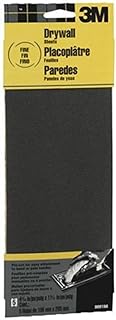
The 9091NA sheets offer fine grit designed for drywall finishing. These sheets are built for durability and long life, making them suitable for frequent use on patched surfaces or repeated detailing across larger drywall areas. Best for: finishing drywall patches where a smooth, paint-ready surface is essential. Use to minimize scratch lines and create a uniform sheen prior to priming. Limitation: some users may prefer a pad or sponge for contoured corners, but sheets work well on flat sections with a sanding block.
toolant Mesh Abrasive 9″ Disc, 120 Grit

The toolant mesh abrasive disc uses a breathable open mesh design that allows dust to escape more efficiently, promoting a cleaner sanding process during drywall patch work. It’s reusable and designed to resist clogging, offering extended life compared to traditional paper. Best for: users who want a dust-free environment and longer-lasting discs for patch smoothing and finish work. Caution: mesh discs require compatible sanding tools and may feel different from traditional blocks on tight curves.
S&F Stead & Fast Sanding Sponge: 4-Grit Set

This kit includes four grits (60, 80, 120, 220) in a single pack, leveraging premium European high-density foam for durability. The combination supports multi-stage patch work, from removing high spots to final smoothing. Best for: drywall patching alongside wood and metal prep, offering a versatile option for various project needs. Limitation: foam-based sponges may wear faster under heavy use on hard materials; consider backup blocks for aggressive grinding.
Buying Guide: Key Considerations For Drywall Patch Sanding
- Grit progression: For patches, start with a coarser grit (60-80) to level uneven areas, then move to 120 and 220 to smooth before priming.
- Surface type: Sponges excel on flat surfaces and corners, while sheets or discs suit larger flat areas or contoured joints when used with a sanding block.
- Dust control: Mesh discs and open-structure abrasives reduce clogging and dust, helpful for indoor projects and health considerations.
- Reusability and cleanup: Wet/dry options and washable blocks can extend tool life and reduce waste, especially for frequent patch work.
- Tool compatibility: Check that discs or sheets fit your sander or hand-sanding setup to ensure efficient use and safety.
- Durability vs. precision: Heavier grit blocks remove material quickly; finer grits provide the final finish but may require more passes to achieve smoothness.
Frequently Asked Questions
- What grit should I use first for drywall patch smoothing? – Start with 60-80 grit to flatten patch edges, then progress to 120 and finish with 220 for a smooth surface.
- Are sanding sponges better than sheets for drywall corners? – Yes, sponges conform to contours and edges, offering better control around joints and patch borders.
- Can I reuse sanding discs after patching? – Some mesh discs are designed for reuse; shake, vacuum, or rinse as directed to extend life.
- Is dust control important for drywall sanding? – Yes, especially indoors; open-mesh and dust-extraction designs help keep the work area cleaner and safer.
- What’s the best option for small patches vs. large repairs? – For small patches, a multi-grit sponge kit (60-220) is convenient; for larger jobs, sanding sheets or mesh discs with a block or pole sander can speed smoothing.
- Should I prime after sanding? – Yes, after achieving a uniform, dust-free surface, apply primer before painting to ensure adhesion and even color.