| Product | Best For | Notes |
|---|---|---|
| Skil SR232301 Corded Detail Sander | Fine finish and contours | Includes attachments and dust control |
| Skil SR211601 Random Orbital Sander | General sanding with dust box | Cyclone dust box, variable speed |
| HYCHIKA Detail Sander | Tight corners and precision work | Compact, efficient dust system |
| TOVPADE 54PCS Micro Sander Kit | Detail work and quick grit changes | 3-color grit system, quick swap |
| Sanding Sticks 50 Pcs Warmtree | Hard-to-reach spots and models | Dual-ended, 120/280 grit |
Answering the common buyer question: which sanding tools deliver smooth finishes on wood while staying versatile for corners, edges, and small detail work? This guide covers five well-rounded options, from detail sanders to sandpaper sticks, and explains who each tool suits best. Read on to compare performance features, best-use scenarios, and practical cautions to help you choose the right tool for your project.
Skil Corded Multi-Function Detail Sander SR232301
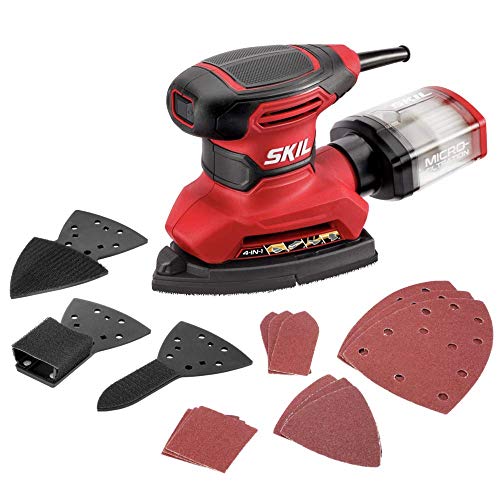
This 4-in-1 detail sander offers versatility for fine finishing across various surfaces. It operates with a 1.2 amp motor and up to 13,500 orbits per minute for smooth results. The tool includes three additional detail attachments for corners, edges, and contours, allowing quick, tool-free changes. A Micro-Filter Dust Box and a 1-1/4″ dust port support cleaner workspaces. Best for: small furniture, trim work, and precision sanding where contouring matters. Caution: dust management depends on attachment use; ensure a vacuum hookup or dust box is used during long sessions to minimize mess.
Skil 5” Random Orbital Sander SR211601

This sander delivers steady power with a 2.8 amp motor and 13,000 OPM for a range of sanding tasks. It features an X-flow dust collector that uses cyclone action to keep dust in the container, making cleanup easier. Variable speed control provides flexibility across materials. Best for: medium to large surfaces where removing material efficiently matters. Caution: the cyclone dust box is best used with a compatible vacuum or collection system to maximize dust capture.
TOVPADE 54PCS Premium Micro Sander Kit
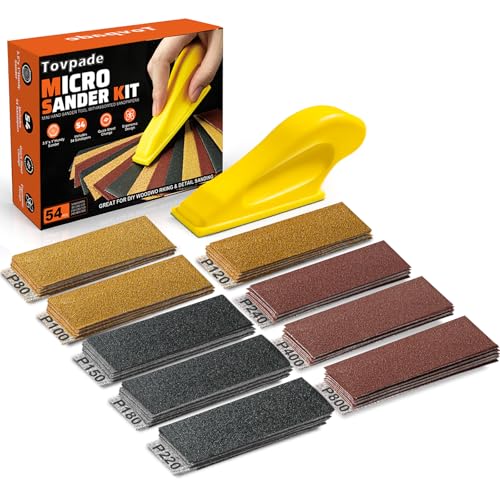
All-in-one sanding kit designed for detail work and tight spaces. Includes a compact sanding block and 54 sheets in 9 grit types (80/100/120/150/180/220/240/400/800). A smart 3-color grit system helps identify coarse, medium, and fine sandpaper. Tool-free hook-and-loop backing lets you switch sheets quickly for uninterrupted progress. Best for: precision finishing on trim, small furniture parts, and crafts. Caution: ensure sheets are properly aligned with the backing to avoid slipping during use.
HYCHIKA Detail Sander

Compact and quiet, this detail sander operates at up to 14,000 OPM with a 1.6 amp motor. It includes 12 sanding papers (P80, P120, P240) and uses a hook-and-loop system for quick changes. It features an efficient dust collection design to keep the workspace cleaner. Best for: paint stripping, rust removal, and tight corner work where precision matters. Caution: lower power models may struggle on very hard coatings; consider higher grit progression for stubborn material.
Sanding Sticks 50 Pcs, Warmtree
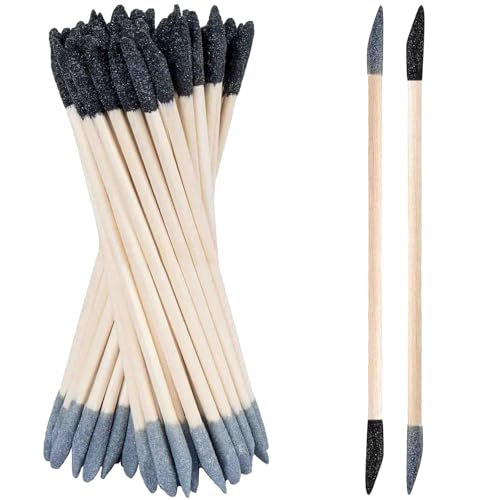
This 50-piece set includes durable double-ended sanding sticks in 120 and 280 grit for quick transitions between rough and smooth finishes. The matchstick-like design helps reach tight spots, curves, and small joints on wood models and crafts. Best for: detail work on furniture edges, model making, and quick touch-ups. Caution: grit labels are not color-coded like some kits; verify grit before use to ensure the correct progression for your task.
Buying Guide
What should you consider when buying sanding tools for wood?
- Project type: Detail work and tight spaces favor compact detail sanders or sanding sticks, while larger surfaces benefit from orbital or random orbital sanders.
- Dust management: A good dust collection system or vacuum compatibility helps keep the workspace clean and prolongs tool life.
- Grit range: For wood, start with coarser grits (60-120) for material removal, then move to finer grits (180-240) for finish. Some kits provide a full range (80-800) for all steps.
- Ease of bit/attachment changes: Tool-free detachment and quick-swap backings save time on finishing sessions.
- Portability and control: Lighter tools with ergonomic grips are better for overhead or detailed work; heavier machines suit flat surfaces.
- Maintenance: Clean dust ports and replace worn pads or sheets promptly to maintain performance.
Buying decision tips: For beginners or hobbyists focusing on trim, edges, and small projects, a versatile detail sander with good dust management and multiple attachments (like the Skil SR232301) offers immediate flexibility. For mid-sized projects requiring efficient dust containment and adjustable speed, the Skil SR211601 provides robust performance. For tight corners and delicate finishes, HYCHIKA and TOVPADE kits provide tailored solutions with quick sheet changes and organized grit options. If you frequently work on models or small crafts, Warmtree sanding sticks offer accessible reach and consistent grit transitions.
FAQ
- What type of sander is best for wood finishing? A detail sander or orbital sander with dust control is generally best for finishing, depending on the surface area and contours.
- Should I use wet or dry sanding for wood? Dry sanding is common for initial shaping; wet sanding helps reduce dust and achieve a smoother finish, especially on softwoods.
- How do I choose grits for wood? Start with 60-120 for material removal, progress to 180-240 for smoothing, and finish with 320-400 for a fine surface. Use finer grits on softwoods to prevent tearing.
- Can I use sanding sticks for wood furniture? Yes, sanding sticks are effective for edges, curved surfaces, and tight corners where traditional sheets don’t fit well.
- Is dust collection essential for sanding? Yes. It reduces airborne particles, improves visibility, and helps maintain cleaner workspaces and equipment.
- What should I avoid when selecting sanding accessories? Avoid mismatched grit with delicate tasks; ensure hook-and-loop backings are compatible with your sander for secure grip and safe operation.