Answering the common buyer question, these sanding sponges and blocks are designed to smooth drywall joints, finish plaster, and prepare surfaces for paint or primer. The top picks below are best for DIYers and professionals who want versatile, reusable solutions that work on joint compound, sheetrock, wood filler, and metal accents. Each product is selected for its balance of grit range, durability, and ease of use on walls, ceilings, and trim.
| Product | Grit Range | Best For |
|---|---|---|
| Romeda 8-Pack Sanding Sponge | 60/80/120/220 | Drywall finishing and refinishing projects |
| 3M Drywall Sanding Sponge (9095DC-NA) | Fine/Medium | Joint compound smoothing and contour sanding |
| YNZDRWA 8 Pack Sanding Sponge | 60/80/120/180/220 | Wet or dry sanding on drywall and wood |
| MARSHALLTOWN QLT Drywall Sanding Sponge | Wet and dry dual-sided | Dustless drywall finishing and residue removal |
| S&F STEAD & FAST Sanding Sponge Set | 60/80/120/220 | Broad use from wood to drywall and metal prep |
Romeda 8-Pack Sanding Sponge

Grits: 60/80/120/220. A set of eight blocks in four grits, color-coded by grit. The pack includes two blocks per grit, making it suitable for sequences from heavy material removal to fine finishing. Best for homeowners tackling drywall patches, primer prep, and furniture polishing adjacent to drywall work.
Best for: DIYers who want a complete starter kit with multiple grits in one package. The sponges are described as high-density, flexible, tear-resistant, and durable, reducing the chance of tearing or grit loss during use.
Limitations: The color-grit coding aids identification but relies on the user to maintain the proper grit for each stage of sanding. Some projects may require wet sanding for dust control, which this set supports but does not specify wet-dry compatibility in every case.
3M Drywall Sanding Sponge (9095DC-NA)

Grits: Fine/Medium; dual grit block for versatile use. Flexible sponge can be used on flat or contoured surfaces, and is designed for sanding joint compounds and smoothing seams. This option emphasizes precision with moderate material removal and a smooth finish.
Best for: Professionals or serious DIYers who need a compact, dual-grit solution for joint compound work and finishing touches on drywall. Good for removing minor ridges and smoothing compound in corners and curves.
Limitation: As a dual-grit sponge, it may require switching sides or blocks for different stages, which can slow down very large jobs.
YNZDRWA 8 Pack Sanding Sponge

Grits: 60/80/120/220 with additional 180. These blocks are described as washable and reusable, suitable for wet and dry use. The base material uses industrial-grade brown corundum on a high-density sponge, offering strength and tear resistance for long-term projects.
Best for: Those who want a flexible, reusable option with a wide grit range, useful for drywall, wood filling, and metal prep. Wet sanding reduces dust and improves surface finish on large patches.
Limitation: Slightly more complex to cut to custom sizes, which can be inconvenient for unusual corners or tight spaces.
MARSHALLTOWN QLT Drywall Sanding Sponge
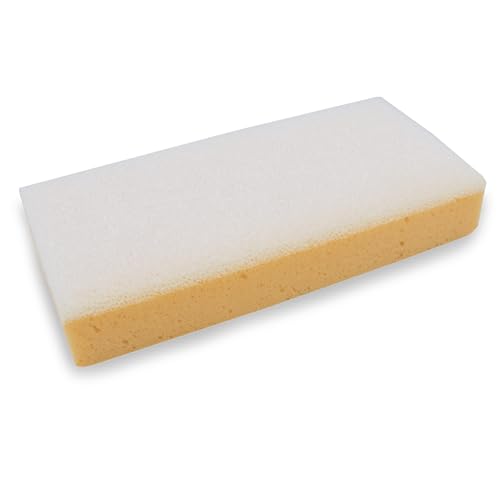
Dual-sided sponge with abrasive on one side for wet sanding and a sponge on the other for residue removal. It’s designed for virtually dustless drywall sanding, making it suitable for indoor projects where dust control matters.
Best for: Contractors and hobbyists who value reduced dust and a surface that can be cleaned and reused. Especially useful in finishing stages where a clean surface is critical before priming and painting.
Limitation: May be bulkier than single-function blocks; some users may prefer separate sanding sheets for very fine finishing in tight corners.
SACKORANGE 12 Pack Sanding Sponge Set

Grits: 80/100/120/180/220/320; includes two blocks per grit. The set emphasizes extended service life with four-sided planting and high-density sponge resilience, designed for long-term use on drywall, wood, and metal.
Best for: Those who want a wide grit progression and durable sponges that can handle repeated use in workshops or on renovation jobs. Ideal for mid- to fine-sanding stages before finishing coats.
Limitation: The broader grit spread means more blocks to manage; storage and organization may require a dedicated case or tray.
S&F STEAD & FAST Sanding Sponge Set

Grits: 60/80/120/220. Premium European high-density foam supports long-lasting use with aluminum oxide abrasive. Suitable for a broad range of surfaces from wood to drywall prep, with a focus on durability and versatility.
Best for: Professionals who need a robust option for multiple materials and a finish that can stand up to repeated sanding sessions. Good for family- or shop-based projects where switching between materials is common.
Limitation: The set focuses on four grit stages, which may require additional blocks for very coarse or ultra-fine work on specialized surfaces.
Buying Guide: How To Choose The Right Sanding Sponge For Drywall
What grit range do you need?
For drywall, start with coarser grits (60–80) to smooth joints and remove ridges. Move to medium (120–150) to blend seams, then finish with fine (220–320) for a paint-ready surface. Sets that include multiple grits reduce the need to switch products.
Dry vs. wet sanding
Wet sanding reduces dust and can improve finish on joint compounds. Look for dual-use or wet-dry sponges if you’re sanding in occupied spaces or upstairs to minimize mess.
Durability and material
High-density foam and reinforced backing prevent tearing and grit loss. Industrial-grade corundum or aluminum oxide abrasives hold up longer than cheaper alternatives, especially on rough patches or primer coats.
Size, flexibility, and reach
Block shapes that fit comfortably in your hand speed up work. Smaller blocks help reach corners, around fixtures, and along narrow joints.
Ease of cleaning and reuse
Washable blocks extend life and reduce consumables. Choose blocks with robust adhesion between abrasive and foam to avoid grain shedding during cleaning.
Dust control and cleanup
Sponges with integrated dust-reducing features or dual-sided designs can minimize cleanup, especially in home environments. Consider a vacuum-ready setup or a dust-chasing workspace for large projects.
Price and value
While premium sets offer more grits and durability, a balanced selection with 4–6 grits often suffices for typical drywall finishing. For renovations, look for bundles that provide replacements over time.
FAQ
- What grit should I start with on drywall joints? Start with 60–80 grit to remove ridges, then progress to 120–150 grit for blending seams, finishing with 220–320 grit for a smooth surface suitable for paint.
- Are dual-sided sponges better than single-sided? Dual-sided sponges save time by offering different textures in one tool and can help with dust control during wet sanding.
- Can these sanding sponges be used on wood and metal? Yes. Most sets are versatile for drywall, wood filler, primer, and light metal finishing, though you may prefer dedicated blocks for heavy metal work.
- What is the benefit of a washable sanding sponge? Washable sponges reduce waste and cost by allowing repeated use, maintaining performance longer than disposable sheets.
- How do I store sanding sponges to extend their life? Keep them dry in a ventilated container to prevent mold and material breakdown. Avoid prolonged exposure to direct sunlight, which can degrade foam.
- Is dust-free sanding essential for indoor drywall work? Dust-free or low-dust sanding is highly beneficial for indoor spaces, especially in living areas or offices. Look for products marketed as virtually dustless or easy-cleanafter use.