For woodworkers and DIY enthusiasts seeking cleaner sanding and better dust control, a sander with a HEPA vacuum makes a big difference. This guide highlights five reliable options that pair sanding power with strong filtration, helping to protect your lungs and keep workspaces tidy. The selections cover compact handheld sanders to larger dust extractors, suitable for different job sizes and user needs.
Who should consider these? Best for homeowners tackling drywall or wood finishing, professionals needing portable dust control on job sites, and shop-based crafters who require effective sandpaper dust containment. The list balances daily practicality with filter-grade performance to reduce exposure to fine dust. A quick summary table of the chosen products follows to help compare core features at a glance.
| Product | Best For | Key Benefit |
|---|---|---|
| BOSCH VAC090AH | Pro users on job sites | Auto tool activation compatibility |
| Makita VC4210L | Wet/Dry cleanup | HEPA filtration and automatic cleaning |
| Mirka DEXOS 1230X | Professional sanding | 30L capacity, auto filter cleaning |
| AEROPRO Drywall Sander | Drywall projects | Integrated vacuum with adjustable speed |
| Dapper Supply Dust Extractor | General cleanups | Auto-start and strong CFM |
Bosch VAC090AH 9 Gallon Dust Extractor
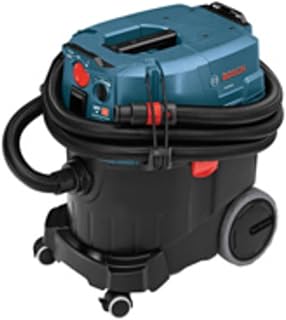
The Bosch VAC090AH is a 9-gallon dust extractor designed to work with power tools, enabling automatic activation for controlled dust capture during grinding and cutting. It offers up to 150 CFM airflow and up to 97 inches of water lift for strong suction. Best for professional users who want seamless integration with power tools and OSHA silica compliance through the ProPlus Guard dust system.
Best for: contractors and serious hobbyists who need a robust, tool-activated vacuum on job sites. Why selected: reliable auto-activate feature, strong CFM, and a filtration system designed to support silica dust controls. Caution: larger workspaces may require periodic filter checks to maintain peak performance.
Makita VC4210L 11 Gallon HEPA Dust Extractor

The Makita VC4210L combines an 11-gallon capacity with a powerful 12-amp motor delivering 148 CFM and 92″ water lift. It includes an automatic filter cleaning system and a HEPA filter that captures 99.97% of particulates at 0.3 microns and larger. Best for: heavy sanding or woodworking tasks that produce persistent dust, where consistent suction matters. Why selected: strong suction, automatic cleaning, and true HEPA filtration. Caution: HEPA filters may require periodic maintenance beyond routine cleaning.
Mirka DEXOS 1230X M-Class HEPA Dust Extractor

The Mirka DEXOS 1230X is a 30L dust extractor with an M-class filtration system designed for dry and wet sanding workflows. It features built-in storage, adjustable suction, and an automatic start function for efficient job-site operation. Best for: professional sanding setups that need high-capacity dust collection and practical auto-start features. Why selected: high capacity and built-in storage make it a versatile sanding system. Caution: M-class filtration is suitable for general dust; for silica dust, ensure compatible tools and practices.
AEROPRO Tools Electric Drywall Sander with Vacuum

The AEROPRO drywall sander integrates an 800W motor with variable speed (800-1800 RPM) and dedicated vacuum suction. It includes a soft-start feature, a 7W LED for illumination, and a foldable/extendable handle. Best for: drywall finishing in tight spaces where dust containment and visibility matter. Why selected: built-in vacuum support and adjustable speed help manage dust during sanding. Caution: not a full standalone dust extractor—choose this if you’re prioritizing integrated sanding convenience.
Dapper Supply Wet/Dry Dust Extractor with Auto HEPA

The Dapper Supply 10-gallon dust extractor features a 15A brushless motor delivering 151 CFM and up to 98 PSI for concrete or drywall dust control. It includes an automatic filter cleaning system and an integrated tool auto-start, enabling the vacuum to power on/off with connected tools. Best for: job sites needing strong suction with automated tool activation for drywall or general cleanup. Why selected: high airflow, tool auto-start, and automatic filter maintenance. Caution: monitor for filter wear with heavy dust loads.
Buying Guide: Choosing the Right Sander With HEPA Vacuum
What matters most in a sander and vacuum combo? Consider dust filtration efficiency, suction power, capacity, compatibility with tools, and ease of use on site. If you work with concrete or silica-rich dust, prioritize true HEPA filtration and OSHA-aligned features. For drywall projects, a lighter, portable unit with auto-start can reduce setup time. If you sand large areas daily, a higher-capacity unit reduces interruptions for bag or filter changes.
Filtration and air handling
- HEPA vs. M-class filtration: HEPA captures finer particles; M-class is common in general dust applications. Choose according to dust type and regulatory needs.
- Automatic filter cleaning helps maintain suction during extended use, reducing manual maintenance.
Capacity and mobility
- Smaller units (5-9 gallons) are more portable but may require more frequent emptying on big jobs. Larger units (11-30 gallons) suit longer tasks but can be heavier to haul.
- Wheels and compact designs improve maneuverability on stairs or tight spaces.
Power and compatibility
- Power-tool activation (auto-on/off) can streamline workflow by starting the vacuum when you start the tool. Ensure compatibility with your tools and outlets.
- Static water lift (inches) and CFM determine overall suction. Higher CFM with sufficient lift is preferable for aggressive sanding tasks.
Best-use scenarios
- Professional sanding on large surfaces: high-capacity units with robust suction and auto-clean features.
- Drywall finishing: integrated vacuums with adjustable speed and strong dust containment.
- Shop cleanup and general dust control: versatile units with auto-start and flexible attachment options.
Frequently Asked Questions
- What is the difference between HEPA and standard filters in dust extractors?
HEPA filters capture smaller particles, improving overall air quality and reducing inhalable dust exposure. - Is auto-start dust extraction worth it for sanding?
Yes, it reduces manual steps and helps maintain continuous dust collection while you work. - Can a sander vacuum handle wet and dry sanding?
Many models support both, but confirm the unit’s spec for wet use to avoid damage or clogs. - What capacity should I choose for a home workshop?
For occasional DIY, a 5–9 gallon unit is usually enough; for frequent or large projects, 11–30 gallons reduce emptying frequency. - Do I need a dedicated dust extractor or a combined sander-vac unit?
A dedicated dust extractor generally offers stronger filtration and suction and is preferred for serious dust control. - How important is filtration class when sanding drywall or concrete?
Filtration class matters for health and regulatory concerns; HEPA is typically preferred for finer dust.