Answering the common buyer question: Which sand additives for paint deliver texture, hiding power, and slip resistance without compromising durability? This guide highlights five practical options suited for homeowners, DIYers, and professionals applying textures on walls, ceilings, or floors. Each entry is chosen for clear benefits, with notes on best use cases and limitations. Read on to compare texture strength, application ease, and where each product excels most.
| Product | Best For | Texture Type | Notes |
|---|---|---|---|
| Zinsser 22616 Roll-A-Tex Sand Texture Additive | Walls and ceilings; DIY remodels | Fine to medium sand texture | Easy to mix; USA-made |
| Rust-Oleum Anti-Skid Additive | High-traffic surfaces | Coarse, sand-like | Slip resistance; aluminum oxide base |
| Homax Roll On Paint Additive, Sand Texture, 6 oz | Quick texture upgrades | Fine to medium texture | Texture and paint in one step |
| Zinsser 22234 Roll-A-Tex Coarse Texture Additive | Rougher texture finishes | Coarse texture | Durable; easy to use |
| Zinsser Roll-A-Tex Texture Additive, Fine | Subtle texture refinements | Fine texture | Durable; easy to use |
Zinsser 22616 Roll-A-Tex Sand Texture Additive

Best for: DIY projects where a flexible, easy-to-use texture additive is desired. The product promises value and simple use, with U.S. manufacturing noted in its features. This is suitable for interior walls and ceilings that require a sanded appearance without heavy labor.
Why chosen: It provides straightforward texture with recognizable brand support, making it a reliable first-step option for texture upgrades. Use this when you want a balanced texture without drastic changes to coating performance.
Limitations: Specific texture coarseness isn’t detailed in the features; plan a test patch to confirm the finish before full application.
Rust-Oleum Anti-Skid Additive

Best for: Surfaces where slip resistance is important, such as entryways, ramps, or garage floors. The aluminum oxide formula is designed to improve traction while preserving the coating’s properties when used as directed.
Why chosen: It adds a stable, uniform texture that helps prevent slips on multiple substrates—concrete, wood, metal, and fiberglass—without needing to change coatings.
Limitations: It is a heavy-duty texture additive; consider its impact on surface smoothness and ensure proper mixing to avoid uneven distribution.
Homax Roll On Paint Additive, Sand Texture, 6 oz
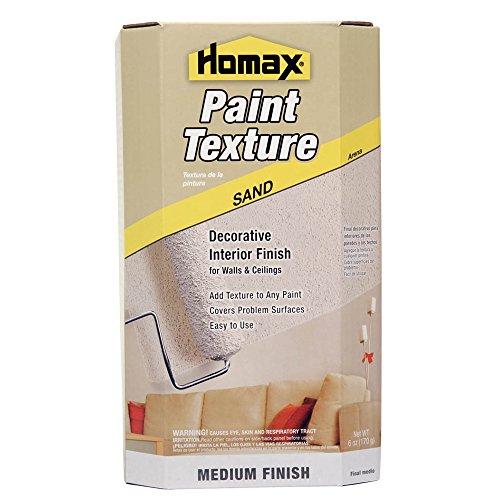
Best for: Quick texture upgrades with a one-step approach. The product claims to combine texture with paint in a single operation, which can save time on small to medium projects.
Why chosen: It offers an accessible option for homeowners who want to refresh walls or conceal minor imperfections while achieving a sanded look.
Limitations: Specific texture granularity isn’t detailed; plan a test patch to confirm the level of texture before broader use.
Homax Roll On Paint Additive, Sand Texture, 6 oz (Pack of 2)

Best for: Projects requiring more texture per can or uniform texture across larger areas. The per-pack note suggests a longer or larger-scale job can be completed with the same texture approach.
Why chosen: It mirrors the single-can option while providing more material per project, which is useful for consistency across walls and ceilings.
Limitations: Details emphasize per-pack usage; ensure compatibility with your intended coating and test a small area first.
Zinsser 22234 Roll-A-Tex Coarse Texture Additive

Best for: Exterior or high-visibility interiors where a pronounced texture is desirable. The coarse texture provides a rugged finish for more dramatic effects.
Why chosen: This option emphasizes durability and easy use, attributes that are helpful in both renovation and new construction projects.
Limitations: Coarser textures may not be suitable for all surfaces; overlay crack-prone areas with appropriate prep to achieve even results.
Zinsser Roll-A-Tex Texture Additive, Fine

Best for: Subtle texture improvements on walls and ceilings where a smooth-but-not-flat finish is desired. Good for hiding minor imperfections or patches.
Why chosen: It provides a finer texture option that yields a washable, refined look, suitable for living spaces or offices with moderate texture goals.
Limitations: Fine texture may be less noticeable on large surfaces; plan to apply at recommended thickness to achieve the desired effect.
Buying Guide
What type of texture do you want?
Texture range varies from fine to coarse. Choose fine for subtle warmth and hiding minor flaws; coarse for a bold, rustic look or high-traffic areas where more traction or visual impact is desired.
Do you need slip resistance or just texture?
Some additives focus on anti-slip properties (for floors and high-traffic areas). If slip resistance is critical, pick products explicitly designed for that purpose, and follow mixing ratios precisely.
What surfaces are you coating?
Concrete, wood, metal, and drywall respond differently to texture additives. Some products are versatile, while others are best for specific substrates. Always test on a small area first.
Is ease of use important?
Several options advertise simple, one-step mixing with paint. If you prefer a quick upgrade, these may be preferable, but verify compatibility with your base paint and desired finish.
How much texture is needed per area?
Texture impact correlates with the amount of additive used per gallon. Follow product-specific guidelines and perform a patch test to predict final appearance and coverage.
How durable is the texture over time?
Durability depends on the base coating and preparation. Durable texture additives typically require proper surface cleaning, priming where necessary, and correct film formation to prevent premature wear or flaking.
Practical quick tips
- Always mix additives thoroughly to ensure even distribution of texture particles.
- Do a small test patch before committing to a full room or floor.
- Keep the surrounding area protected from dust and splatter during application.
FAQ
- What is the best sand texture additive for interior walls? — Zinsser Roll-A-Tex variants offer easy-to-use texture options for walls and ceilings, with both fine and coarse textures available.
- Can these additives be used with any paint? — Most are designed to mix with latex, oil-based, or epoxy coatings; always check product directions for compatibility.
- Will texture additives hide drywall imperfections? — Yes, especially the fine textures, which can obscure minor seams and patches when applied correctly.
- Is slip resistance only for floors? — Anti-slip additives are often designed for floors but can be used on certain vertical applications if the coating system supports it; follow product guidelines.
- How do I choose between fine and coarse texture? — Choose fine for subtle aesthetics and patch hiding, coarse for a bold look and higher traction on surfaces that require more grip.
- Do I need a primer when using texture additives? — Primer decisions depend on the base surface and paint system; refer to the paint and additive guidelines for best results.