When selecting a random orbital sander for drywall, look for adjustable speed, dust collection, and a comfortable grip to handle long jobs. The top picks below are suited for DIYers and professionals alike: some excel at fast material removal, others prioritize dust control and versatility for ceilings, walls, or tight joints. The table summarizes each option’s strongest use case to help you compare at a glance.
| Product | Best For |
|---|---|
| SKIL SR211601 | Balanced power and easy dust cleanup for general drywall sanding |
| MAXXT 4mm Drywall Sander | Heavy-duty material removal with smart speed control |
| DEWALT DCW210B | Cordless convenience and precise control |
| CRAFTSMAN CMCW220B | Cordless flexibility within a V20 system |
| DEWALT DWE6423 | Corded reliability with strong dust sealing |
SKIL 5” Random Orbital Sander With Cyclonic Dust Box

The SKIL SR211601 delivers a capable drywall sanding option with a 2.8-amp motor and 13,000 OPM for smooth finishes across common drywall textures. The cyclonic dust box collects debris in a transparent container for quick assessment and easy emptying. Variable speed control enables precise matching to material hardness and surface condition. This model is best for homeowners and hobbyists who want a budget-friendly tool with solid dust management and straightforward operation.
Best for: Home renovations and light commercial projects where a balanced, easy-to-use sander is preferred.
Caution: The dust container is transparent, but frequent emptying is required on dense debris to maintain suction efficiency.
MAXXT 4mm Random Orbital Drywall Sander

MAXXT offers a 4mm orbit with a brushless motor and a 6-speed dial (4,000–8,500 RPM) plus an LED display that tracks RPM. The memory function recalls the last setting for quick restart, while the 180° pivoting head adapts to ceilings and walls. Dual-mode suction permits ceiling and wall sanding, with a quick-connect adapter to your vacuum for dust capture. This is a strong choice for professional drywall professionals and serious DIYers who value power, control, and dust management in one tool.
Best for: Pros and advanced DIYers who need deep material removal and reliable dust control in hard-to-reach spaces.
Caution: The system relies on an additional vacuum for optimal dust capture; users should ensure compatible hoses and setups before use.
DEWALT 20V MAX Orbital Sander (Tool Only)

This tool-only DEWALT model features a brushless motor for efficiency and runtime, with a variable speed range from 8,000 to 12,000 OPM to fit the application. A low-profile height helps users approach work surfaces closely for precise sanding. It’s well-suited for professionals who already own a DEWALT 20V battery system and need a compact sander for drywall tasks where speed control matters.
Best for: Tradespeople who value cordless convenience and tight-control sanding on drywall projects.
Caution: Battery-dependent performance means runtime is tied to your battery pack; have spare cells on hand for extended work sessions.
CRAFTSMAN V20 Orbital Sander (Bare Tool)

Part of the V20 cordless system, this 5-inch random orbit sander delivers up to 12,000 OPM for rapid material removal. It provides onboard dust collection and a connection to a standard 1-1/4 inch vac hose. The bare tool is ideal for users who already own a V20 battery and want a lightweight, portable sanding option for drywall tasks, especially on larger vertical or overhead surfaces where corded tools are less practical.
Best for: Users who rely on a cordless system and need a lightweight sander for drywall finishing and touch-ups.
Caution: As a bare tool, it requires a compatible battery and charger; ensure your battery level matches your project’s duration.
DEWALT Random Orbit Sander, 5-Inch (Corded)
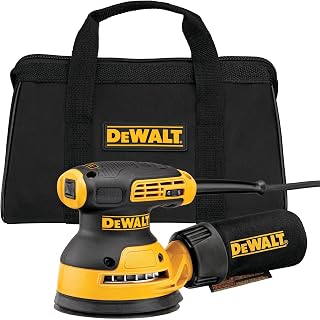
This corded DEWALT model features a 3-amp motor that spins from 8,000 to 12,000 OPM with a counterweight design to reduce vibration. The dust-sealed switch helps protect the tool in dusty environments. It is a reliable pick for drywall sanding where consistent power and a comfortable grip are essential, particularly on larger surfaces or rooms where cords are convenient.
Best for: Users who want a reliable, mid-weight corded sander with solid vibration control for drywall projects.
Caution: The tool relies on a power outlet; consider an extension cord suitable for workshop use to avoid voltage drop on long runs.
Buying Guide: Choosing The Right Drywall Sander
- Power source: Decide between corded for consistent power or cordless for mobility. Corded tools generally offer steadier performance in longer jobs, while cordless models excel in ceilings or tight spaces without a power outlet.
- Orbits and speed: Drywall finishing benefits from finer finishes; look for sanders with adjustable speed and smaller orbit sizes (like 4mm) for smoother results and less gouging.
- Dust management: Effective dust collection saves cleanup time and improves air quality. Consider built-in cyclonic dust boxes or the ability to connect to a vacuum with a quick-connect hose.
- Head versatility: A swiveling or 180° rotating head helps you reach ceilings, corners, and awkward angles. Check if the head can be oriented vertically and horizontally.
- Weight and ergonomics: Lighter tools reduce fatigue on long projects. A low-profile body improves access to tight corners and edges.
- Platform compatibility: If you already own batteries (e.g., DEWALT or CRAFTSMAN), staying within the same system can save costs and improve efficiency.
What to look for in a drywall sander
- Adequate dust collection that captures fine dust and debris without frequent clogging.
- Clear speed indicators or digital readouts for quick setup and repeatable results.
- Durable construction and a comfortable grip for extended sanding sessions.
- Compatibility with standard sanding discs and ease of changing discs.
Size and speed considerations
Drywall sanding requires controlling material removal and minimizing dust. A 5-inch pad is common for efficient coverage, while a smaller 4-inch option can offer better control in tight spots. Speeds around 8,000–12,000 OPM are typical for drywall finishing; use lower speeds for primed or delicate surfaces and higher speeds for rapid material removal where appropriate.
Maintenance tips
- Keep dust collection components clean and unclogged to sustain suction.
- Regularly inspect the sanding pad for wear; replace worn pads promptly to maintain even sanding.
- Lubricate moving parts as recommended by the manufacturer to extend tool life.
FAQ
- Which sander is best for drywall ceilings?
Best options are sanders with a swiveling head and strong dust collection; cordless options near ceilings also help with overhead reach. - Do I need a vacuum connection for drywall sanding?
Yes, connecting a vacuum improves dust control and reduces airborne particles during sanding. - Should I choose a 4mm or 6mm orbit for drywall?
A smaller 4mm orbit yields finer finishes, while larger orbits remove material faster but may scratch surfaces. For paint and primer, 4mm is often preferred. - Is a brushless motor beneficial for drywall sanding?
Brushless motors offer better efficiency and longer life, which can be advantageous for frequent sanding work. - Is a cordless sander practical for large drywall projects?
Cordless tools provide mobility but may require extra batteries for extended work; plan for runtime and charging time. - Can I use standard sanding discs with any sander?
Most sanders use standard hook-and-loop discs; verify the disc size (usually 5 inches) and attachment method for compatibility.