The best quarter round molding cutter depends on the material, angle, and amount of cutting you need to do. Adjustable miter shears are convenient for repeated angle cuts in compatible trim and soft materials; the GARTOL is a portable option, while the O’Shine ratchet model is designed to reduce cutting effort. For wood quarter round and shoe molding, the Crain 855 offers fixed 22.5- and 45-degree settings. Compare the options below and check each tool’s material and thickness limits before buying.
| Product | Best for | Notable detail |
|---|---|---|
| GARTOL Adjustable Miter Shears | Portable angled cutting | Adjustable 45–135-degree range in product name |
| O’Shine 22.5 Degree Miter Shears | 22.5-degree cuts | Extra blade included |
| Warmtree Miter Shears | Softwood and trim up to 0.4 inches | SK5 blade and spare blades |
| O’Shine Ratchet Miter Shears | Reducing effort on repeated cuts | Ratchet system and marked angle positions |
| Crain 855 Cutter | Wood quarter round and shoe molding | Straight, 22.5-, and 45-degree cuts |
GARTOL Adjustable Miter Shears
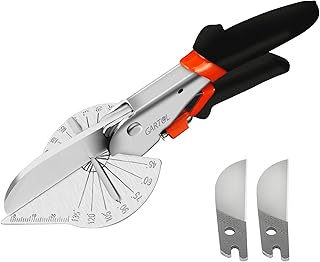
The GARTOL is best for DIYers who want a portable hand cutter with an adjustable angle rather than a bulky saw for suitable trim materials. Its listing describes a 45–135-degree adjustment range and presents the tool as a dust-free alternative for cutting PVC and trim.
Choose this if you value angle flexibility and quick, hand-operated cuts. It may suit small trim jobs where carrying or setting up a saw is inconvenient. The product information provided does not specify a maximum cutting thickness or give a complete material list, so verify that the cutter matches the profile and material you plan to cut.
O’Shine 22.5-Degree Miter Shears

This O’Shine model is best for buyers whose project specifically calls for 22.5-degree angle cuts. The product name also identifies it as a quarter-round and shoe-molding cutter and notes that one extra blade is included.
Choose this tool when its stated angle and hand-shear format suit the job. It may be a more direct fit than a multi-angle tool if you mainly need the named 22.5-degree cut. The provided product details do not explain the full angle range, the maximum material thickness, or which materials it can cut. Check those points before using it for a particular molding profile or material.
Warmtree Adjustable Miter Shears

Warmtree is best for buyers cutting compatible softwood trim, quarter round, PVC trunking, chamfer, or weather stripping. Its stated maximum cutting thickness is 0.4 inches, and the listed angle positions are 45, 60, 75, 90, 105, 120, and 135 degrees. A built-in scale and adjustable fence help set those positions.
The listing specifies an SK5 high-carbon steel blade and spare replacement blades. Choose this if you want several indexed angle settings and need a stated thickness limit for planning. Avoid it for hardwood or metal: the product details explicitly say it is not suitable for either. Measure the molding before buying, since material thickness is a stated constraint.
O’Shine Ratchet Miter Shears

The O’Shine ratchet model is best for buyers who want a hand cutter designed to reduce the effort needed for repeated cuts. Its listing describes an auto-stop ratchet system, long handles, and soft PP+TPR grips, with a claimed reduction in cutting force of up to 80%. It lists uses including quarter round, molding, trim, PVC strips, and other light materials.
The tool has marked positions at 45, 60, 75, 90, 105, 120, and 135 degrees. Its aluminum-alloy anvil and movable fence are described as supporting material during cutting. Choose this over a basic shear if the ratchet feature and reduced hand effort are priorities. Do not use it to cut metal; the listing says it is not for metals.
Crain 855 Quarter Round Cutter

The Crain 855 is best for buyers focused on wood quarter round and shoe molding who need straight, 22.5-degree, or 45-degree cuts. Its listed gauge supports these three cutting positions, making it a straightforward option when those angles cover the project.
The blade is replaceable, and the product information identifies replacement blade No. 856. Choose this cutter if you prefer a tool described specifically for quarter round and shoe mold rather than a general multi-angle shear. Its stated angle choices are more limited than tools with adjustable 45–135-degree settings, so it may not suit projects requiring other angles.
Buying Guide: How to Choose a Quarter Round Cutter
A quarter round molding cutter is a hand tool used to trim molding ends, commonly for corners and joints. Some models use a blade and fence to make angled cuts without setting up a power saw. The right choice depends on what you are cutting, the angle you need, and whether the molding fits within the tool’s stated capacity.
What material and thickness will you cut?
Start with the molding material. Product descriptions may name PVC, softwood, quarter round, shoe molding, or other light materials, but these categories are not interchangeable. For example, the Warmtree listing specifies softwood such as pine and sets a 0.4-inch maximum thickness. It also says not to use the tool on hardwood or metal. Compare your material and measured thickness against the specific cutter’s instructions.
Do not assume that every shear can cut every trim profile. A molding piece may be too thick, hard, or wide for a hand cutter even if its general material sounds suitable. If the product information does not state a capacity, look for additional manufacturer details before purchase rather than guessing.
Which cutting angles do you need?
For typical trim work, identify the angle before choosing a tool. Several listed cutters offer marked positions from 45 to 135 degrees, including 60, 75, 90, 105, and 120 degrees. The Crain 855 lists straight, 22.5-degree, and 45-degree cuts. The O’Shine 22.5-degree model is an option when that specific angle is central to the work.
A tool with fewer settings can be a suitable match for a simple project. A multi-angle cutter is more adaptable when the work includes multiple corner layouts. Confirm whether angle markings represent the cut you need, and test the setup on a scrap piece when possible.
Would a ratchet or standard shear work better?
A standard hand shear offers a simple portable approach to suitable trim cuts. A ratchet model is designed to use a staged cutting action and may be useful when repeated cuts or hand effort are concerns. The O’Shine ratchet listing describes an auto-stop mechanism and an up-to-80% force-reduction claim; that figure is a manufacturer-listed claim, not a guarantee for every material or user.
Tool ergonomics also matter. Handle length and grip materials can affect control, but they do not replace checking blade capacity or material suitability. If a cut requires excessive force, stop and confirm that the tool is appropriate rather than forcing it.
When should you use a saw instead?
Hand miter shears are convenient for portable, light-duty cutting when the trim fits the tool and the material is approved. A saw may be more appropriate for material that is too thick or hard for the shears, or for cuts outside the tool’s supported angles. The GARTOL listing presents its cutter as an alternative to bulky saws, but does not provide a thickness limit in the supplied product details.
For cleaner results, support the molding, align it against the fence, and make sure the blade is sharp and suitable for the material. Follow the product’s instructions and use appropriate hand protection when handling sharp blades.
Do replacement blades matter?
Blade replacement can be useful when a cutter’s edge becomes dull or damaged. The Warmtree and O’Shine ratchet product descriptions mention spare or replacement blades, while the Crain 855 listing identifies a replaceable blade, No. 856. Check that replacement blades are intended for the exact cutter model; blade compatibility should not be assumed from appearance alone.
Frequently Asked Questions
Can you cut quarter round with miter shears?
Yes, certain miter shears are listed for quarter round. Confirm that the cutter supports the material and thickness of your molding before use. Some models are intended only for softwood or light materials.
What angle is commonly used for quarter round corners?
Many corner joints use angled cuts, and 45 degrees is a common setting for joining pieces at a right-angle corner. The correct setup depends on the corner and how the molding meets. Measure and test the cut on scrap when possible.
Can miter shears cut hardwood?
Not all models can. The Warmtree listing explicitly says it is not suitable for hardwood, and the O’Shine ratchet listing says it is for light materials and not metal. Check the product’s material guidance rather than assuming a cutter can handle hardwood.
Are quarter round cutters suitable for PVC?
Some listed cutters include PVC among their intended materials. The GARTOL product name and the Warmtree and O’Shine ratchet descriptions reference PVC-related cutting. Confirm the specific PVC profile and thickness are within the tool’s stated limits.
How do I get a clean cut with a hand molding cutter?
Use a sharp, suitable blade, set the required angle, and position the molding securely against the fence. Cut a scrap piece first to check the fit. Do not force the handles if the material resists or exceeds the tool’s capacity.


