Direct answer: For resurfacing and repairing concrete, choose products that provide strong adhesion, fast curing, and resistance to chemicals and wear. This list highlights patches, epoxy concretes, and sealers that are well-suited for concrete repair, resurfacing, and protective coatings. The top picks include two-part epoxy patches for heavy traffic and chemical exposure, a novolac epoxy for tougher chemical environments, and a penetrating sealer for long-lasting moisture protection. Each option is best for specific situations, from small cracks and holes to industrial floors exposed to spills or heavy foot traffic. The following table summarizes the five highlighted products to help you compare at a glance.
| Product | ||
|---|---|---|
| Damtite Waterproofing SuperPatch | Two-component patch | Cracks and holes in concrete, masonry, brick, stone |
| QuestMark 8120 Natural Epoxy Patch | Chemical resistant epoxy patch | Heavy traffic areas with chemical exposure |
| QuestMark 8250 Novolac Epoxy Patch | Novolac epoxy patch | Areas prone to acid and chemical spills |
| QuestMark 8120 Red Epoxy Patch | Chemical resistant epoxy patch | Heavy traffic and chemical exposure (color variant) |
| Rain Guard Concrete Sealer Spray | Silane/Siloxane penetrating sealer | Natural finish and long-term water protection |
Damtite Waterproofing SuperPatch

Best for: Small to mid-size repairs where a strong, waterproof patch is needed. The patch is versatile enough to be used on concrete, masonry, stucco, and brick, and it adheres to concrete, glass, wood, and metal. It can repair cracks or holes and resurface walks, driveways, and walls. It is a two-component patch with superior strength and adhesion, offering a waterproof finish. It can be feathered to blend with surrounding surfaces and provides anchoring capability for bolts or railings into concrete.
Why selected: This patch stands out for its combination of waterproofing, adhesion across multiple substrates, and capacity to resurface rather than only fill. It is useful for projects that require both repair and a durable finish in one material. A key limitation is that it may not be ideal for large structural repairs where pure concrete patching materials are required.
Caution: Ensure proper surface preparation and curing conditions; follow two-component mixing ratios for best results. Do not rely on it where full immersion is expected without verifying the product data sheet.
QuestMark 8120 Chemical Resistant Epoxy Patch Natural

Best for: Industrial floors and areas that see chemical spills or diluted acids. This epoxy patch is formulated to resist chemicals while being suitable for heavy traffic areas, chemical troughs, curbs, and tanks. It offers a practical pot life at 70 degrees F, with a typical recoat window and a cure timeline appropriate for industrial settings.
Why selected: Its chemical resistance makes it a strong pick for environments where spills or splashes are common. The option is available in a natural color for easier blending with concrete surfaces. A limitation to note is that immersion in certain chemicals may require confirmation from the manufacturer; consult the specification sheet for details.
Caution: Do not assume universal immersion compatibility. Adhere to recommended cure times and recoating windows for best performance.
QuestMark 8120 Case Dark Gray Epoxy Patch

Best for: High-traffic areas where a dark-toned patch helps blend with existing flooring. This 1/2 pallet option is designed for areas exposed to chemical spills and diluted acids, offering similar chemical resistance to the Natural variant but in a darker shade for better aesthetic match.
Why selected: Provides uniform color options to reduce visual contrast in repaired sections, while delivering chemical resistance and durable performance. A potential limitation is similar to other epoxy patches: ensure proper surface prep and check immersion compatibility for specific chemicals.
Caution: Follow cure and recoat timelines; avoid prolonged exposure to aggressive chemicals beyond specified guidelines.
Rain Guard Concrete Sealer Spray 16 oz
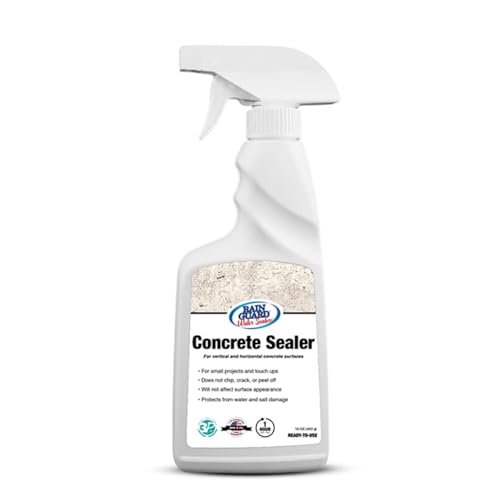
Best for: Passive protection and maintenance, especially on new or aged concrete surfaces where a natural finish is desired. This silane/siloxane waterproofer provides deep penetration and a protective barrier against water and salt damage.
Why selected: It is simple to apply, producing a clean, white finish that does not yellow over time. It is suitable for both indoor and outdoor use and helps prevent moisture-related issues in porous concrete. A limitation is that penetrating sealers may not radically alter surface texture or color and may require reapplication over time for ongoing protection.
Caution: For best results, ensure the surface is clean and dry before application, and follow reapplication intervals based on exposure and wear.
Buying Guide
What kind of concrete project do you have?
For small cracks or holes, patches like Damtite SuperPatch provide a quick repair with waterproofing. For areas with heavy traffic or chemical exposure, epoxy patches (QuestMark options) offer superior chemical resistance and durability. If you need a long-lasting moisture barrier with a natural look, a penetrating sealer like Rain Guard is a practical maintenance choice.
What curing and installation considerations matter?
Epoxy patches typically require controlled cure conditions and proper surface prep. Look for pot life, recoat windows, and full cure times to minimize downtime in busy spaces. Surface prep often involves cleaning, roughening, and ensuring the substrate is dry and sound before application.
How important is color and finish matching?
For visible resurfacing, color-matched or darker epoxy patches (such as the dark gray QuestMark variant) can help blend with surrounding flooring. If appearance is less critical, natural-colored patches provide a neutral option that blends with most concrete shades.
Chemical resistance and exposure
Choose products rated for the specific chemical environment. Novolac and standard epoxy patches offer different levels of resistance to acids and solvents. If your area faces frequent chemical spills, prioritize products with explicit chemical resistance specifications and cure times suitable for the expected traffic patterns.
Application scope and access
Consider pallet sizes and application area. Smaller patches are often easier for DIY projects, while larger areas or multiple bays may benefit from larger-volume units. For floor-wide resurfacing or refurbishment, plan for the required quantity and recoat windows to minimize downtime.
FAQ
- What is the best product for patching small concrete cracks?
Two-component patch products like Damtite SuperPatch are well-suited for small cracks and holes, offering waterproofing and strong adhesion. - Are epoxy patches good for chemical spills?
Yes. Epoxy patches such as QuestMark 8120 and 8250 variants are designed for chemical resistance and heavy-traffic areas, though check the compatibility with specific chemicals in the spec sheet. - Do I need a sealer after patching?
Depending on the project, a penetrating sealer (like Rain Guard) can help protect against moisture and salt. Patches themselves may offer waterproofing but not the same long-term moisture barrier as a dedicated sealer. - How long does curing take before foot traffic?
Epoxy patches typically allow light foot traffic within 12-14 hours and full cure in 2-7 days, depending on product and conditions. - Can I use these products indoors and outdoors?
Most are suitable for both environments, but verify outdoor exposure, temperature ranges, and UV considerations in the product data sheet. - Do these products require special tools?
Mixing two-component patches and applying them with trowels or putty knives is common. Sealer applications require uniform spraying or brushing, following the product’s instructions.