Finding the right primer is essential when you want a smooth, durable finish over stained wood. This guide focuses on stain-blocking, interior and exterior use, and fast-drying formulas that work well under paint. The top picks below are suited for different scenarios: interior trim and walls, hardwood furniture, or outdoor wood surfaces. Each product is chosen for strong adhesion, solid stain blocking, and reliability across common wooden substrates.
| Product | Best For | Notes |
|---|---|---|
| Zinsser Bulls Eye 1-2-3 Water-Base Primer & Sealer | Interior and exterior wood and glossy surfaces | Sticks to slick surfaces without scuff sanding; low-temperature application |
| Zinsser Cover-Stain Stain-Blocking Primer | Wood, drywall, metal with heavy stains | Oil-based; strong stain-blocking with good adhesion |
| Zinsser Bulls Eye Water-Base Primer & Sealer | Interior walls, trim, plaster, drywall | Low-odor, fast-drying; excellent hide on dark/porous surfaces |
| Rust-Oleum Zinsser 271009 White B-I-N Advanced | Sealing odors and tough stains on wood | Shellac-based for strong odor and stain blocking |
| Rust-Oleum Painter’s Touch 2X Ultra Cover Spray Primer | Indoor/outdoor wood and other materials | Spray primer; quick-drying and versatile |
Zinsser Bulls Eye 1-2-3 Water-Base Primer & Sealer
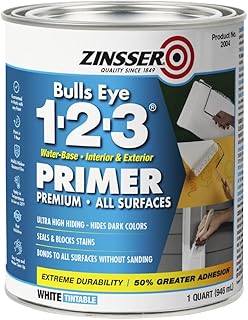
This water-based primer-sealer is designed for both interior and exterior surfaces. It bonds to glossy surfaces without scuff sanding and can be applied at low temperatures down to 35°F. Best for projects needing quick repaint cycles on wood, metal, and previously finished surfaces. Best for homeowners tackling furniture, trim, or exterior siding where moisture resistance and stain blocking are priorities.
Who it’s best for: DIYers seeking a hassle-free, odor-light option that adheres to challenging surfaces without heavy prep. Why selected: it minimizes sanding and provides solid stain blocking while maintaining flexibility for subsequent latex coats.
Caution: While versatile, extremely porous surfaces may still benefit from a brief prime-and-fill approach to achieve uniform coverage.
Zinsser Cover-Stain Stain-Blocking Primer

This oil-based primer-sealer blocks stains and seals surfaces with superior adhesion for interior and exterior wood, drywall, and metal. It’s well-suited for covering water and smoke stains, tannins from wood, and other difficult blemishes. Better for projects that require robust stain blocking and a durable base for topcoats.
Who it’s best for: projects with heavy stain challenges or aged finishes where adhesion to multiple substrates is necessary. Why selected: strong stain blockage and compatibility with multiple topcoats.
Caution: Oil-based primers can have longer drying times and odor; ensure adequate ventilation and dry time before applying paint.
Zinsser Bulls Eye Water-Base Primer & Sealer

This white, water-based Bulls Eye primer is designed to seal drywall, wood, and painted surfaces. It blocks stains and provides a friendly base for interior surfaces such as walls, doors, and trim. It dries quickly and covers about 100 sq. ft. per quart, helping workflows stay on schedule. Best for interior projects with minimal odor considerations.
Who it’s best for: interior homeowners needing fast-drying, low-odor primers for walls and trim. Why selected: fast-drying, easy cleanup, and good stain concealment on common interior substrates.
Caution: For very oily finishes or glossy surfaces, light scuffing may improve topcoat grip and prevent sheen variation.
Rust-Oleum 271009 White Zinsser B-I-N Advanced

This white shellac-based primer addresses odor sealing and heavy stain blocking. It’s especially effective when projecting over wood with strong tannins or resinous knots. Best for projects where odor control and high hiding power are essential before topcoating with latex or enamel paints.
Who it’s best for: projects requiring robust odor sealing and powerful stain blocking in one coat. Why selected: shellac-based performance that blocks stubborn stains and seals odors well.
Caution: Shellac-based primers can be difficult to sand and may require longer dry times before applying enamel or latex paints in high-traffic areas.
Rust-Oleum Painter’s Touch 2X Ultra Cover Spray Primer

This spray primer is formulated for wood, plastic, plaster, metal, and other surfaces. The oil-based formula provides durability, while the spray capability facilitates even coverage on large surfaces or intricate woodwork. It dries quickly, helping you move toward final coats sooner. Best for projects where spray application speeds up the job and uniform adhesion is needed.
Who it’s best for: DIYers and pros needing fast, even coverage on furniture, doors, or outdoor wood. Why selected: spray format reduces brush marks and handles curved or detailed surfaces well.
Caution: Oil-based spray primers can have higher odor levels; ensure good ventilation and follow spray technique to avoid runs or overspray.
Buying Guide
What type of primer should I choose for stained wood? For stained wood, select a stain-blocking primer with good adhesion. Oil-based formulas excel at blocking tannins and knots, while water-based options are lower odor and faster to dry but may require more coats on stubborn stains.
Do I need interior or exterior primer? Choose based on the project location. Exterior wood requires weather-resistant primers with better moisture sealing, while interior wood benefits from low-odor, fast-drying primers for quick updates on walls and trim.
What about odor and cleanup? Water-based primers typically offer lower odor and easier cleanup with soap and water. Shellac- or oil-based primers block stronger stains but often need solvent cleanup and longer dry times.
How many coats will I need? Stain-heavy wood often needs at least two coats or a sealing layer followed by a topcoat for uniform color and finish. Surface preparation, including light sanding or wiping, can improve topcoat adhesion and final appearance.
Any topcoat considerations? Use compatible paints (latex over water-based primers, enamel over shellac primers) and allow recommended dry times between coats. For glossy or sealed surfaces, light scuff sanding improves primer and paint adhesion.
FAQ
Q: Can I use any primer over stained wood? A: Most primers suitable for stained wood provide stain blocking and adhesion, but confirm compatibility with your topcoat type (latex, oil, enamel).
Q: Is shellac-based primer necessary for knotty pine? A: Shellac or shellac-based primers are highly effective at blocking resin bleed from certain woods like knotty pine.
Q: Will I see the grain through the primer? A: Some wood grain may show through light coats; multiple coats or a higher-hiding primer can reduce grain visibility before painting.
Q: How long should I wait between coats? A: Dry times vary; typically 30 minutes to 2 hours for water-based primers and longer for oil-based or shellac primers. Check product labels for specifics.
Q: Can I apply primer and paint the same day? A: If the primer dries within its recommended time, you can proceed with paint on the same day, provided the surface is clean and properly prepped.