Facing bathroom wall prep? This guide highlights the best primers and sealers for bathroom walls, focusing on moisture resistance, adhesion to glossy or problematic surfaces, and quick drying. Ideal buyers include DIY bathroom remodelers, condo or apartment residents refreshing tile or plaster, and anyone needing reliable stain blocking on damp walls. Below, five carefully chosen primers/sealers are compared, with a concise buying table to help you choose quickly.
| Product | Best For | Key Benefit |
|---|---|---|
| INSL-X SXA11009A-04 Stix Acrylic Waterborne Bonding Primer | Glossy surfaces, PVC, tile, plastic | Unmatched adhesion on challenging surfaces |
| Zinsser Bulls Eye 1-2-3 All Surface Primer | New or previously painted drywall, wood, masonry | Sticks to difficult surfaces without sanding |
| Zinsser 02244 Bulls Eye Water-Base Primer and Sealer | Interior walls and trim with stains | Low-odor, good stain blocking, quick dry |
| Zinsser 1-2-3 Plus | Interior/exterior, light to heavy surfaces | All-in-one primer with broad application |
| Zinsser Peel Stop Triple Thick | Peeling or weathered edges before finishing | Stops peeling paint and seals weathered surfaces |
1 Quart Bulls Eye 1-2-3 Primer Sealer Stain Killer

Best for: Bathrooms with glossy or high-sheen surfaces where adhesion is a concern. This interior/exterior primer sealer bonds to gloss without scuff sanding, reducing prep time. It also handles low application temperatures down to 35°F, making it versatile for various climates. Choose this if you need reliable sticking on hard-to-coat surfaces like glazed tile or sealed surfaces commonly found in bathrooms.
Caution: As a versatile primer, it may require a compatible topcoat to achieve the desired sheen or finish on specialized bathroom surfaces.
Zinsser PERMA-WHITE Mold & Mildew Proof Interior Paint

Best for: Bathrooms needing both paint and mildew resistance. Although primarily a paint, its self-priming formula reduces steps while delivering a mold- and mildew-proof coating on interior bathroom walls. Best for those who want fewer layers while maintaining a durable, easy-to-clean finish.
Caution: It is a paint product rather than a dedicated primer; ensure compatibility with the chosen topcoat and substrate.
Zinsser 286258 Bulls Eye 1-2-3 All Surface Primer

Best for: Mixed bathroom surfaces, including drywall, concrete, and masonry, especially when previous coatings exist. This interior/exterior primer adheres to glossy or difficult surfaces without sanding and dries quickly. Choose this if your bathroom walls involve a combination of materials or previously painted textures.
Caution: Drying times can vary by humidity; plan for recoat windows accordingly in bathrooms with variable moisture.
Zinsser Peel Stop Triple Thick High Build Binding Primer

Best for: Surfaces showing peeling paint or weathered edges prior to finishing in damp bathrooms. This primer seals and builds a smoother base, addressing common bathroom prep issues before topcoating. Use when you encounter peeling remnants or uneven edges that could interfere with adhesion.
Caution: Not a substitute for removing loose material in heavily compromised areas; for extensive peeling, perform proper prep before applying.
INSL-X SXA11009A-04 Stix Acrylic Bonding Primer
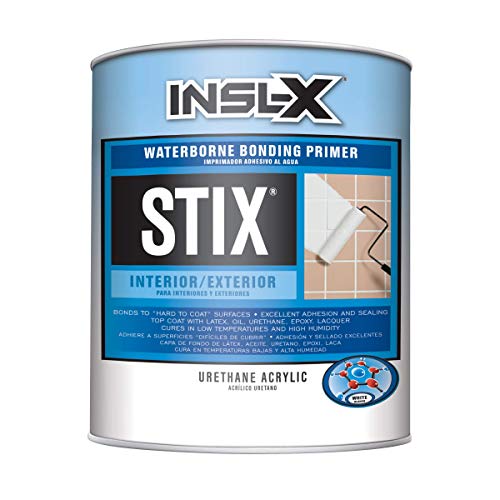
Best for: Bathroom walls with challenging substrates like glossy tile, vinyl, glass, or pre-coated surfaces. Stix provides superior adhesion and bonds to surfaces that typically resist primer. Choose this if you expect future moisture exposure and need a robust base that sticks to tough materials.
Caution: Stix is a bonding primer; ensure the topcoat is compatible for moisture-prone bathroom environments to avoid any finish issues.
Buying Guide: How To Choose The Right Bathroom Wall Primer
What surfaces are you priming?
Bathrooms include drywall, tile, panels, and sometimes plaster or cement. If you have glossy or non-porous surfaces, pick a bonding primer like Stix or a high-adhesion all-surface primer. For porous walls, a standard water-based primer may suffice.
Do you need mold or moisture resistance?
Look for primers that block stains and resist mildew. If your bathroom has a history of moisture issues, plan for a primer with stain-blocking properties and compatibility with moisture-resistant topcoats.
What about prep time and odor?
Water-based primers typically dry quickly and have lower odors, which is beneficial in small bathrooms. If ventilation is limited, choose low-odor formulas to improve usability.
Should you prime before wallpapering or tiling?
Some primers, like wallpaper primers, are designed to promote adhesion for borders. For general walls, a universal bonding primer can improve adhesion under wallpaper or border installations.
How important is drying time?
In busy bathrooms, quicker recoat times help reduce downtime. Primers like Bulls Eye 1-2-3 Plus offer fast dry-to-touch times and broad coverage, which can speed up renovation timelines.
What is your budget and project scope?
For larger projects or multiple rooms, consider versatile all-surface primers that reduce the number of products you need. For specific problem areas, targeted primers like Peel Stop or Stix can provide superior results with fewer coats.
Practical tips for applying bathroom primers
- Clean surfaces thoroughly to remove soap scum, grease, and grime before priming.
- Use appropriate PPE and ensure adequate ventilation when applying primers.
- Follow the manufacturer’s recoat window and topcoat recommendations for best results.
FAQs
- Q: Can I use any primer on bathroom walls? A: Choose primers suited for moisture-prone environments and glossy or porous surfaces, depending on your walls.
- Q: Do I need to sand glossy surfaces before priming? A: Some bonding primers reduce or eliminate sanding; follow product instructions for best results.
- Q: Is a dedicated wallpaper primer necessary for borders? A: If you plan to apply wallpaper or borders, a primer designed to promote adhesion is beneficial.
- Q: How long should I wait before painting over primer in a bathroom? A: Drying and recoat times vary by product; refer to the product’s label for precise guidance.
- Q: Which primer is best for mildew-prone bathrooms? A: Primers with stain-blocking and moisture-resistance properties are preferable; consider pairing with a mold-resistant topcoat.
- Q: Can I use primer on tiled bathroom walls? A: Bonding primers like Stix are designed to adhere to difficult surfaces, including tile, when properly prepared.