A turbo pressure washer nozzle is a practical choice for removing loose or stubborn paint from durable surfaces, but its concentrated rotating spray can also damage wood, siding, and other finishes. The AURORA CAR is best for buyers seeking a paint-removal nozzle rated up to 4,000 PSI; the XUZOG is a stainless-steel option rated to 3,600 PSI; and the M MINGLE set adds standard spray tips for other cleaning tasks. Match the nozzle to your washer and test a small area before removing paint.
| Product | Best For | Listed Rating |
|---|---|---|
| AURORA CAR Turbo Nozzle | Paint and grime removal on durable surfaces | 4,000 PSI max; 4.0 GPM; 4.0 orifice |
| XUZOG Turbo Nozzle | Stainless-steel construction | 3,600 PSI; 3.0 orifice |
| EARLEAS Turbo Nozzle | High listed pressure capacity | 4,500 PSI; 4.0 GPM; 4.0 orifice |
| M MINGLE Nozzle Set | Turbo cleaning plus everyday spray options | 3,600 PSI; 3.0 GPM turbo nozzle |
| Weslymoo Rotating Nozzle | Rotating cleaning with included tips | 4,000 PSI max; 4.0 GPM; 4.0 orifice |
AURORA CAR 4,000 PSI Turbo Nozzle
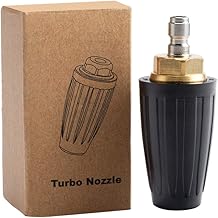
Best for: Buyers who want a rotating nozzle specifically described for stripping paint from wood exteriors, as well as cleaning brick, concrete, tanks, and equipment. Its advertised maximum is 4,000 PSI, with a 4.0 GPM and 4.0-orifice specification.
The nozzle uses centrifugal force to create a rotating impact spray. The product listing describes a ceramic core, rubber exterior, brass components, an aluminum-alloy vortex nozzle, and a 1/4-inch quick-connect plug. These features make it a relevant choice for users comparing turbo-style tips for tough cleaning and paint-removal work.
Why it was selected: The listed applications explicitly include stripping paint from wood exterior, which directly matches this search. Its broad range of described cleaning uses may also suit someone who needs one attachment for several rugged surfaces.
Limitation: A rotating impact spray can be too aggressive for delicate or painted surfaces that should remain intact. Confirm the washer’s requirements and test an inconspicuous spot before proceeding.
XUZOG Stainless-Steel Turbo Nozzle

Best for: Buyers looking for a stainless-steel turbo nozzle with a listed 3,600 PSI maximum and 3.0 orifice. The listing identifies paint, rust, moss, concrete, driveway, and siding cleaning among its intended uses.
This model produces a concentrated rotating jet and has a wear-resistant ceramic core. Its standard 1/4-inch quick-connect plug is described as compatible with most pressure washers, power washer wands, and hose extensions. The listing says it works with gas and electric pressure washers, but users still need to verify that their specific washer’s pressure, flow, and connection requirements match.
Why it was selected: It provides a clearly stated pressure limit and a stainless-steel construction description, making it straightforward to compare with higher-rated options. Choose it if its 3,600 PSI rating and 3.0 orifice suit your equipment and the surface you are treating.
Limitation: Its listed maximum pressure is lower than the 4,000- and 4,500-PSI options in this guide. Do not use the rating alone to decide whether it is safe for a particular surface.
EARLEAS 4,500 PSI Turbo Nozzle

Best for: Buyers comparing turbo nozzles with a high listed pressure capacity for heavy-duty cleaning. This model is specified at up to 4,500 PSI, with a 4.0 GPM and 4.0-orifice listing.
The nozzle creates a rotating jet from a zero-degree stream. Its described applications include concrete, brick, siding, vehicle wheels, and undercarriages. Construction details listed by the seller include a brass body, ceramic core, stainless-steel 1/4-inch quick-connect plug, and rubber housing. The listing also states heat resistance up to 180°F.
Why it was selected: Its 4,500 PSI maximum and rotating spray make it a comparison option for users tackling tough grime or considering paint removal from suitable durable surfaces. The construction details are useful for buyers comparing materials alongside pressure and flow specifications.
Limitation: The zero-degree jet description signals a concentrated, forceful spray. Avoid using it casually on surfaces where paint, finish, or material must be preserved; start with a low-risk test area.
M MINGLE Turbo Nozzle and Tip Set

Best for: Buyers who want a turbo nozzle for tough stains and a bundle of standard tips for routine washing. The turbo tip is listed at 3,600 PSI and 3.0 GPM, with a 3.0 orifice; the set also includes seven 2.5-orifice tips with different spray angles.
The seller describes the turbo nozzle as stainless steel with a wear-resistant ceramic core and says it can remove rust, paint, moss, and grime from concrete, brick, and wood. The included standard tips are intended for tasks such as car washing, home cleaning, fence maintenance, sidewalk upkeep, and plant watering.
Why it was selected: This is the most versatile listed choice for buyers who do not want a turbo nozzle to be their only spray option. Choose it if you expect to switch between concentrated rotating cleaning and the different spray patterns supplied in the set.
Limitation: The turbo nozzle’s 3,600 PSI and 3.0 GPM specifications need to be checked against your washer. The listing does not establish that every included tip is suitable for every surface or machine.
Weslymoo 4,000 PSI Rotating Nozzle

Best for: Buyers seeking a rotating nozzle listed up to 4,000 PSI that comes with five additional pressure washer tips. The product is specified at 4.0 GPM and a 4.0 orifice and is described for patios, brick, driveways, and vinyl surfaces.
The listing says its rotating spray reaches cracks and crevices and provides a wider pattern than a thin stream. It describes a ceramic core, rubber housing, and stainless-steel tip, and states that the product is for fresh water only. The additional tips may be useful for switching away from the turbo spray when a different pattern is needed.
Why it was selected: It combines a high listed pressure limit with extra tips, so it may suit buyers who want options for more than one cleaning task. Its stated 4.0 GPM and 4.0-orifice details make it easier to compare with similarly specified models.
Limitation: The seller specifies fresh water only. Confirm the nozzle’s connection and flow requirements, and do not assume the rotating tip is appropriate for delicate siding or surfaces you do not want to strip.
Buying Guide: How to Choose a Paint Removal Nozzle
Is a turbo nozzle suitable for removing paint?
A turbo nozzle can help remove loose or stubborn paint from surfaces that can withstand a forceful water stream. It creates a rotating spray from a concentrated jet, combining impact with a broader cleaning path than a stationary narrow stream. Product descriptions in this guide specifically mention paint removal, but that does not mean every nozzle or surface is a safe match.
Pressure washing can remove material along with paint. On wood, siding, masonry, or other surfaces, an aggressive spray may cause gouging, etching, water intrusion, or damage to a coating you intended to keep. Use a test patch, keep the spray moving, and stop if the surface begins to fray, pit, or deteriorate. For delicate work, a scraper or another paint-removal method may offer more control.
What pressure and flow specifications should I check?
Compare the nozzle’s stated PSI and GPM requirements with the pressure washer’s specifications. PSI describes pressure, while GPM describes water flow. A nozzle’s maximum PSI is not a recommendation to use it at that pressure on every job. The listed orifice also matters because it is part of how the nozzle is matched to a washer’s flow and pressure.
Do not choose a nozzle based only on the highest PSI number. A model with a 4,500 PSI maximum is not automatically the best fit for a machine or surface. Check the washer manual, verify the nozzle’s connection, and select a combination that stays within the equipment’s stated limits.
When is a turbo nozzle better than standard spray tips?
A turbo nozzle is designed to produce a rotating, concentrated impact spray and may be useful for tough grime on robust surfaces. Standard tips provide different spray patterns and can offer more choice for routine washing. The M MINGLE and Weslymoo products include additional tips, while the AURORA CAR, XUZOG, and EARLEAS listings focus on turbo-nozzle cleaning.
For paint removal, begin cautiously rather than assuming the strongest option is most efficient. If the goal is to preserve nearby paint or a delicate finish, a less aggressive spray pattern or a non-pressure-washing method may be more appropriate.
Does the quick-connect fitting fit my pressure washer?
Several products list a 1/4-inch quick-connect plug. That description does not guarantee that every pressure washer, wand, or hose uses a matching fitting. Check your equipment’s connector and the nozzle’s specifications before purchasing. Also confirm any flow or pressure requirements; a physical fit alone does not establish that the nozzle is suitable for the machine.
What safety steps matter during paint removal?
Wear eye protection and suitable protective clothing, keep the spray pointed away from people and animals, and never use a pressure washer on skin. Avoid aiming the stream at electrical equipment, openings, or areas where water could enter a building. Follow the washer manufacturer’s operating instructions and local requirements for handling paint residue, especially when the age or composition of the paint is unknown.
Use fresh water only when the product instructions require it, as stated for the Weslymoo nozzle. Before starting, secure the work area and consider where paint chips and wash water will go. Do not direct residue into storm drains or onto neighboring property.
Frequently Asked Questions
What type of pressure washer nozzle removes paint?
A turbo nozzle with a rotating impact spray is commonly listed for tough cleaning and paint removal from durable surfaces. The correct choice depends on the washer’s pressure and flow, the nozzle specifications, and how much force the surface can tolerate.
Can a turbo nozzle remove paint from wood?
It may remove paint from wood, but the concentrated spray can also gouge or damage the wood. Test a hidden area first, keep the nozzle moving, and stop if the surface fibers begin to lift or erode.
Which option in this guide has the highest listed PSI?
The EARLEAS turbo nozzle has the highest stated maximum in this selection at 4,500 PSI. That rating should not be treated as a recommended operating pressure for every washer or surface.
Should I use the highest-pressure nozzle available?
No. Match the nozzle to the washer’s pressure, flow, orifice, and connection requirements, then use only as much force as the surface can safely tolerate. A higher maximum PSI does not guarantee better results.
Are 1/4-inch quick-connect nozzles universal?
A 1/4-inch quick-connect plug is a common connector description, but users should verify that their wand or equipment has a matching fitting. They should also confirm the nozzle’s pressure and flow requirements.
Can pressure washing remove all paint?
Pressure washing may remove loose or stubborn paint, but results vary by surface and coating. It can also damage the underlying material, and it may not remove paint uniformly. Test first and use another method when greater control is needed.


