Executive summary: For trim work, choose pin nails that deliver a nearly invisible finish, minimal wood damage, and reliable drivability. This article highlights five top pin nail options suited for delicate trim, moulding, and fine woodworking. Each product section explains who it’s best for, why it was selected, and a practical caveat to consider. The buying guide and FAQs provide practical decision-making help for homeowners, hobbyists, and professional trim carpenters alike.
| Product | Best For | Key Benefit |
|---|---|---|
| Meite 23 Gauge Pin Nails, 6 Sizes | General trim work and versatile tiny-fastening tasks | Six sizes, smooth headless design for precise placement |
| DEWBIN Store 23 Gauge Pin Nails, 3000 Cts | Professional finishing where a nearly invisible fastener matters | Headless, high-tensile galvanized steel for clean finishes |
| Meite 23 Gauge Pin Nails, 1-3/8 Inch | Fine woodworking and trim with longer pins | Length variety for deeper anchoring without visible heads |
| Meite 23 Gauge Pin Nails, 1/2 Inch | Short trim gaps and delicate moulding | Smaller sizes favor minimal surface disruption |
| Delicate trim and intricate detailing | Large-pack value with headless finish and corrosion resistance |
Meite 23 Gauge Pin Nails — 6 Sizes

The six-size pack covers 1/2″, 5/8″, 3/4″, 1″, 1-3/16″, and 1-3/8″ galvanized pin nails. Best for versatile trim tasks, this set supports multiple projects from small decorative moulding to longer trim pieces. The pins are headless and designed to minimize wood damage and nail visibility, which is essential for visible interior trim. The package design helps keep the assortment organized for shop or job-site storage. Use this when you need a broad size range in one purchase; avoid if you require a single, very long run of the same size in bulk. Best for: homeowners and hobbyists who frequently switch trim sizes or work on varied projects.
DEWBIN Pin Nails, 3000 Count — 23 GA

These 3,000-count pins are engineered for universal fit with standard 23-gauge pneumatic micro pinners. They are designed to minimize jams and protect driver blades, helping maintain consistent performance in trim applications. The headless design leaves nearly invisible pin holes, which reduces the need for putty or sanding on pre-finished surfaces. Ideal for crown molding and decorative trims where a flawless finish is critical. Best for: professional finish carpentry and cabinetry projects where appearance matters most. Caution: users should ensure their tool tolerances align with these pins to prevent occasional feeding issues in older equipment.
Meite 1-3/8 Inch Pin Nails — Headless
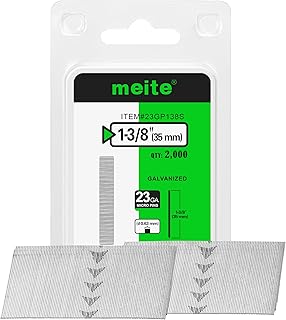
Longer 1-3/8″ pins are best when finishing thicker trim or backing pieces where a longer embedment is needed without a visible head. The pins are galvanized for corrosion resistance and designed to drive cleanly with micro headless technology. Best for: trim where a deeper hold is required and where a barely-there finish is desirable. Caution: ensure your nailer channel and magazine width can accommodate longer pins without feeding trouble.
Keentech 3/4″ Headless Pins

KEENTECH offers 3/4″ headless pins in an ultra-large pack, emphasizing invisible finishing, corrosion resistance, and a low jam rate. They are a practical choice for delicate trim, small mouldings, and fine detailing where an unobtrusive fastener is preferred. Best for: busy shops needing high-volume headless nails for frequent trim tasks. Caution: the sheer quantity requires organized storage to prevent misplacement or overstock in tight spaces.
Meite 1/2 Inch Pin Nails

Short 1/2″ pins are ideal for tight gaps and subtle trim work where minimal intrusion is essential. They are galvanized for corrosion resistance and provide discreet anchoring in softer woods. Best for: light trim installations and decorative accents with small fastener visibility. Caution: very small pins can bend if driven into hard woods without proper support or a quality nailer.
Summary of Top Picks For Pin Nails
Choosing the right pin nails for trim depends on project type, wood hardness, and finish expectations. Headless pins minimize filler work and offer a clean look on pre-finished surfaces. For crown molding and decorative trim, longer lengths may be warranted to grab deeper wood fibers. For small mouldings, shorter pins reduce the risk of splitting. Consider your nailer compatibility, the desired final appearance, and the ease of post-install finishing when selecting pins.
Buying Guide: How To Choose Pin Nails For Trim
What gauge and length should you use for trim?
For most interior trim, 23-gauge pins are standard. Lengths vary from 1/2″ to 1-1/2″. Short pins are ideal for delicate mouldings; longer pins fit thicker trim pieces or backing blocks. Choose the length that provides a secure hold without protruding or requiring excessive filler.
Headless design vs. traditional heads
Headless (invisible) pins leave minimal holes and require little or no wood putty. This is ideal for pre-finished surfaces or visible trim. Traditional heads offer easier alignment for some projects but may need filler after painting or staining.
Material and finish considerations
Galvanized steel pins resist corrosion and are suitable for indoor environments and humid spaces. For coastal or outdoor-adjacent trim, consider corrosion-resistant finishes and compatible fasteners to prevent staining or rust marks over time.
Tool compatibility and safety
Confirm that your nail gun and magazines support 23-gauge pins and the selected lengths. Incorrect sizing can cause jams, misfires, or damage to delicate trim pieces. Always follow the tool manufacturer’s safety guidelines when loading and firing pins.
Storage and organization tips
Use a graded organizer or clear containers to separate sizes. Proper storage preserves pin sharpness and reduces the chance of misplacing the correct length during a project.
FAQ
- Q: Are headless pins always better for trim?
- A: Headless pins create minimal holes, which is ideal for pre-finished surfaces, but some projects may benefit from a small visible head for alignment or holding power in dense woods.
- Q: Can I use these pins for hardwood trim?
- A: Yes, but use longer pins and confirm your nailer tolerances to prevent bending or misfires in hard woods like Red Oak or Cherry.
- Q: How do I prevent splitting when installing small mouldings?
- A: Use pins with the appropriate diameter and length, drive at an even speed, and provide adequate backing behind the trim to distribute driving force.
- Q: What is the advantage of a six-size pack?
- A: A multi-size pack provides flexibility to match different trim dimensions without ordering multiple individual sizes.
- Q: Should I worry about pin visibility after finishing?
- A: Headless pins minimize visibility; any visible holes can be filled with minimal putty and touched up with stain or paint.