When choosing pigment powder for concrete, you want reliable color dispersion, outdoor durability, and compatibility with cement-based materials. This guide highlights five top options and explains who each is best for—DIY homeowners, professional contractors, or artists working with decorative concrete. Each selection is chosen for its pigment quality, versatility, and practical application notes to help you decide quickly.
The following quick-reference table summarizes the five highlighted products, including their primary use and ideal user type. Use it to compare at a glance before diving into detailed product sections.
| Product | Best For | Key Benefit |
|---|---|---|
| 5 Colors Matte Iron Oxide Pigment Powder (Brown, Blue, Burgundy, Green, Black) | Professional projects | Ultra-fine dispersion for precise color control |
| Matte Brown Iron Oxide Powder (5 Oz) | DIYers & craftspeople | Vivid brown tones with broad mixability |
| GOODTAKE 5 Colors Concrete Pigment | Home improvement & small shops | High pigment concentration for strong color payoff |
| Matte Black Iron Oxide Powder (2.5Lbs) | epoxy coatings and durable finishes | Long-lasting black with good UV resistance |
| Matte Black Iron Oxide Powder (5 Oz) | Decorative concrete & wood finishes | Consistent matte black with broad compatibility |
Colorful Matte Iron Oxide Powder Set for Concrete
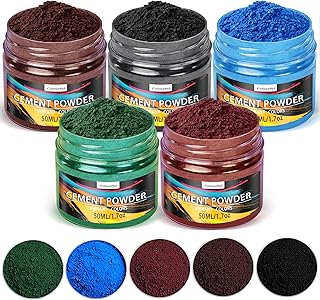
This set uses premium matte iron oxide pigments designed for cement-based materials, including concrete, grout, plaster, self-leveling floors, and lime-based finishes. It provides precise, professional-grade color customization for architectural and decorative projects. Best for professionals looking to achieve consistent color across large mixes and multiple surfaces.
- Versatile applications span landscape art, terrazzo, mosaic joints, and epoxy flooring.
- Ultra-fine 500 mesh powder (≤29 μm) promotes easy dispersion and strong color payoff.
Best for: Professional contractors and architects who require dependable, repeatable color results in cementitious applications. Limitation: The set may require additional mixing time to achieve full dispersion in large pours.
Matte Brown Iron Oxide Powder (5 Oz)

The Rock N Soil Brown pigment powder is designed to dye cement materials, including concrete, grout, render, and plaster. It also doubles for coloring epoxy, resin, and wood fillers. The color range is intermixable and suitable for interior and exterior use, producing warm earthy tones with a matte finish.
- Best for: DIYers and small workshops creating sculptures, stepping stones, terrazzo, and planters.
- Limitation: Color intermixing is necessary to achieve exact brown tones; test mixes before large pours.
GOODTAKE Concrete Pigment Powder (5 Colors)
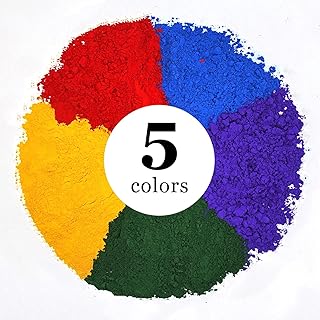
GOODTAKE offers five color choices with high iron oxide content (95% and above), designed for durability and colorfastness. The pigments are waterproof, non-toxic, and suitable for coloring cement, grout, plaster, and epoxy resins. They are highly mixable for custom shades and have a practical 3–10% mixing range.
- Best for: DIY enthusiasts and hobbyists who want substantial color impact with straightforward mixing ratios.
- Limitation: Requires careful measurement to avoid oversaturation in small batches.
Matte Black Iron Oxide Powder (2.5 Lbs)
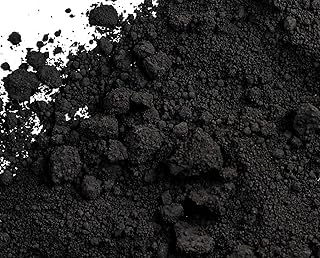
Rock N Soil’s Matte Black pigment is formulated for cement materials, including concrete, grout, plaster, and mortars, and is suitable for tinting epoxies and resins. It offers durable, long-lasting color with good UV resistance. Particle size is 29 μm / 500 mesh and disperses well in dry mixes.
- Best for: Projects needing a strong, deep black with reliable UV stability, such as outdoor features and epoxy coatings.
- Limitation: Large-volume pours may require additional agitation to maintain uniform dispersion.
Buying Guide
Key purchase considerations help ensure you pick the right pigment for your project. Consider these practical questions and answers when choosing pigment powder for concrete.
- What finish do you want? Matte iron oxide pigments yield a subdued, earthy look, while deeper blacks provide dramatic contrast. For bright accents, consider multi-color sets.
- What is the intended use? For indoor decorative pieces, lighter mixes with good dispersion are ideal. For outdoor installations, UV resistance and colorfastness are crucial.
- What is your mixing method? Fine powders disperse more easily in dry mixes, but large batches may require additional mixing time or mechanical agitation.
- How compatible is the pigment with other materials? Ensure the pigment is suitable for cement, grout, plaster, epoxy, and other media you plan to color.
- Are colors intermixable? Intermixability expands creative options but requires testing to achieve the desired shade.
Practical Tips for Best Results
- Always perform a small test batch to verify color intensity before full-scale production.
- Disperse pigments thoroughly to avoid streaking or uneven color distribution.
- Combine pigments gradually; add more color incrementally to reach the target shade.
FAQ
- Q: Can these pigments be used with epoxy resin? A: Yes, several options are suitable for epoxy resin in addition to cement-based materials.
- Q: Are the pigments toxic? A: Most listed pigments are non-toxic and designed for building materials, but always check the product’s safety data sheet.
- Q: Do colors fade in sunlight? A: High-quality iron oxides typically offer good UV resistance, but outdoor exposure may still affect color over time.
- Q: How much pigment should I mix per batch? A: A typical starting point is 3–10% pigment by weight, depending on the color depth desired and the base material.
- Q: Can I mix different colors together? A: Yes, most pigments are intermixable, but test mixes to ensure color accuracy.