For door projects, a reliable paint sprayer delivers even coverage, minimizes brush marks, and speeds up completion. This guide highlights five top options that balance power, spray patterns, and ease of use. It’s best for homeowners refinishing interior doors, cabinet doors, and entryways, as well as DIYers tackling multiple doors in a single weekend. The table below compares the featured models to help you select the right tool for your needs.
| Product | Best For | Key Benefit | Notes |
|---|---|---|---|
| HomeRight Super Finish Max | Small to mid-size doors and furniture | Versatile adjustments for horizontal, vertical, and round spraying | 450W delivers solid performance; good for latex and stains |
| DEKOPRO 1000W HVLP | Doors, furniture, walls | Large capacity with multiple nozzle sizes | Three spray patterns; easy to clean |
| PULENDY 4 Nozzle HVLP | Beginner to intermediate projects | Blowing and cleaning features for easy maintenance | Four nozzle sizes; handy cleaning tools |
| LUDERIGNITE 1000W HVLP | Large doors and wall-to-wall projects | High flow and large 1400 ml container | Three spray patterns; fast coverage |
| Graco Magnum Project Painter | Seasonal or frequent painters | Direct-from-bucket spraying flexibility | Adjustable pressure; supports large volumes |
The following sections present each product with a concise, buyer-friendly overview. Each entry notes who should consider the model, why it’s chosen, and a practical caveat to guide your decision.
HomeRight Super Finish Max HVLP Sprayer
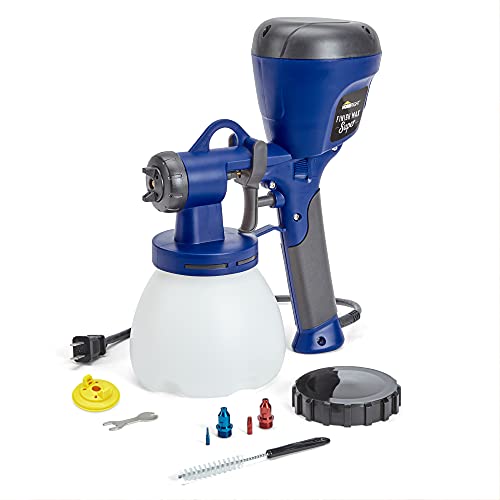
Best for: DIYers tackling doors, furniture, and smaller architectural projects. This sprayer offers adjustable air cap settings for horizontal, vertical, and round spray patterns, plus a material flow control knob to fine-tune output. With 450 watts of power, it handles chalk-type paints, latex, enamels, primers, clear sealers, polyurethane, stains, and varnishes. It’s well suited for interior doors where a smooth, even finish matters most.
Why chosen: It combines ease of use with versatile spray options, making it a strong all-around choice for door refinishing or painting multiple doors in a weekend project.
Caution: For very large exterior doors or heavy stain coatings, you may want a model with higher throughput to minimize recoat time.
DEKOPRO 1000W HVLP High Power Sprayer
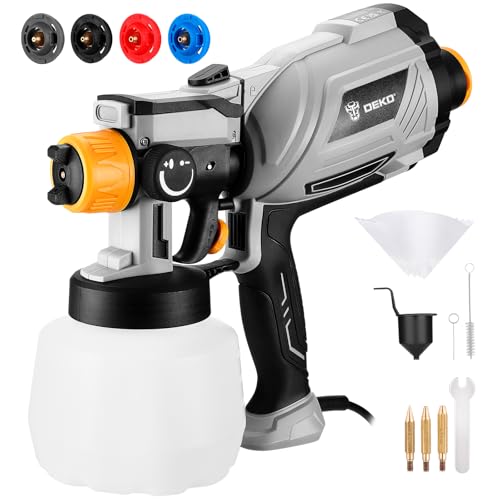
Best for: DIY door projects that require more capacity and variety. It offers a 1200 ml container and a 1000 watt motor, plus four nozzle sizes (1 mm, 1.8 mm, 2.5 mm, 3.0 mm) and three spray patterns (horizontal, vertical, round). This setup helps achieve smooth finishes on doors, frames, and adjacent panels.
Why chosen: The larger container and multiple nozzles enable longer spray runs without frequent refills, which is convenient for door fascias and panels.
Caution: The kit’s complexity may require a brief learning curve for beginners to optimize flow and pattern consistency.
PULENDY HVLP Paint Sprayer

Best for: Beginners and intermediate projects, including doors, furniture, and garden items. It includes four nozzle sizes and three spray patterns, making adjustments easy for different surfaces. It also offers a dust blowing joint and a cleaning connector to simplify maintenance after use.
Why chosen: The built-in cleaning features and versatile nozzles help maintain spray quality and extend nozzle life, which is valuable for door works that require consistent finishes.
Caution: Thorough cleaning is essential to prevent clogging, especially when switching between paint types or colors.
LUDERIGNITE 1000W HVLP Sprayer

Best for: Projects that demand maximum reach and faster coverage, such as multiple doors or large interior doors. It features a detachable 1400 ml container and a 1000W motor for strong performance, with three spray patterns—horizontal, vertical, circular—plus an adjustable flow to dial in precise coverage.
Why chosen: The large capacity reduces refilling interruptions, helping maintain momentum on door refinishing or painting jobs that cover several panels.
Caution: The higher output can require careful masking and ventilation to avoid overspray in tight indoor spaces.
Graco Magnum Project Painter Plus
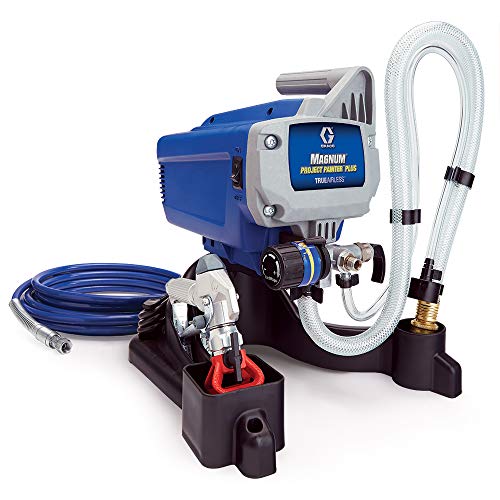
Best for: Seasonal or frequent painters who work on many doors and other surfaces. This model supports spraying directly from a bucket via a flexible suction tube, enabling continuous work on larger projects. It offers fully adjustable pressure for control over spray intensity and finish type.
Why chosen: The direct-from-bucket capability and adjustable pressure provide flexibility for coats that require thinning or unmixed paints, which is useful for door projects with varied material finishes.
Caution: Might be overkill for very small door projects; consider lighter options if you’re painting a single or few doors.
Buying Guide
What to look for when choosing a door spray sprayer
Power and throughput: For doors, a motor around 1000W generally balances speed and control without excessive overspray. Look for a model that supports larger flow when you’re painting multiple doors.
Spray patterns and nozzle options
Three patterns (horizontal, vertical, round) and multiple nozzle sizes give flexibility for flat panels, rails, and mouldings. More nozzles help match coating thickness and surface texture.
Container capacity
Choose a container large enough to cover a door without frequent refills. A capacity around 1000–1400 ml is common and practical for interior doors.
Ease of cleaning
Sprayers with cleaning accessories, quick-disconnects, and built-in blowing/cleaning features save time and reduce clogs, especially when switching between finishes.
Best for beginners vs. advanced users
Beginner-friendly sprayers prioritize simplicity and fewer setup steps. Advanced users may prefer models with higher power, larger containers, and more precise flow control for consistent door finishes.
Practical tips for door spraying
- Mask surrounding areas thoroughly and use drop cloths to protect floors and hardware.
- Test spray on a scrap surface to adjust pattern and flow before working on doors.
- Thin paints or stains as recommended by the manufacturer to prevent runs and orange peel.
- Maintain a consistent distance from the surface to ensure even coverage.
FAQ
What spray pattern is best for doors?
A combination of vertical and horizontal passes with a round pattern for corners and panels usually yields a smooth, uniform finish.
Do I need a large capacity for interior doors?
Yes, a larger container reduces refills and helps maintain a steady workflow on multiple doors.
Can I spray over stained wood or varnish?
Yes, with appropriate primers and compatible coatings. Always check the product’s compatibility with stains, sealers, or varnishes.
Is it better to thin paint for a sprayer?
Often yes. Follow the manufacturer’s thinning instructions to optimize nozzle size and spray dynamics.
How do I prevent clogging?
Clean after each use, use proper filters, and switch between products with compatible chemistries as directed by the manufacturer.