Answering the question “what’s the best paint for metal cabinets?” with clear picks that balance durability, ease of use, and suitability for different environments. This guide highlights five top options from trusted brands, explaining who each product is best for and why it stands out. Ideal for homeowners, workshop setups, and garage projects seeking long-lasting metal cabinet finishes.
| Product | Best For | Why It Stands Out |
|---|---|---|
| Rust-Oleum Painter’s Touch Latex Brush-On Paint (Gloss Black) | Indoor/outdoor metal, wood, plaster | Low odor water-based acrylic; quick dry; chip and fade resistance |
| Rust-Oleum Stops Rust Door & Trim Paint (Satin Nantucket Navy) | Interior/exterior metal and wood | Pre-mixed, low-odor water-based; fast drying; strong fade resistance |
| Rust-Oleum Painter’s Touch 2X Ultra Cover Spray Paint (Gloss White) | Metal, wood, plastic | Oil-based; fast dry; smooth finish; versatile spray application |
| Meuvcol Metal Paint (Black) | Direct-to-metal surfaces | Rust prevention; high-opacity coverage; quick-drying |
| Rust-Oleum Chalked All-in-One Ultra Matte Black Abyss Spray Paint | Furniture and cabinets | One-coat coverage; no primer required; low odor |
Rust-Oleum Painter’s Touch Latex Brush-On Paint, Gloss Black
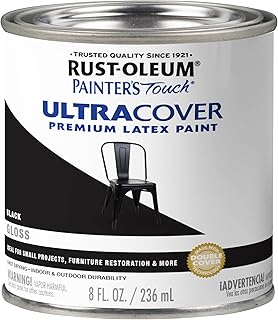
Best for: DIYers seeking an all-around, low-odor finish for metal cabinets in both indoor and outdoor settings. The water-based acrylic formula resists chips and fades, providing long-lasting protection while remaining easy to clean up.
Why selected: It handles multiple substrates beyond metal, making it a versatile choice for mixed projects. Its quick-dry time (touch in about 30 minutes) helps minimize downtime on cabinet refinishing tasks.
Caution: Read surface prep requirements to maximize adhesion on glossy metals. May require a light scuff or primer for ultra-smooth finishes.
Rust-Oleum Stops Rust Door & Trim Paint, Satin Nantucket Navy

Best for: Finishing metal cabinet doors or trim that face high exposure areas or outdoor elements. Excellent for metal, wood, and fiberglass surfaces.
Why selected: This pre-mixed, low-odor formula dries to the touch in about 45 minutes and dries faster than many oil-based options, delivering durable resistance to fading and chipping.
Caution: The satin finish hides surface irregularities less than glossy finishes; plan for slight texture matching if touching up adjacent surfaces.
Rust-Oleum Painter’s Touch 2X Ultra Cover Spray Paint, Gloss White

Best for: Quick, even coverage on metal cabinets where spraying is preferred or required for uniform coats. Works well on metal, wood, and plastic surfaces.
Why selected: Oil-based formula resists chips and provides long-lasting protection; dries to touch in about 20 minutes and covers up to 12 sq ft per can, enabling faster project completion.
Caution: Sprays can create overspray in tight indoor spaces; ensure proper ventilation and masking of surrounding areas.
Meuvcol Metal Paint, 35 Fl Oz Black

Best for: Direct-to-metal applications such as gates, fences, rails, and outdoor furniture requiring rust prevention and long-lasting protection.
Why selected: Emphasizes rust prevention and quick-drying properties, delivering a strong, uniform coating with fewer coats thanks to high opacity.
Caution: This is a black finish; test under lighting to ensure the shade matches surrounding hardware before large-scale use.
Rust-Oleum Chalked All-in-One Ultra Matte Black Abyss Spray Paint

Best for: Furniture and cabinets where a matte finish with one-coat coverage is desired and primer is not required.
Why selected: One-coat coverage and low odor simplify projects involving metal cabinets, wood, and other surfaces, especially for quick refreshes.
Caution: Matte finishes can show flaws more readily; surface preparation remains important for a smooth look.
Buying Guide: Key Considerations For Metal Cabinet Finishes
- Surface type and exposure: Consider indoor vs. outdoor use, and whether the cabinet surfaces are metal, wood, or mixed.
- Finish and appearance: Gloss vs. satin vs. matte, and whether the finish should be spray or brush-on.
- Durability needs: If the cabinet endures frequent handling, choose a chip- and fade-resistant formula with rust protection.
- Drying time: Quick-dry options reduce downtime; plan for ventilation with oil-based formulas.
- Application method: Sprays cover large areas quickly; brush-on products can offer more control on edges and corners.
- Prep and primer: Some products claim no primer required; verify surface prep needs for adhesion and longevity.
- Color consistency: Ensure the color matches surrounding hardware and cabinets for a cohesive look.
Frequently Asked Questions
- What is the best finish for metal cabinets outdoors?
– Look for rust-preventive, water-based or enamel formulas designed for metal and exterior exposure. - Is a primer necessary for metal cabinet paint?
– Some products claim no primer needed; for best adhesion, light sanding and rust-preventive primers can help in challenging conditions. - Can I use spray paint on metal cabinets indoors?
– Yes, but ensure good ventilation and mask off surrounding areas to avoid overspray and fumes. - How long should I wait before using painted metal cabinets?
– Drying times vary by product; plan for at least the manufacturer’s recommended touch-dry period before handling. - Which finish hides imperfections best?
– Satin and matte finishes can conceal small surface flaws more effectively than high-gloss finishes. - Are these paints safe for food-contact surfaces?
– Most cabinet paints are not rated for direct food contact; avoid applying to areas that may contact food unless explicitly stated safe.