Answering buyers who need a reliable, long-lasting finish for fiberglass decks, this guide highlights top choices that resist the elements and provide a safe, attractive surface. These selections suit boat owners, homeowners with pool or dock decks, and anyone seeking a durable outdoor finish for fiberglass or related substrates. Each option is described by where it shines, who should consider it, and a practical note on its limits.
Buyer-friendly overview: the following table summarizes key details to help compare options quickly. It lists product name, best-use scenario, and primary material compatibility.
| Product | Best For | Key Material Compatibility |
|---|---|---|
| Rust-Oleum Marine Topside Semi-Gloss White Boat Paint | Fiberglass above waterline on boats and hydro-durable decks | Fiberglass, wood, metal |
| TotalBoat TotalTread Non-Skid Deck Paint | Fiberglass boat floors with anti-slip needs | Wood, fiberglass, metals |
| Topside Paint Gloss White Quart Commercial Grade Enamel | Commercial-grade marine topside projects | Fiberglass, wood (implied), metals |
| SENVEN Acrylic Concrete & Garage Floor Paint Slate Gray | Porous concrete decks and exterior concrete surfaces | Concrete, masonry, stone, brick |
| Epifanes Nonskid Deck Coating (Cream) | Non-slip decks requiring a classic finish | Wood and fiberglass decks (non-skid coating) |
Rust-Oleum Marine Topside Semi-Gloss White Boat Paint

Best for surfaces above waterline where flexibility and quick drying are valuable. This oil-based formula levels smoothly to a semi-gloss finish and is designed for fiberglass, wood, or metal above water. It dries to the touch in about 1–2 hours and covers up to 100 sq ft, making it a practical choice for small to medium deck projects. Best for boaters who want a durable marine finish with easier brushability than some two-part systems. Use with caution on areas that experience heavy wear or immersion; its suitability is above the waterline only and may require topcoats for extended exposure.
Who it’s best for: boat owners and deck handlers seeking a flexible, quick-drying marine topcoat for fiberglass above the waterline. Why selected: combines ease of application with a durable, UV-resistant finish suitable for marine environments. Limitation: not intended for underwater use or continuous immersion; check local requirements for your deck setup.
TotalBoat TotalTread Non-Skid Deck Paint
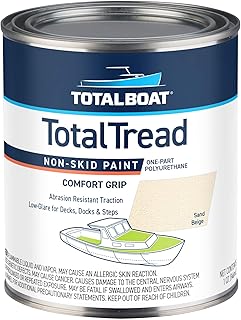
This textured paint delivers a high-traction, low-glare surface ideal for boat decks, docks, or stairs. The polyurethane finish is durable and designed to resist wear, maintaining color and texture with regular cleaning. It’s a versatile choice for fiberglass and wood applications where slip resistance is essential. A potential limitation is that texture can be more challenging to clean in tight or crowded areas and may require maintenance to preserve its non-slip properties over time.
Best for: decks and walkways where secure footing is a priority. Why selected: provides durable traction while remaining weather-resistant. Choose this if anti-slip performance is a primary concern and you need an easy-to-clean surface. Avoid if you want a completely smooth topcoat for a low-profile look.
Topside Paint Gloss White Quart Commercial Grade Enamel
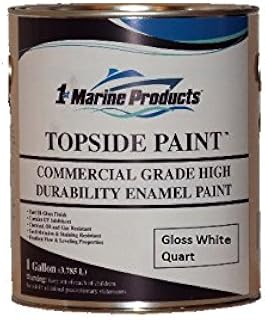
Designed as a commercial marine enamel, this Topside paint emphasizes UV inhibitors and chemical, oil, and gas resistance. It offers a glossy white finish suitable for topside areas where a bright, clean appearance matters. The product is presented as a robust option for demanding marine environments. A practical note: ensure compatibility with your substrate and prepare fiberglass surfaces properly to achieve optimal adhesion and longevity.
Best for: commercial or heavy-use topside projects requiring UV protection and chemical resistance. Why selected: strong formulation for marine exposure and a glossy, professional finish. Limitation: may require extensive surface preparation and conditioning for best results on older decks.
SENVEN Acrylic Concrete & Garage Floor Paint Slate Gray

Although marketed for concrete, this paint offers a durable, satin finish suitable for exterior deck floors that are concrete or stone-adjacent. The acrylic formula resists hot tire pickup, scuffing, cracking, peeling, and fading, making it a practical option for high-traffic areas where fiberglass decks transition to concrete or masonry surfaces. Coverage is generous at up to 120 sq ft per gallon, but not intended for vertical surfaces or hydrostatic pressure exposure. Best for: porches, driveways, and pool deck transitions where concrete-like performance is desired. Limitation: not designed for vertical use or areas with forklift traffic.
Epifanes Nonskid Deck Coating (Cream)

The Epifanes nonskid deck coating provides a cream-toned, non-slip finish crafted specifically for decks where grip is a priority. While information is concise, the product is positioned as a purpose-built nonskid solution that can pair with fiberglass decks for maritime applications. Best for: owners needing a dedicated non-slip coating with a traditional aesthetic. Limitation: data provided is limited on application specifics and cure times; verify surface preparation needs before use.
Buying Guide
- What surface are you coating? Fiberglass above waterline benefits from flexible, UV-stable topside paints, while concrete-like decks may benefit from concrete-friendly formulas.
- Do you need texture or slip resistance? Non-skid products like TotalTread offer traction, but may require more maintenance to keep texture even.
- Is exposure to chemicals or fuels a concern? Look for enamel or polyurethane-type coatings with resistance to oils, fuels, and UV exposure for marine contexts.
- What is the expected foot traffic? High-traffic decks require durable finishes that resist abrasion and peeling, with a plan for reapplication timelines.
- What is your preferred finish? Gloss, semi-gloss, and satin finishes offer different levels of glare, visibility, and maintenance needs.
- Preparation matters. Clean, abrade lightly, and prime as needed to maximize adhesion and longevity, especially on older fiberglass.
FAQ
- Q: Can these paints be used on fiberglass below the waterline? A: Most listed products are intended for above-waterline or exterior applications; check product specifics before use on submerged areas.
- Q: How long does each coating take to cure? A: Dry and cure times vary; follow manufacturer directions for touch-dry windows and full cure periods.
- Q: Are these paints peel-resistant on fiberglass? A: Proper surface prep improves adhesion and reduces peeling potential; choose a coating designed for fiberglass and follow prep steps.
- Q: Can I mix these products with others? A: Do not mix brands or formulas unless explicitly approved by the manufacturer to avoid adhesion or curing issues.
- Q: How often should I recoat a fiberglass deck? A: Recoat intervals depend on usage, environment, and wear; monitor for chipping or dulling and recoat as needed.