Short answer: choose a durable epoxy or acrylic concrete floor paint for long-lasting wear, with the right prep. This guide compares top options for residential basements, garages, porches, and driveways. Best for DIYers seeking a balance of protection and ease of use, and for contractors needing a reliable, reusable coating system. Below is a quick summary of the five highlighted products to help you decide.
Product quick reference
- KILZ 1-Part Epoxy Concrete & Garage Floor Paint — Best for satin finish and strong resistance on indoor/outdoor horizontal concrete surfaces.
- SENVEN Concrete & Garage Floor Paint Light Gray — Best for broad coverage with a durable satin finish for basements and driveways.
- Drylok 43313 Concrete Floor Paint — Best value option for non-slip protection on larger spaces.
- YOA Epoxy Colored Sand Self Leveling Floor Paint — Best for a high-gloss, decorative, marble-like finish on flat, prepared concrete.
- Drywall Repair Kit (for prep and touch-ups) — Best for quick hole filling and surface prep before coating.
KILZ 1-Part Epoxy Concrete & Garage Floor Paint

The KILZ 1-Part Epoxy Floor Paint provides a durable satin finish with an epoxy-acrylic formula designed to resist hot tire pickup, scuffing, cracking, peeling, and fading. It’s suitable for both interior and exterior horizontal concrete surfaces, making it a versatile choice for basements, garages, porches, driveways, and pool decks. Best for homeowners seeking a long-lasting shield with relatively simple application. Caution: not recommended for vertical surfaces or areas under hydrostatic pressure or forklift traffic.
SENVEN Concrete & Garage Floor Paint Light Gray

SENVEN’s 1-part floor paint offers durable acrylic protection with a satin finish suitable for indoor and outdoor horizontal concrete surfaces. It covers up to 100-120 square feet per gallon, which makes it cost-effective for medium-sized spaces. Best for homes needing solid abrasion resistance with a professional look for basements, garages, porches, and driveways. Choose this if you want strong scratch resistance and a straightforward, no-muss application. Limitation: not recommended for vertical surfaces or areas with heavy forklift traffic.
Drylok 43313 Concrete Floor Paint, Non-Slip Dover Gray
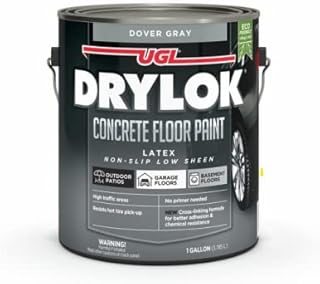
Drylok 43313 is a non-slip floor paint option that emphasizes safety for concrete floors exposed to moisture or high traffic. It’s sold in gallon quantities (often as a two-pack in this listing) and is designed for durable, slip-resistant performance. Best for basements, garages, or utility spaces where traction is a priority. Better for spaces where slip resistance matters more than a glossy finish. Limitation: the non-slip texture can slightly reduce glossy appearance versus smoother coatings.
Drywall Repair Kit (Prep and Patch)

Prep matters. This Drywall Repair Kit helps fill holes and smooth surfaces before painting concrete or drywall. Best for quick fixes and preparation tasks that improve coating adhesion and finish quality. Choose this if your concrete surface has holes or imperfections that could telegraph through the paint. Caution: designed for interior use and may need compatible patch materials for concrete-specific prep.
YOA Epoxy Colored Sand Self Leveling Floor Paint

This epoxy colored sand kit provides a high-gloss, marble-like finish with a self-leveling formula designed for easy application. It’s best for flat, prepared concrete surfaces in garages, basements, and workshops where a decorative, durable surface is desired. It offers an upscale aesthetic and strong durability but requires careful mixing and surface preparation. Choose this if you want a premium decorative look and can commit to proper leveling. Limitation: coverage per coat is limited and may require additional material for larger areas.
Buying Guide
What to consider when painting or sealing a concrete floor
- Surface condition and prep: Any cracks, holes, or unevenness should be repaired before coating to prevent telegraphing and premature wear. A prep step (like the Drywall Repair Kit) can improve adhesion and finish quality.
- Environment and exposure: Indoor vs. outdoor use, moisture levels, and traffic type (pedestrian vs. forklift) influence product choice. For moisture-prone spaces, non-slip or epoxy formulations offer better protection.
- Finish preference: Satin finishes hide minor imperfections; high-gloss finishes look more decorative but may show flaws. Self-leveling options produce a seamless, professional look for concrete floors.
- Durability needs: Epoxy-based products tend to resist abrasion, tire pickup, and staining better than standard acrylic paints, making them ideal for garages and workshops.
- Coverage and cost: Compare square footage per gallon and expected number of coats. Some products cover more area per gallon or require multiple coats for optimal performance.
Frequently asked questions
- Q: Can I use these paints on vertical concrete surfaces? A: Most listed products are designed for horizontal surfaces; vertical applications require special primers or products rated for vertical use.
- Q: Do I need a primer before applying epoxy or acrylic concrete paint? A: Primers or sealers are often recommended for better adhesion, especially on old or porous concrete.
- Q: How many coats are typically needed? A: Most formulas require 1–2 coats, depending on the product and surface porosity; check the product instructions for guidance.
- Q: Is non-slip protection automatic with these paints? A: Some options provide slip resistance in the finish; if not, consider a non-slip additive or a dedicated non-slip coating.
- Q: How long before the floor can be used after application? A: Drying and cure times vary; follow manufacturer guidelines to ensure full hardness and safety before foot traffic or vehicles.
- Q: Can I use these products for basements? A: Yes, most are suitable for interior basement floors, provided proper ventilation and surface prep are observed.