Finding the right orbital sander with a vacuum attachment helps keep your workspace clean while delivering smooth, dust-controlled finishes. This guide highlights five top options—chosen for varying budgets and task types—so you can pick the best match for your projects. Best for hobbyists who want reliable dust control, contractors needing consistent dust capture, and DIYers seeking tool versatility across materials. Below is a quick, at-a-glance table of the featured products to help you compare at a glance.
| Product | Best For | Key Feature |
|---|---|---|
| SKIL 5” Random Orbital Sander with Cyclonic Dust Box | Budget-friendly, general sanding | Cyclonic dust box, variable speed |
| DEWALT DWE6421K 5-Inch Orbital Sander | Comfort, accurate finishing | Low vibration, dust collection |
| BOSCH ROS20VSC Palm Sander | Versatile dust control | Vacuum dust collector, fast disc changes |
| TurboVolt 5-Inch Sander with ZeroDust | ZeroDust filtration, multi-speed | 6 speeds, built-in dust capture |
| Dong Cheng 5-Inch Orbital Sander | Budget option with vacuum-ready design | Detachable dust bag, variable speeds |
SKIL 5” Random Orbital Sander with Cyclonic Dust Box

Best for budget-conscious projects, this 2.8-amp sander delivers 13,000 OPM for smooth results across wood, metal, and composites. The cyclonic dust box uses air flow to separate dust from the air stream, making the container easier to empty and reduce mess. Variable speed control helps tailor performance to the material and task. Ideal for beginners and DIYers who want reliable dust management without extra accessories.
Who it’s best for: hobbyists and light renovation crews requiring straightforward power and clean-up. Limitation: might feel rugged for heavy-duty continuous use, as motor power is modest compared with professional models.
DEWALT DWE6421K 5-Inch Orbital Sander
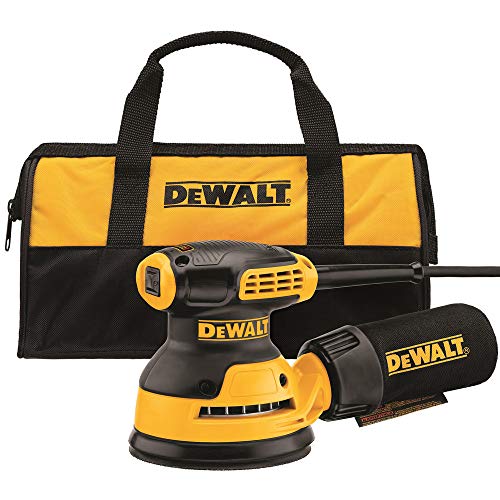
This compact, 3.0-amp sander emphasizes comfort and precision, with a shorter height to reach tight spaces and a separate counterweight to reduce vibration. The tool is designed to pair well with dust-collection setups that fit typical shop vacuums. Choose this if you want better balance and lower fatigue for extended sanding sessions. Best for: finish carpentry and cabinet installation where calm operation matters. Caution: ensure compatible vacuum attachment if you rely solely on the tool’s built-in dust features.
BOSCH ROS20VSC Palm Sander With Vacuum Dust Collector

Designed for versatile dust control, the ROS20VSC offers a variable speed dial to match the work piece. Its Hook-and-Loop disc attachment system makes changing sanding pads quick, and the integrated vacuum dust collector helps keep your workspace clear. Best for pros and serious DIYers who prioritize easy disc changes and consistent dust capture. Consideration: while efficient, it may be less compact than smaller palm sanders for tight corners.
TurboVolt 5-Inch Random Orbital Sander With Brake

This model emphasizes a 1-second BrakeSnap brake for a clean start and finish, reducing swirl marks. It offers six adjustable speeds (6000-13000 RPM) for heavy material removal through fine finishing. It includes a ZeroDust system and a universal vacuum adapter, making it a practical choice when dust control is a priority. Best for: users who need fast, clean stops and flexible sanding across project types. Limitation: may require compatible vacuum setup to maximize dust collection.
Dong Cheng 5-Inch Random Orbital Sander
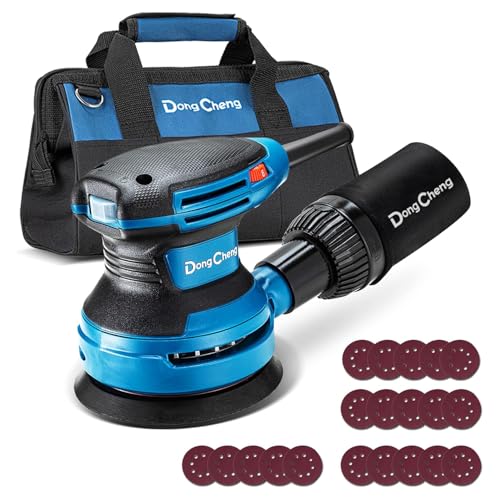
With a 3.2-amp motor delivering 12,800 OPM across six speeds, this sander balances power and control for wood and metal projects. It features a dust box design and a detachable dust bag, plus the option to connect to a vacuum for longer jobs. Best for budget-conscious users who still require reliable dust management. Caution: the dust collection and fit may vary with different vacuum ports—confirm compatibility before pairing with gear sets.
Buying Guide: Key Considerations For An Orbital Sander With Vacuum
- Dust collection effectiveness: Look for built-in vacuums, cyclonic dust boxes, or ZeroDust systems that trap fine particles and are easy to empty and clean.
- Power and speed range: A motor around 3.0 A with 8,000–12,000 OPM covers most tasks. More speeds provide better control for finishing and heavy stock removal.
- Ergonomics and vibration: Low-vibration designs and shorter tool heights help reduce fatigue during long sessions.
- Disc attachment system: Hook-and-loop (Velcro) discs offer quick changes, while secure attachments reduce disc shifts during use.
- Vacuum compatibility: Ensure the sander’s dust port fits your shop vac hose diameter or commonly available adapters.
- Size and reach: Five-inch pads balance power and maneuverability for most medium to large surfaces; smaller or larger options may suit specialized tasks.
- Durability and maintenance: Look for robust housings, reliable switch protection from dust, and easy access to replace pads and bags.
Frequently Asked Questions
- Do orbital sanders with vacuum attachments work for metal as well as wood? Yes, many models handle wood and metal with appropriate grits, but always verify material compatibility and use proper abrasives.
- Is a vacuum attachment essential for sanding projects? It helps control dust and can improve finish quality by reducing dust infiltration on the surface, but not all tasks require it.
- What disc size is best for general finishing? A 5-inch pad is versatile for most surfaces and speeds, balancing material removal and finish quality.
- Should I choose fixed or brushless motors for sanding? Brushless motors are common in modern sanders for efficiency and longer life, but both can perform well with proper maintenance.
- How important is the brake on an orbital sander? A brake helps prevent swirl marks by stopping the pad quickly, which is especially useful for finishing work.
- Can I use any vacuum with these sanders? Most include a standard dust port, but verify port size and use a compatible adapter when connecting to shop vacuums.