Answering the most common painting prep question, these masking tape dispensers help you lay painter’s tape quickly and precisely, protecting trim, windows, and edges. The top picks below are best for DIY enthusiasts, professional painters, and anyone who wants faster, neater results with less tape waste. Each option supports different workflows—some pair tape with masking film, others focus on single-pass tape application or integrated scrapers. Read on to compare features, recommended uses, and practical limits to choose the right tool for your project.
| Product | Best For | Key Benefit | Link |
|---|---|---|---|
| Scotch Blue Painters Tape Applicator TA3-SB-ESF | Trim, windows, doors | One-pass continuous tape application | |
| 3M Hand Masker M3000 Tape Dispenser | Large surface areas | 2–5x faster than tape alone | |
| ScotchBlue Painter’s Tape Dispenser (Tape + Paper) | Protective masking projects | Dispenser for tape and masking paper | |
| Tangibay Pre-Taped Masking Paper With Dispenser | Household and auto projects | 2-in-1 paper and tape with time-saving dispenser | |
| Masking Master Painters Tape Dispenser (Generic) | Precise edge work | Integrated scraper and fixed spacing |
Scotch Blue Painters Tape Applicator TA3-SB-ESF

Features: Faster, easier prep with precision versus hand-applying 3M tapes; Applies tape in one continuous strip on trim, baseboards, windows, and door frames; Circular grip with a felt pad glides smoothly across surfaces. Best for DIYers tackling trim work or door and window frames where clean lines matter. Caution: May require a starter roll to begin efficient use on large projects.
ScotchBlue Painter’s Tape Applicator (Tape Only)

Features: Ready set with one starter roll; Applies painter’s tape in a single continuous strip and uses a sharp blade for a straight cut; Circular grip and felt pad aid easy gliding along surfaces. Best for fast, precise prep on trim, baseboards, and frames. Limitation: Works best with standard blue painter’s tape and may require steady hand to maintain straight lines on irregular surfaces.
ScotchBlue Painter’s Tape Dispenser (Tape & Paper)

Features: Combines masking tape and paper in one step; Includes a 6-inch plastic blade with a 6-inch extension for precise cuts; Great for covering surfaces like baseboards, trim, cabinets, doors, and windows. Best for larger surfaces where you want to protect with both tape and paper. Limitation: May be heavier to handle for small-scale detail work.
Masking Master Painters Tape Dispenser
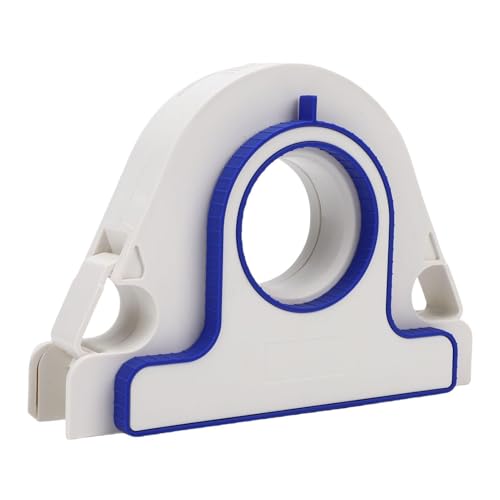
Features: 5x faster tape dispensing with an integrated non-scratch scraper; Maintains a stable 1mm gap for baseboards and wall edges; One-hand operation and precise cutting. Best for professional alignment and bleeding-proof edges. Caution: As a generic tool, availability and replacement parts may vary by seller.
Tangibay Pre-Taped Masking Paper With Dispenser

Features: 2-in-1 masking paper and tape; Dispenser saves time by applying tape and paper in one pass; Paper is strong, non-absorbent 40gsm machine-glazed brown kraft; Ideal for painting walls, cars, and large areas. Best for projects where you want quick full-coverage protection. Limitation: Paper thickness may vary; not ideal for very fine edge work requiring ultra-narrow masking.
Lichamp Desktop Tape Dispenser Holder

Features: Desktop holder for up to 1-inch tapes; Non-skid weighted base for stable use; One-hand dispensing option ideal for quick desk repairs, sealing, or light decoration. Best for light-duty masking tasks or as a supplementary stand. Caution: Not a full masking tool for large painting projects; better as a supporting accessory.
Buying Guide
What should you consider when choosing a masking tape dispenser for painting?
- Project size and surface area: For large rooms, consider 2-in-1 tape and paper dispensers or fast-handling models like Hand Masker.
- Edge precision: Look for a sharp blade and a stable guide to achieve straight lines on trim and baseboards.
- Grip and glide: A circular grip and a soft-feel glide pad reduce fatigue on long sessions.
- Dispensing method: Continuous-strip dispensers are best for smooth, uniform edges; paper-tape combo tools protect large areas quickly.
- Weight and handling: Lightweight tools excel at detail work; heavier bases help with stability on flat surfaces.
Practical tips for use
- Prepare surfaces—clean and dry—to maximize tape adhesion and edge bleed resistance.
- Test the blade cut on scrap material before applying to walls or trim.
- Apply in slow, deliberate passes to maintain edge alignment.
- Use a steady hand and consistently hold the dispenser at the same angle for uniform results.
FAQ
- What is the main advantage of a one-pass tape applicator?
It speeds up painting prep by applying tape in a continuous strip with fewer adjustments. - Is a paper + tape dispenser better than tape-only?
It protects larger areas in one step, reducing the need for separate masking film. - Can these dispensers be used on wood, metal, and glass?
Most are designed for multiple surfaces, but test a small area first on delicate finishes. - Do I need starter rolls with every dispenser?
Some models include a starter roll, while others require you to use your own tape supply. - Which option is best for beginners?
A lightweight, ergonomic model with a comfortable grip and simple blade can reduce learning time. - Are there any limitations to blade-based dispensers?
Blades can dull with heavy use; replace or sharpen as needed to maintain clean cuts.