Choosing the right mask for sanding wood is essential for health and comfort. This guide highlights five top options that balance filtration, breathability, and wearability for DIYers, hobbyists, and professionals. Each product is best for different use cases—dust-heavy batches, long sessions, or when durability matters. Use the quick comparison below to decide which mask fits your sanding tasks, whether you’re smoothing pine, oak, or reclaimed lumber.
Summary table of chosen products:
| Product | Best For | Key Benefit |
|---|---|---|
| 3M N95 Performance Respirator 8210 | Short, casual sanding | NIOSH-approved N95; easy breathing |
| AirGearPro G-500 Reusable Respirator | Messy dust & chemicals | Dual filtration, reusable with replaceable filters |
| 3M Particulate Respirator 8511 | Daily sanding with comfort | Cool Flow valve reduces heat buildup |
| BASE CAMP M Plus Dust Mask | All-day comfort in dusty environments | High filtration with carbon layer |
| BASE CAMP M PRO Dust Mask | Prolonged wear | 6-layer filtration, updated head strap |
3M N95 Performance Respirator 8210

Best for short sanding sessions and entry-level protection. This NIOSH-approved N95 respirator offers at least 95 percent filtration against non-oil-based particles and aerosols often generated by sanding wood. Its advanced filter media supports smoother breathing, while a cushioned nose foam sits comfortably on the nose bridge for longer wear. Choose this if you need a lightweight, disposable option that’s quick to put on and remove.
Who it’s best for: casual hobbyists or quick fix projects where minimal downtime matters. Caution: Not ideal for prolonged use in low-ventilation spaces; consider a reusable alternative for extended sessions.
AirGearPro G-500 Reusable Respirator Mask

Best for comprehensive protection during wood finishing and sanding tasks. The G-500 uses a dual filtration system (A1P2) to guard against organic vapors and dust. Its reusable design allows filter replacement, reducing waste and long-term cost. This mask is suitable for painters, woodworkers, and DIY enthusiasts who perform frequent sanding or spraying and want reliable filtration over many projects.
Who it’s best for: users needing better filtration over time and reduced breathing resistance. Caution: Initial setup with proper filter cartridges is required; ensure correct assembly for optimal performance.
3M Particulate Respirator 8511

This respirator blends N95 filtration with a Cool Flow exhalation valve to direct exhaled air downward, reducing heat and humidity. It’s a strong pick for longer sanding sessions where heat buildup can become uncomfortable. The valve helps with easier breathing when working with fine sawdust and sanding dust.
Who it’s best for: users needing sustained comfort during longer sanding jobs. Caution: Cool Flow valve is not ideal for environments that require unchanged exhalation filtration or for work with very fine, allergenic particles where a tight seal is critical.
3M, N95 Respirator 8511
Another 8511 variant, designed for sanding, drywall work, and dust control. It features 3M’s advanced electrostatic media to improve particle capture while keeping breathing easy. This option is well-suited for frequent sanding tasks across multiple projects, including pollen and mold spores exposure in certain seasons.
Who it’s best for: daily sanders or workshop users who want reliable filtration with comfortable wear. Caution: Like all disposable N95s, it’s best replaced after a period of heavy use or when the fit degrades.
BASE CAMP M Plus Dust Mask

Best for mixed-use sanding and dusty environments. The M Plus mask features a six-layer filter system and a carbon layer to reduce odors while blocking 99.6% of dust and pollen. Its design emphasizes smoother breathing and heat management through breathable mesh materials and valve-assisted airflow. Replacing filters when worn out is recommended for sustained performance.
Who it’s best for: long stand-alone sanding sessions or environments with noticeable odors. Caution: The mask’s efficiency relies on proper fit and timely filter replacement to maintain protective performance.
BASE CAMP M PRO Dust Mask
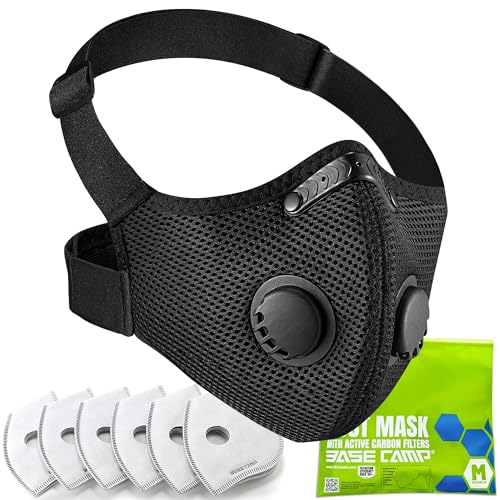
Best for professionals who wear masks all day. The M PRO dust mask emphasizes prolonged comfort with a flat headband design that distributes weight and reduces slipping during extended wear. It provides 99.6% filtration with six layers and includes an activated charcoal layer to combat odors. The neck strap is adjustable for easier on/off in busy work environments.
Who it’s best for: professionals who need a durable, all-day option with consistent protection and comfort. Caution: Bulkier fit may be less ideal for very tight-fitting workspaces where a low-profile mask is preferred.
Buying Guide: How To Choose The Right Sanding Mask
- Filtration Type: For general wood dust, N95 filters are common, providing around 95% efficiency against non-oil-based particles. If you encounter vapors from finishes, look for dual filtration (A1P2) or OV/P100 options.
- Fit And Comfort: A comfortable nose bridge, soft foam, and adjustable straps improve seal and reduce fatigue on long sessions. Consider valves for easier exhalation in warm environments, but note they may be less suitable where odor control is critical for others in the area.
- Reuse vs. Disposability: Reusable respirators with replaceable filters can be cost-effective for frequent sanders. Disposable N95s offer convenience for quick jobs but require timely replacement.
- Breathability: Look for advanced filter media and mesh materials that promote airflow, especially during longer sanding tasks where breathing resistance can impact productivity.
- Odor Control: Some masks include activated carbon layers to reduce odors from varnishes, stains, and coatings. Consider this if you work with finishing products in enclosed spaces.
- Durability And Compatibility: Ensure replacement filters and cartridges are readily available and compatible with your chosen mask model. Reusables require maintenance and proper storage between uses.
- Work Environment: For dusty workshops with little ventilation, prioritize masks with better filtration and a snug fit to minimize inhalation of fine dust.
Frequently Asked Questions
- Q: Is an N95 mask enough for sanding wood? A: For most home projects, an N95 offers adequate protection against wood dust. If you’re exposed to heavy dust or solvents, consider a dual-filtration model or a reusable respirator with cartridges.
- Q: Do masks with valves protect others in the room? A: Exhalation valves primarily protect the wearer and may not reduce exposure to others. In shared spaces, select non-valved models or ensure proper air flow.
- Q: How often should I replace filters? A: Replace filters when airflow becomes noticeably harder or when dust buildup reduces performance. Follow the manufacturer’s guidelines for replacement intervals.
- Q: Can I wear a mask for long sanding sessions? A: Yes, select masks designed for extended wear with comfortable fit, breathable materials, and proper strap tension to distribute weight evenly.
- Q: Are reusable respirators harder to maintain? A: Reusables require filter replacements and periodic cleaning, but they offer better long-term protection and sustainability for frequent use.
- Q: Should I choose a mask with a carbon filter for sanding? A: If odors from finishes or varnishes are a concern, a carbon layer can help reduce odors; otherwise, focus on particle filtration alone.