Looking for maple wood veneer sheets to upgrade furniture or craft projects? This guide highlights five top options that balance realism, ease of use, and versatility. Best for DIY enthusiasts and woodworkers who want authentic maple grain with stable backing for curved or flat surfaces. Each product is evaluated for suitability, best uses, and a practical note to help you choose without overpromising results.
Overview table of selected products:
| Product | Size | Backing | Best For | Limitations |
|---|---|---|---|---|
| Maple Wood Veneer Sheet (9ft x 9in) | 9ft x 9in | Non-woven backing | Curved surfaces, furniture restoration | 9ft length may require joining for large panels |
| Wood-All Maple Veneer Sheet, 24×96 | 24×96 | Peel and Stick PSA | Flat or simple curves, restoration | Natural variation between sheets |
| Edge Supply Maple 24×96 Peel & Stick | 24×96 | Peel & Stick | Cabinetry, high-visibility panels | Adhesive backing may require proper prep |
| Boao 12 Pcs Maple Veneer Sheets 12×12 | 12×12 each | Untreated | Small craft projects, inlays, marquetry | Thin thickness; avoid laser cutting |
| Boao 12 Pcs Maple Veneer Sheets for Door Panels | 12×12 each | Untreated | Door panels, jewelry boxes, inlays | Same as above; ensure backing suitability |
Maple Wood Veneer Sheet – 9ft X 9in, Flexible Natural Wood Skin

Best for curved surfaces and long, narrow panels. This veneer sheet uses a natural maple veneer with a 0.25 mm (10 mil) thickness and a non-woven backing that improves stability. It is suitable for furniture restoration, cabinetry, and various DIY crafts where warmth and grain depth are desired. The flexible panel conforms to flat or curved surfaces, making it a strong candidate for curved cabinet doors or decorative inlays. Caution: long sheets may require careful handling to avoid warping during installation. Best for projects that benefit from maple warmth and a lightweight texture.
Wood-All Maple Veneer Sheet, 24×96, A Grade
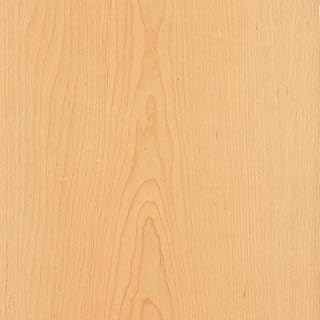
Best for restoration projects requiring a sturdy flat panel finish. This plain sliced/flat cut Maple veneer is 24×96 inches with a 10 mil thickness and a peel-and-stick backing. It provides stability and flexibility for various veneer applications and can be stained to match existing wood. Note that grain and color variation can occur between sheets and lots due to natural wood fibers. Choose this when you want a reliable, ready-to-apply veneer with less prep work on flat surfaces.
Edge Supply Maple 24×96 Flat Cut Peel & Stick

Best for quick cabinet and furniture refinishing with a ready adhesive. These A-grade veneer sheets offer a warm, natural finish and are designed for easy application. The peel-and-stick backing simplifies installation on flat surfaces and helps avoid extra glue. They’re ideal for homeowners working on visible surfaces; however, ensure high-quality surface prep for best adhesion. Choose this if you want a straightforward, no-muss veneer project with a classic maple look.
Boao 12 Pcs Wood Veneer Sheets 12×12 – Cherry, Maple, Walnut

Best for small crafts and inlays. This set includes maple, cherry, and walnut veneers, each 12×12 inches and 0.02 inches thick. It is well-suited for jewelry boxes, marquetry, and decorative panels. The natural grain adds elegance to each piece. Caution: thin sheets may not be ideal for high-stress surfaces or deep cuts; handle with care and avoid laser cutting if not specified for that thickness and material.
Boao 12 Pcs Maple Veneer Sheets 12×12 for Door Panels

Best for door panels, jewelry boxes, and marquetry projects. This 12×12 set emphasizes the maple grain for rich, uniform appearance on flat or gently curved surfaces. The veneers are natural wood with a strong grain profile suitable for refinishing existing doors or creating decorative inset panels. Limitation: ensure your surface is compatible with untreated veneer to avoid adhesion issues. Choose this when you want consistent maple aesthetics across multiple small pieces.
Buying Guide: Maple Veneer Sheets For Your Project
- Sheet Size And Format: Choose sizes that fit your project. Long sheets are great for doors or large panels, while 12×12 sheets are ideal for inlays and craft pieces. Peel-and-stick backing speeds up installation on flat surfaces.
- Backing Type: Non-woven or peel-and-stick backings add stability and ease of use. Unbacked sheets require glue and careful clamping during installation.
- Thickness: Common veneer thickness ranges from 0.02 inches to 0.01 inches (0.25 mm). Thicker veneers are sturdier and less prone to tearing, but may be less flexible for curved surfaces.
- Wood Grain And Grade: A-grade veneers show the most uniform grain and color; expect natural variation between lots. Real wood veneers provide authentic maple warmth compared to synthetic wraps.
- Intended Use: For curved surfaces, prioritize flexible sheets with backing. For flat surfaces, peel-and-stick or traditional glue-down veneers work well.
- Finish And Compatibility: If you plan to stain, ensure the veneer is unfinished maple. Some veneers are ready to stain; others may require sealing before finishing to prevent blotching.
- Application Tools: Box cutter, sanding blocks, scraping tools, and a roller or brayer can improve adhesion and a smooth surface. Avoid lasers on very thin sheets unless specified.
Frequently Asked Questions
- What is maple veneer used for? Maple veneer is used to cover furniture, cabinets, doors, and crafts to achieve a maple appearance without solid maple stock.
- Can I use adhesive-backed veneer on curved surfaces? Yes, but you should test a small area first. Peel-and-stick works best on flatter curves; for extreme curves, consider flexible veneers with backing and proper heating during installation.
- Is veneer thickness important? Yes. Thicker veneers are sturdier and easier to work with on high-stress surfaces, while thinner veneers are more pliable for small inlays and curved panels.
- Do natural maple veneers vary by lot? Yes. Natural variation in grain and color is common between sheets and lots, so expect some differences when matching pieces from different lots.
- Can I stain maple veneer to match existing wood? In most cases, yes. Unfinished maple veneers accept stains, but test on a scrap piece to ensure the finish matches your target.
- What should I avoid with thin veneers? Avoid laser cutting on very thin sheets and handle gently to prevent tearing or cracking during cutting and installation.