Yes—latex primers can provide excellent adhesion on concrete when you choose the right product. This guide highlights five top latex-based primers ideal for concrete and related substrates, explaining who each is best for, why it was selected, and any limitations. Whether you’re prepping for tile, drywall, or masonry, these primers help block stains, create a uniform surface, and improve paint coverage. The table below compares key aims like adhesion strength, interior vs. exterior use, and surface versatility to help you decide quickly.
| Product | Best For | Key Benefit |
|---|---|---|
| Zinsser Bulls Eye 1-2-3 All Surface Primer | Multi-surface prep on concrete or drywall | Excellent stain blocking, sticks to glossy surfaces |
| FloorPops Peel Stick Tile Primer | Floor tile installations on concrete | Full-strength latex primer for tiles and substrates |
| INSL-X Stix Acrylic Bonding Primer | Challenging substrates like glossy or slick concrete | Unparalleled adhesion to hard-to-coat surfaces |
| Zinsser 02244 Bulls Eye Water-Base Primer | Interior concrete, drywall, plaster | Low-odor, fast-drying with solid coverage |
| Custom Building Products CP1 Latex Primer | DIY and professional interior/exterior priming | Versatile, easy-to-use, good coverage |
Zinsser Bulls Eye 1-2-3 All Surface Primer

Best for: interior and exterior use on concrete, drywall, wood, masonry, metal, and glossy surfaces. This water-based formula seals uniformly and adheres without sanding. It dries to the touch in about 30 minutes and is ready for a recoat in 1 hour, covering up to 100 sq. ft. per quart. Choose this if you need a versatile, fast-drying primer for mixed substrates where concrete is involved, and you want reliable stain blocking without heavy surface prep.
Caution: Not ideal if you need high-heat resistance or specialized fire-rating performance; check compatibility with extreme exterior conditions before long-term exposure.
1 Quart Bulls Eye 1-2-3 Primer Sealer Stain Killer

Best for: interior and exterior surfaces, including concrete, where glossy surfaces exist or where high stain resistance is needed. Bonds to glossy surfaces without heavy scuff sanding and tolerates a low application temperature down to 35°F. This makes it a good choice for projects in cooler environments or on glossy concrete floors awaiting topcoat.
Limitation: Primarily a stain killer and sealer; if you need rapid recoat on very rough concrete, normal topcoat compatibility should be confirmed with your chosen paint system.
FloorPops FPP4182W Peel Stick Tile Primer
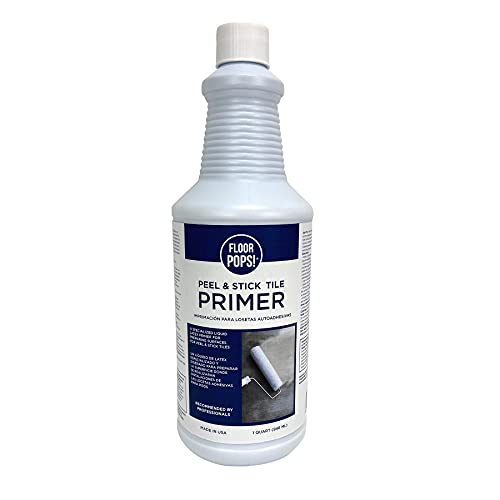
Best for: latex floor primers used with FloorPops peel-and-stick tiles on sound, dry, clean surfaces. Use at full strength and do not dilute. This primer prepares concrete subfloors for tile installations by promoting adhesion and uniformity, helping prevent telegraphing through tile and grout lines.
Limitation: Not suitable for non-sound or damp substrates. Ensure the concrete is dry and free of contaminants before priming.
INSL-X SXA11009A-04 Stix Acrylic Bonding Primer
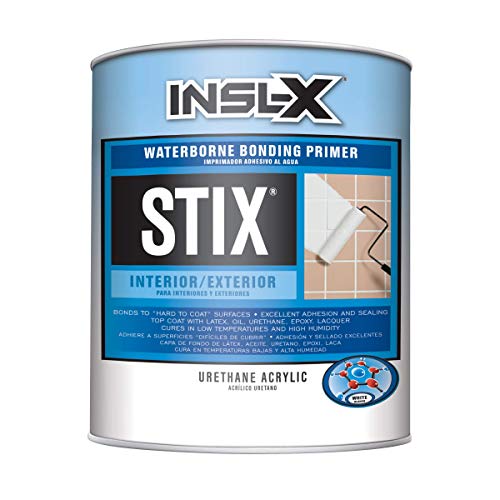
Best for: challenging substrates, including glossy tile, PVC, vinyl, plastic, glass, glazed block, glossy paint, and concrete. This premium bonding primer-sealer delivers exceptional adhesion and can be top-coated with almost any product. Best for projects where maximum adhesion to hard-to-coat substrates is required.
Limitation: May require more thorough surface cleaning on very slick concrete; consider a patch test to confirm adhesion with your final topcoat.
Zinsser Bulls Eye Water-Base Primer and Sealer

Best for: interior priming on concrete, drywall, plaster, and similar surfaces. This water-based formula offers low odor and strong stain hiding. Dries in about 30 minutes and provides solid coverage up to 100 sq. ft. per quart. Choose this when you need a user-friendly primer with easy cleanup and minimal odor.
Limitation: Oil-based stain-blocking performance is not available; for heavy tannin or water stains, additional blocking may be necessary with compatible sealers.
Custom Building Products CP1 Latex Primer

Best for: versatile interior and exterior priming with a focus on smooth, even finishes for walls and ceilings over common substrates, including concrete. The convenient aerosol spray option helps achieve quick, even coverage and reduces mess, making it suitable for DIY projects and professionals seeking efficiency.
Limitation: Aerosol format may limit achievable thickness on very porous concrete; consider brushing or rolling in larger areas for uniform depth if needed.
Buying Guide
Key considerations when choosing a latex primer for concrete:
- Surface compatibility: Determine if you’re priming concrete, glossy surfaces, or a combination. Bonding primers (like Stix) are best for hard-to-coat substrates, while neutral primers suit general concrete.
- Interior vs exterior: Exterior primers require weather resistance and longer-term durability; interior primers focus on fast drying and low odors.
- Drying time: Quick-drying primers speed up project timelines but ensure you don’t sacrifice proper curing before topcoats.
- Coverage: Look at square feet per quart or gallon. Larger areas benefit from primers with higher coverage to reduce coats and time.
- Stain blocking: For concrete with tannins or water staining, select primers with strong stain-blocking properties to prevent bleed-through.
- Topcoat compatibility: Confirm that your chosen topcoat is compatible with the primer to avoid compatibility issues or peeling later.
- Application method: Some primers are available in spray, roll-on, or brush formats. Choose based on project size, accessibility, and tool availability.
Frequently Asked Questions
- Q: Do I need a bonding primer for new concrete?
A: Bonding primers are recommended when concrete is very smooth, glossy, or sealed, to improve adhesion for the topcoat. - Q: Can I use latex primer on damp concrete?
A: Most latex primers require a dry substrate. Check product instructions and allow sufficient curing time before priming. - Q: How long should primer cure before painting?
A: Most primers are ready for topcoat within 1 hour to 24 hours, depending on humidity and temperature. Always follow the label. - Q: Is there a difference between water-based and oil-based primers for concrete?
A: Water-based primers (latex) are low odor and easier to clean, suitable for most indoor projects. Oil-based primers may offer stronger stain blocking but require longer cure times and solvents. - Q: Should I seal newly poured concrete before priming?
A: If the concrete is exceptionally porous or has efflorescence, a penetrating primer or sealer may be beneficial before applying a latex primer. - Q: Are aerosols effective for priming large concrete areas?
A: Aerosol primers are convenient for small or tight spots; for large areas, rolling or spraying with a traditional primer is typically more efficient.